PPF Historiques 222 4200H in Steel: The Quiet One Gets a Serious Copy
The steel, blue-dial Historiques 222 4200H finally gets a replica from a major factory. Thin-ish, well finished and a little noisy. Here's what owners are finding.
Ask a room of integrated-bracelet fans to name the third member of the 1970s steel sports-watch club, and you’ll get a pause. The octagon and the porthole get named instantly. The 222, with its tonneau case and its bezel cut like a bottle cap, gets remembered a beat later, usually by the person who thinks they have the best taste in the room. They might be right.
The genuine steel reissue makes that argument well. The 4200H/222A-B934 is a 37 mm “Jumbo” with a matte blue dial and an in-house 2455/2 movement, at a little under 8 mm thick, which is not much more than a stack of coins. It’s also the first time the modern reissue has come in steel rather than gold, which matters to purists because the very first 222s in 1977 were steel. Retail sits somewhere above $30,000, and boutiques aren’t exactly giving them away.
So when PPF, the factory better known for its Nautilus work, put out its own steel 222, collectors paid attention. Until now, the choice was mostly one version from MX, plus some smaller workshops, with familiar complaints about dial colour, end links and a stiff bracelet. PPF’s announcement made the usual grand claims, including that it’s the only maker buying a genuine watch for 1:1 replication. We’ll treat that as marketing. The watch itself is more interesting.
Case and bracelet: where the money went
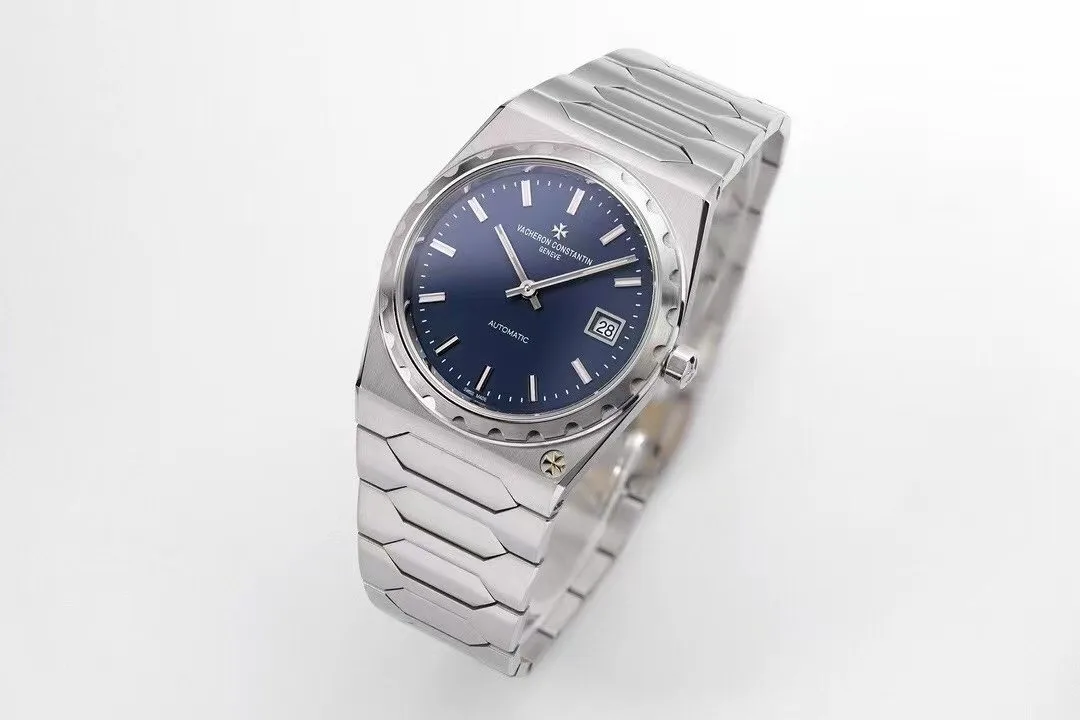
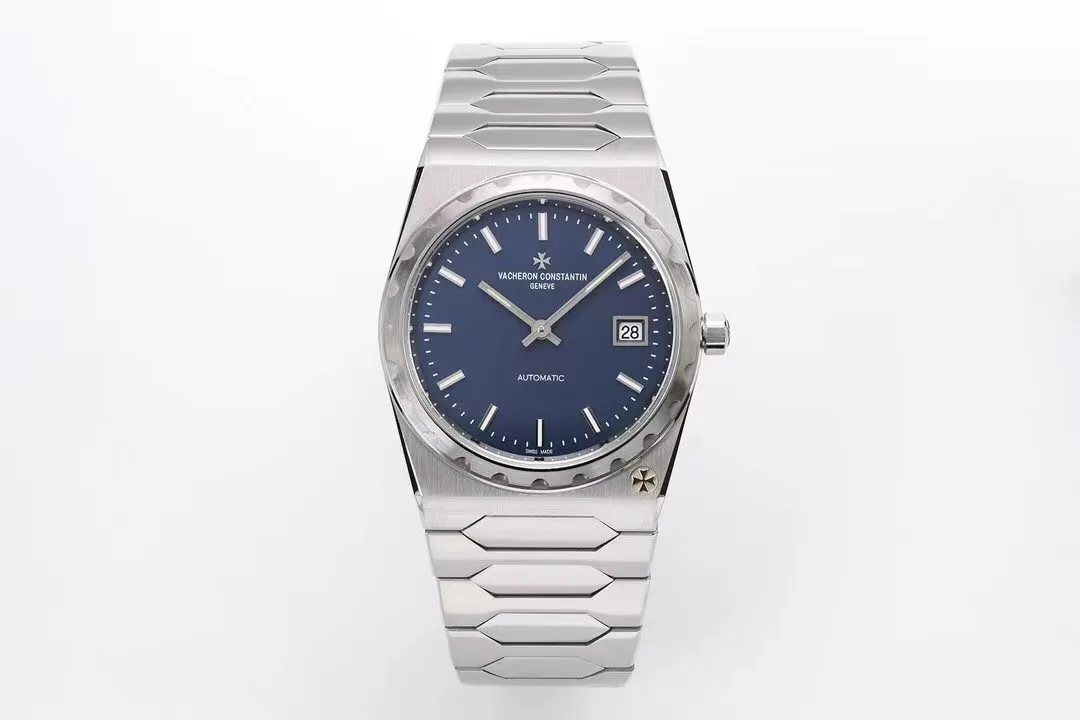
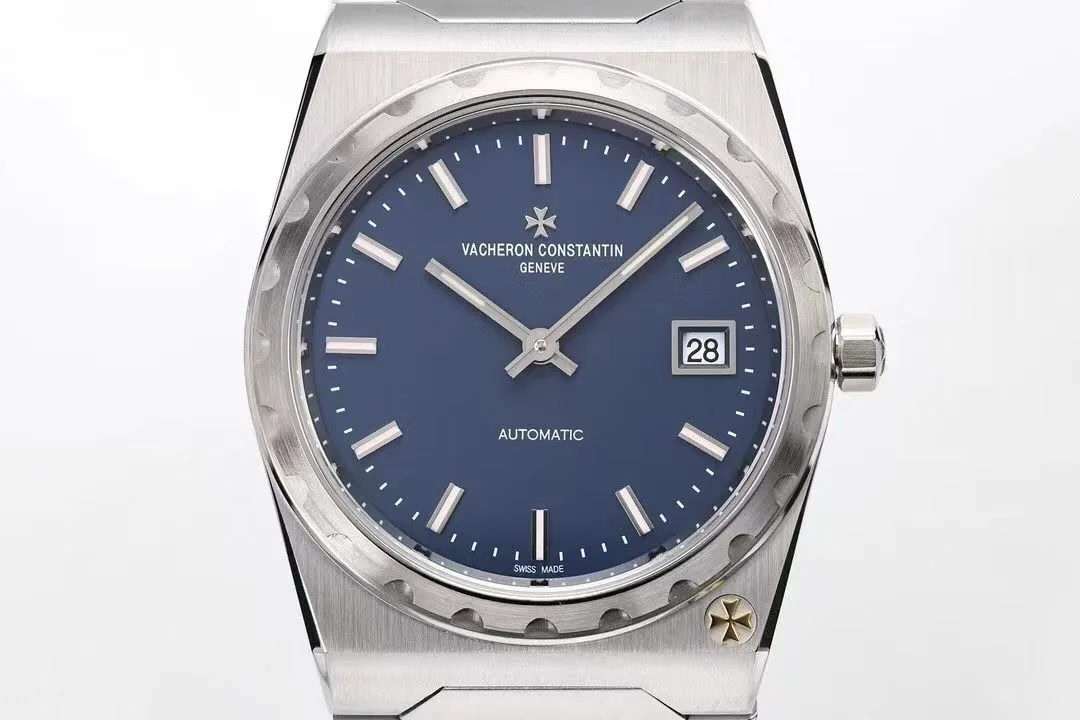
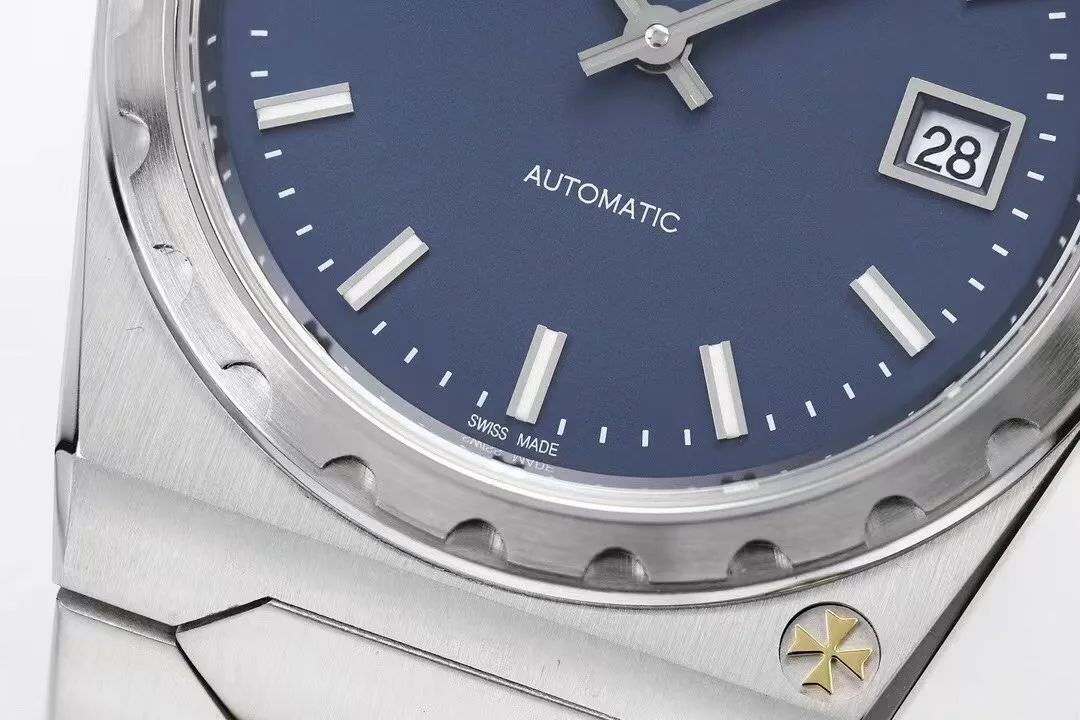
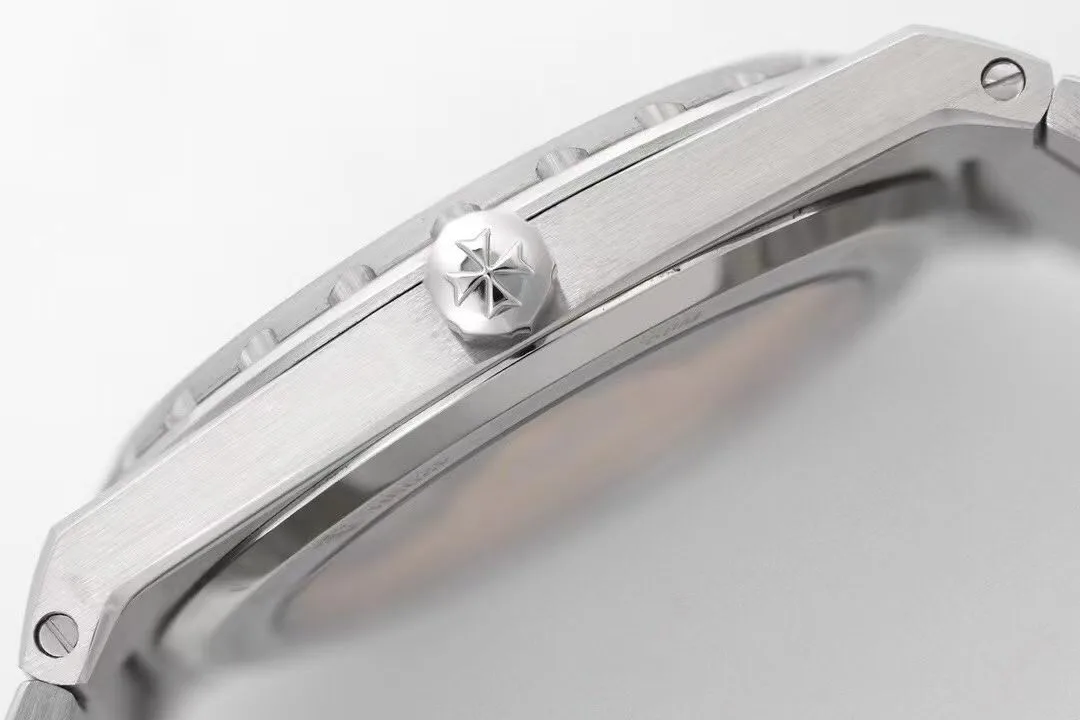
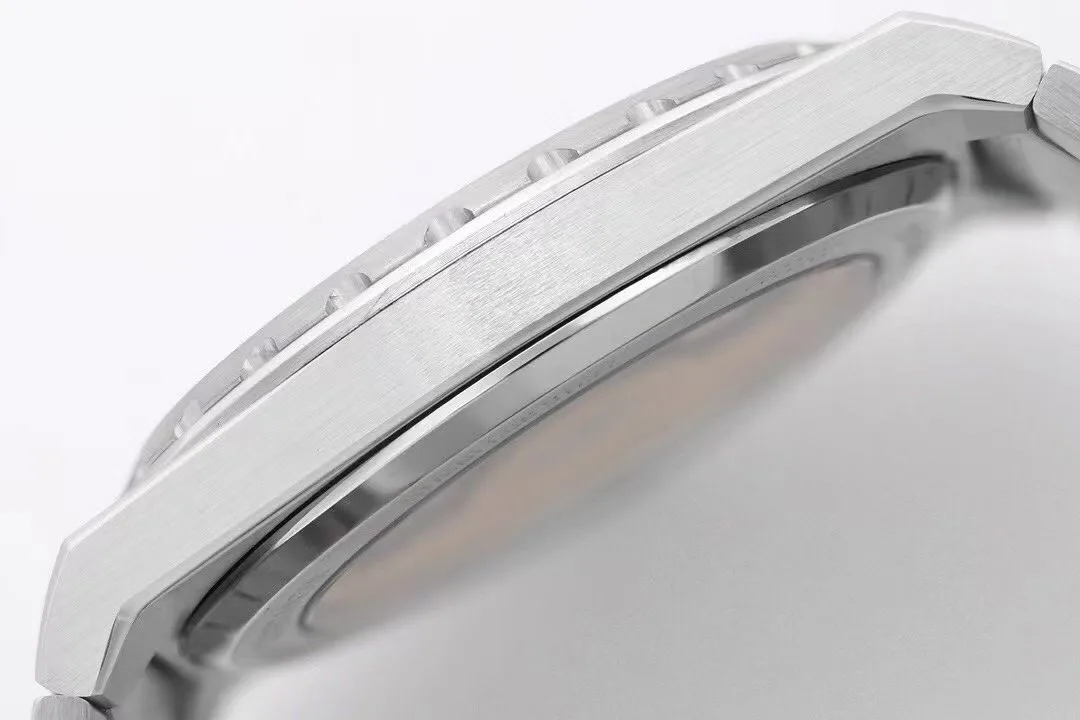
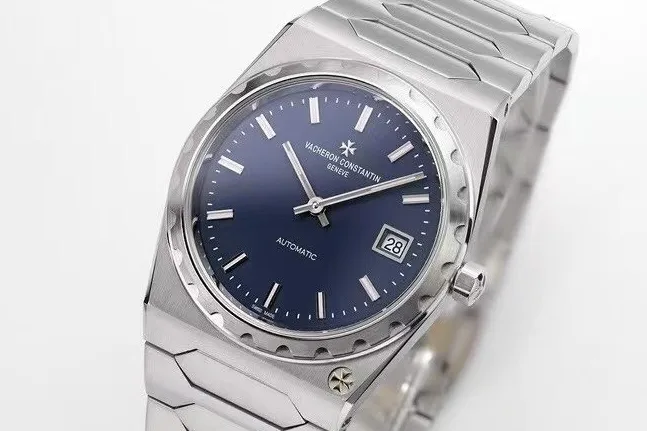
The case is the reason to buy a 222, and it’s where owner reviews are most enthusiastic. The monobloc tonneau has long vertically brushed surfaces that break into polished bevels along the flanks, and close-up photos show crisp transitions and fine, even brushing. The fluted bezel’s notches look well cut, which matters more than you’d think, because a soft bezel ruins the whole design. The small cross emblem sits at five o’clock on the case flank, as it should.
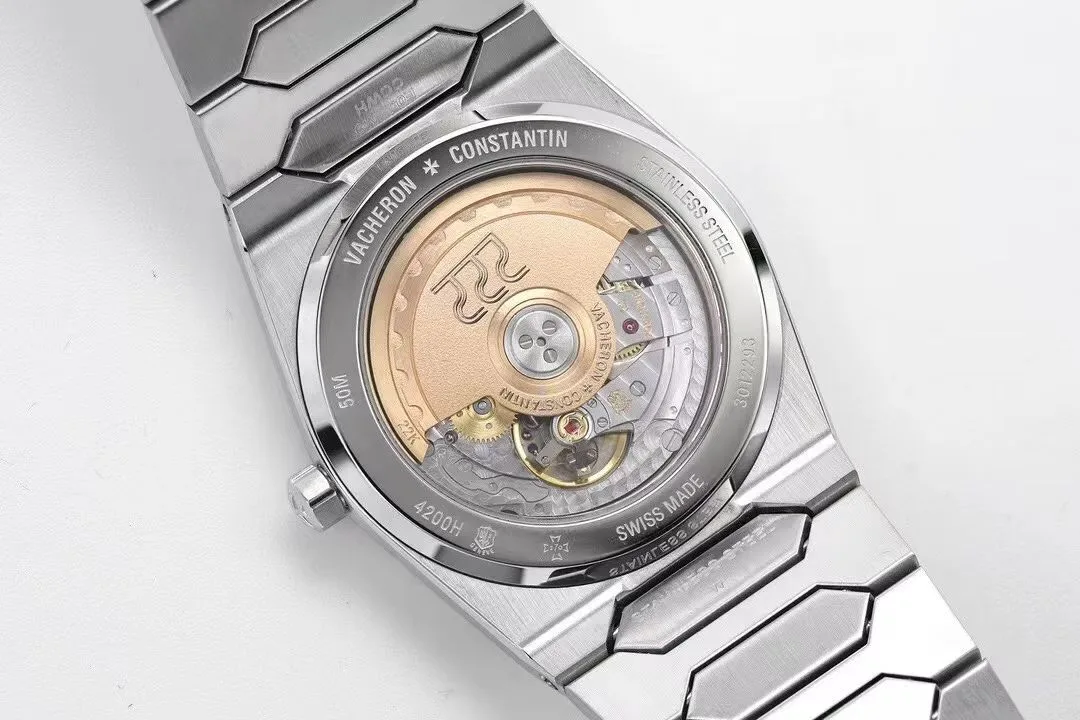
PPF also seems to have done its homework on markings. Early photos show steel markings on the case and bracelet rather than leftover gold hallmarks from a gold-version template, a lazy mistake that has caught out 222 replicas before.
Thickness is the obvious technical challenge. PPF claims 8.2 mm. Reviewers with calipers report closer to 8.5 mm, against the genuine 7.95 mm. Half a millimetre won’t show from across the table, but anyone who has worn the real one might notice it under a cuff. For a replica, it’s still very slim, and that’s thanks to the movement choice, which brings its own trade-offs.
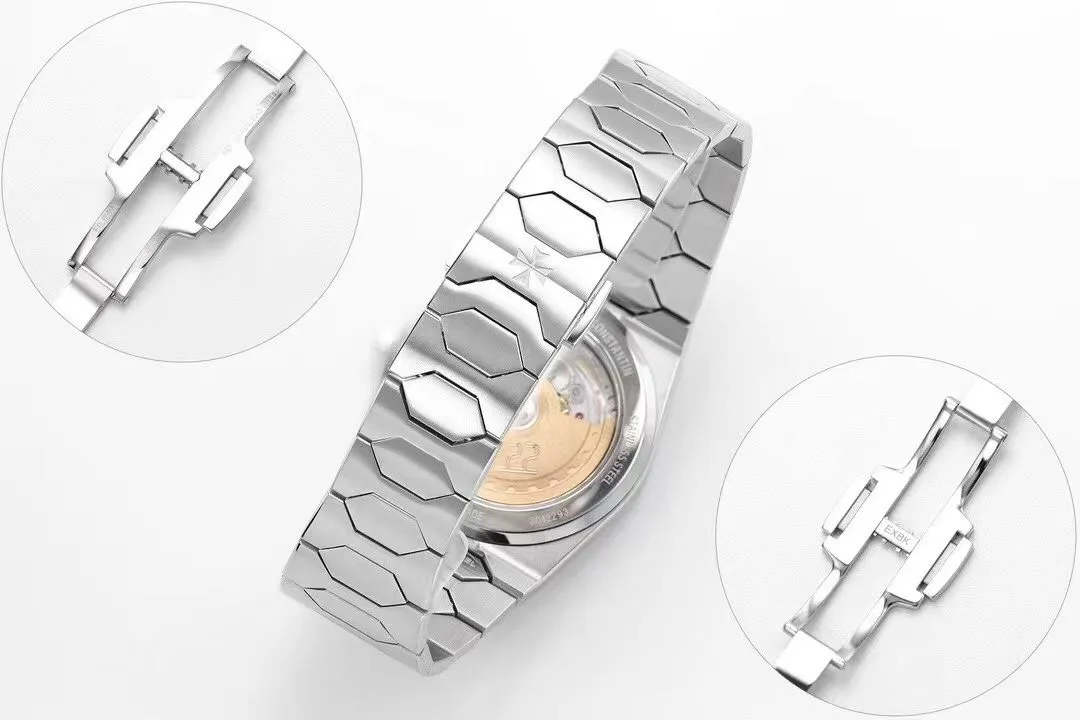
The bracelet earns real praise. It’s integrated and well brushed, and owners describe it as flexible and comfortable, which hasn’t been true of every 222 replica. The clasp is a hidden triple-blade folding design, like the genuine reissue’s, so the bracelet looks almost continuous when closed.
There’s one warning every sizing guide now repeats. The link screws copy the genuine watch’s floating-head design, but the shafts sit very tight even after the thread is fully undone. Pull too hard on that flexible head and owners report you can snap it off, leaving the shaft stuck in the link. The fix is boring but effective: a little lubricant before you start, and patience rather than force. If you’re not comfortable sizing an integrated bracelet, let someone else do it.
Dial: close, with one odd note
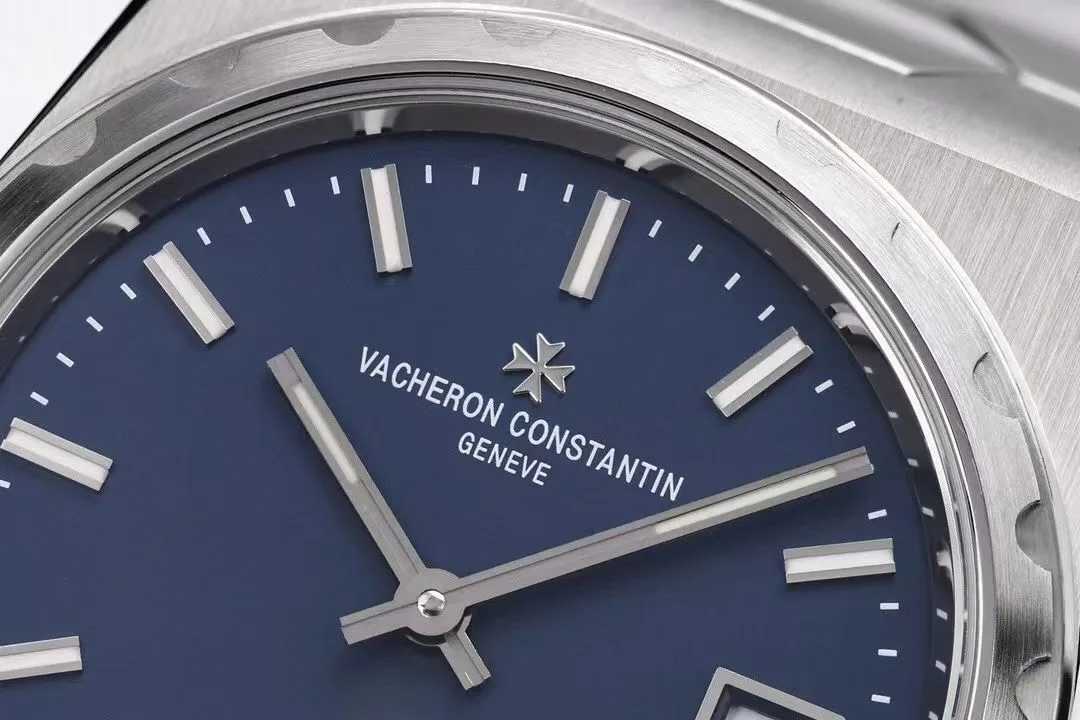
The blue is the best part of the dial, and early reactions suggest it’s an improvement on earlier replicas. Reviewers describe it as a convincing navy-to-cobalt in most light. The texture is a different story. The genuine dial has a more obvious matte grain, and the replica’s surface reads smoother on close inspection.
The printing looks clean and slightly raised, and the date window gets specific praise: a neat silver frame with softened corners and a correctly shaped, slightly raised font. The serifs on the date numerals may be a touch less pronounced than on the genuine watch, but that’s loupe territory.
Then there’s the lume. On the genuine watch, the coating is off-white by day and lime green at night, a nod to old tritium. On this replica, several reviewers notice that the markers carry a faint pink tint that doesn’t quite match the hands. At arm’s length it mostly reads white, but once you’ve seen it, you’ll keep seeing it. The lume itself is reportedly bright and evenly applied, so it’s a colour problem rather than a performance one.
The movement: smart choice, audible compromise
Inside is a Miyota 9015, which explains the slim case. It’s a reliable, 4 Hz Japanese automatic, and PPF has added a decorative plate so that, through the display back, it looks broadly like the genuine 2455/2. Look closer and the illusion has limits. Reviewers point out that some of the visible wheels are decorative rather than functional, so the view is more stage set than engine room.
The other limit is sound. The 9015 winds in one direction only, so a flick of the wrist can send the rotor spinning freely, with the familiar whirring that collectors call the helicopter effect. Owners call it noticeable, though not a reliability concern. The 9015 is a durable movement, and servicing it shouldn’t be a headache. It just won’t feel or sound like a 40-hour Geneva-hallmarked calibre, and nobody should expect it to at this price.
The crown is a simple push-pull design rather than screw-down, which matches the genuine watch, with winding, quick-set date and time-setting positions. Expect roughly 40 to 42 hours of reserve, which is close enough to the genuine watch’s 40 hours.
The trade-offs
What makes this replica good is the part that’s hard to fake: the case geometry, the finishing and a bracelet that actually flexes. What holds it back is mostly smaller details: a smoother dial than the genuine one, a lume tint that’s slightly off, a rotor you can hear and a caseback that looks better than it works.
At around $500, it costs more than most 222 replicas, but owners generally think it’s the best version available. The comparison with the octagon replicas is instructive. Those get dedicated clone movements and endless iterations. The 222 gets a well-dressed Miyota. That’s partly because the market is smaller, and it’s also why this watch remains the slightly unusual choice. That’s precisely its appeal.
What to check before you accept one
- Lume colour on the markers: check for a pink cast against the hands.
- Dial texture and colour in daylight, not just under the seller’s lamp.
- Bezel notches: they should be sharp and evenly spaced all the way round.
- Thickness: expect about 8.5 mm. Anything much thicker is a different batch.
- Bracelet screws: lubricate them and be gentle when sizing, or let a watchmaker do it.
- Rotor noise: a quiet whirr is normal, but grinding or scraping isn’t.
The verdict
The steel 222 has always been the connoisseur’s choice in this category, and PPF’s version suits it. It isn’t trying to be the loudest watch in the room, just the one people ask about afterwards. Get the bracelet sized carefully, make peace with the rotor and the lume tint, and you’ll have a watch that looks right and wears thin. Very few replicas of this design have managed both.
Historiques 222 4200H
Product photos
Blue dial, steel