RWF Daytona 126500LN Panda: Warm Dial, Free-Sprung Heart
RW Factory's 126500LN Panda pairs a JH4131 free-sprung movement with a warmer white dial and a well-regarded bezel. Owner reviews also flag a few things at 6 o'clock.
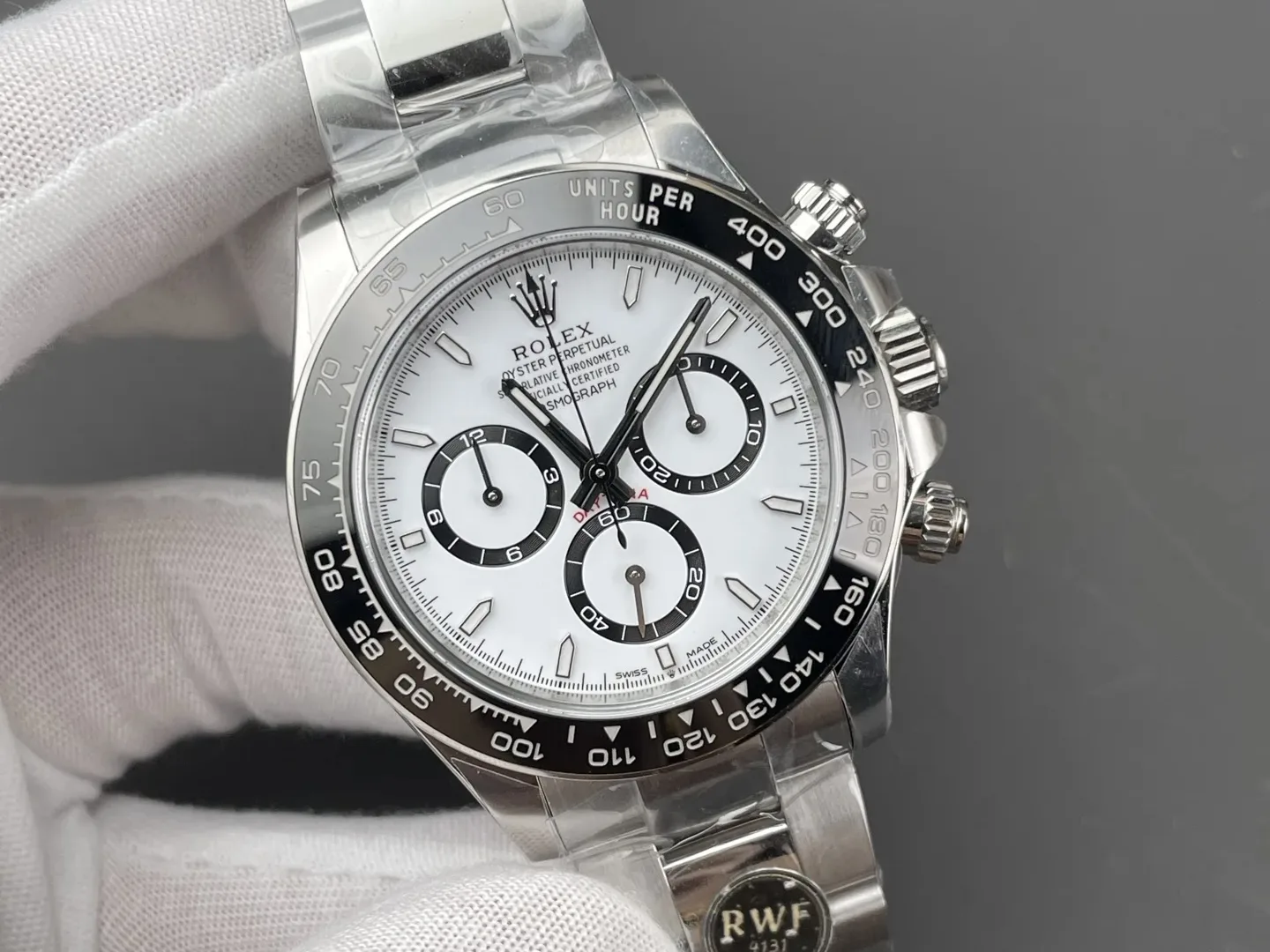
Every few months a new factory turns up promising the steel Daytona everyone else has been getting slightly wrong. Usually the promise fades by the second batch. RW Factory’s 126500LN Panda is the latest to try, and its pitch is unusually specific: a warmer white dial, a bezel with every number where it should be and a free-sprung JH4131 movement as standard.
The early owner reviews are, on balance, kind. They aren’t uncritical, though, and the criticism keeps coming back to the same small area of the dial. Let’s work through it.
Who is RWF?
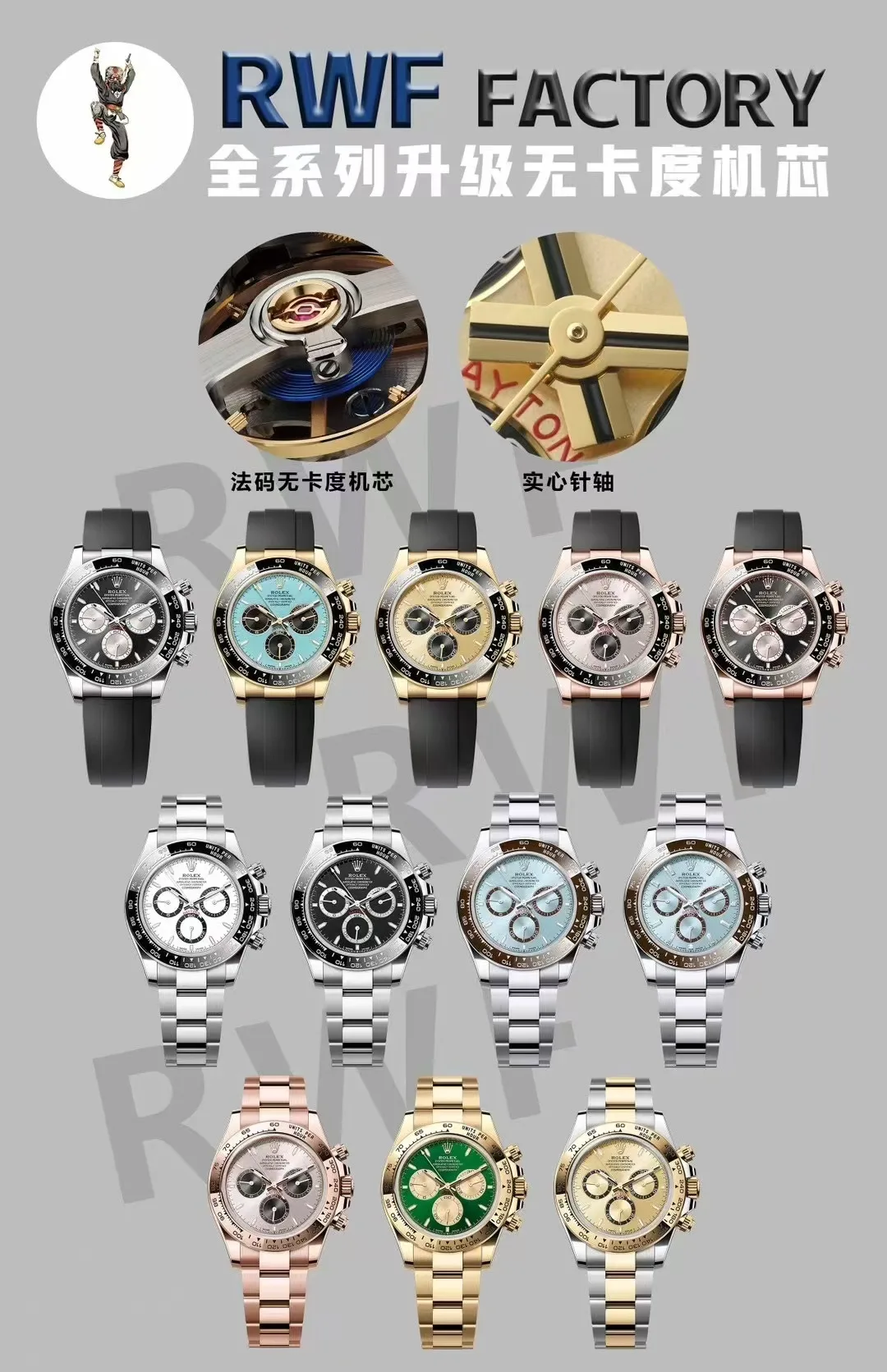
RWF stands for RW Factory. It’s a newer name, and the community’s first question was whether it existed at all. Reportedly it’s a rename by an established factory owner, though nobody seems keen to say which one, so treat that as rumour. Every watch in its range is said to use a free-sprung movement, and this Panda is the headline model.
Why this watch matters
The genuine 126500LN is the current steel Daytona: 40 mm, black ceramic bezel and, in Panda form, a white dial with black sub-dial rings. Inside is the 4131 calibre, with roughly 72 hours of reserve and a free-sprung balance. On paper the update from the previous generation was subtle: slimmer bezel numerals, thinner sub-dial rings and new finishing on the movement. In practice it gave every factory a new set of details to miss.
That makes the Panda a strict test. The white has to be the right white, the bezel has to be properly engraved and the tiny markers between the sub-dials have to be there. Owners will check all of it.
The dial: the warmth question
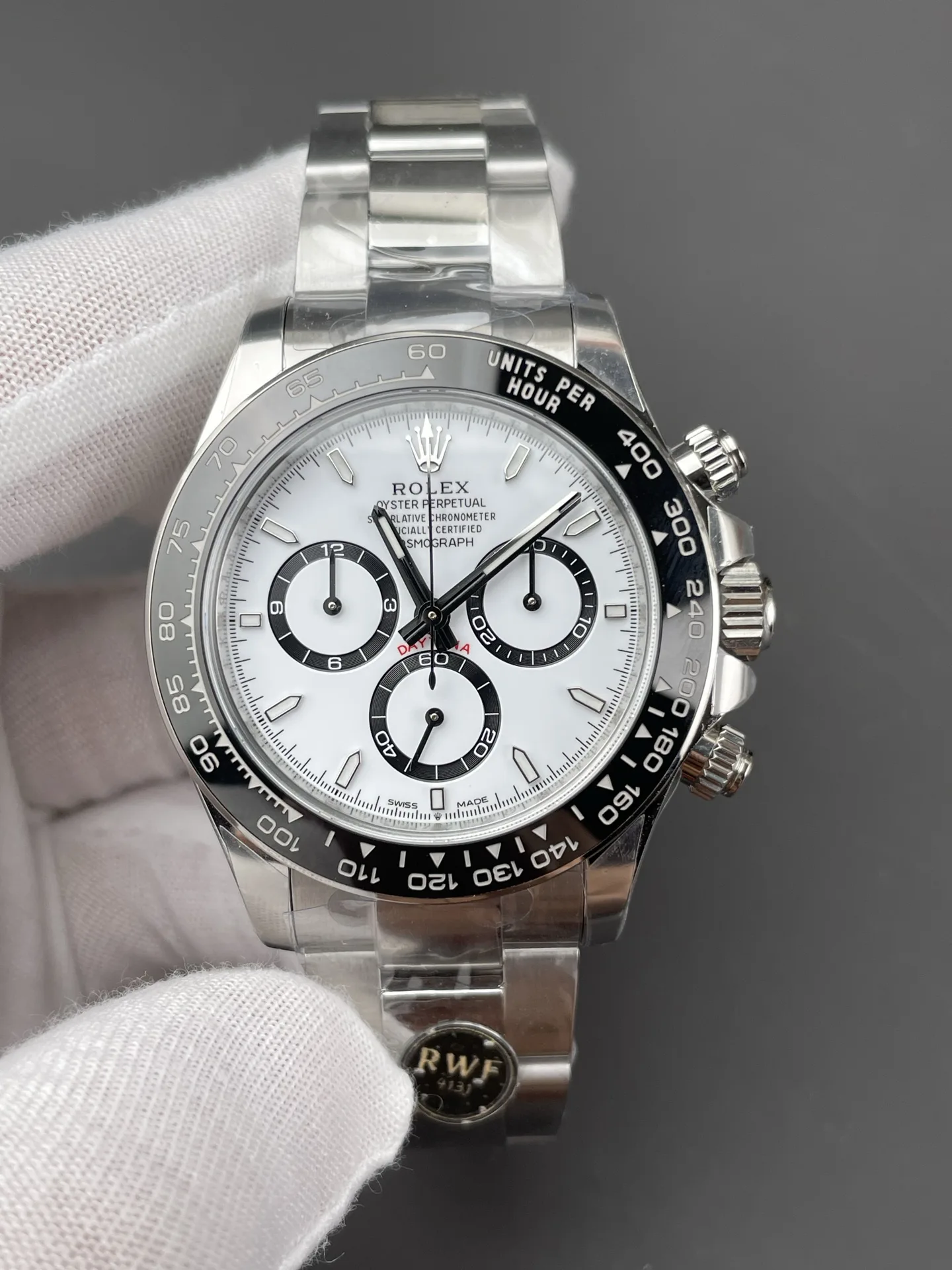
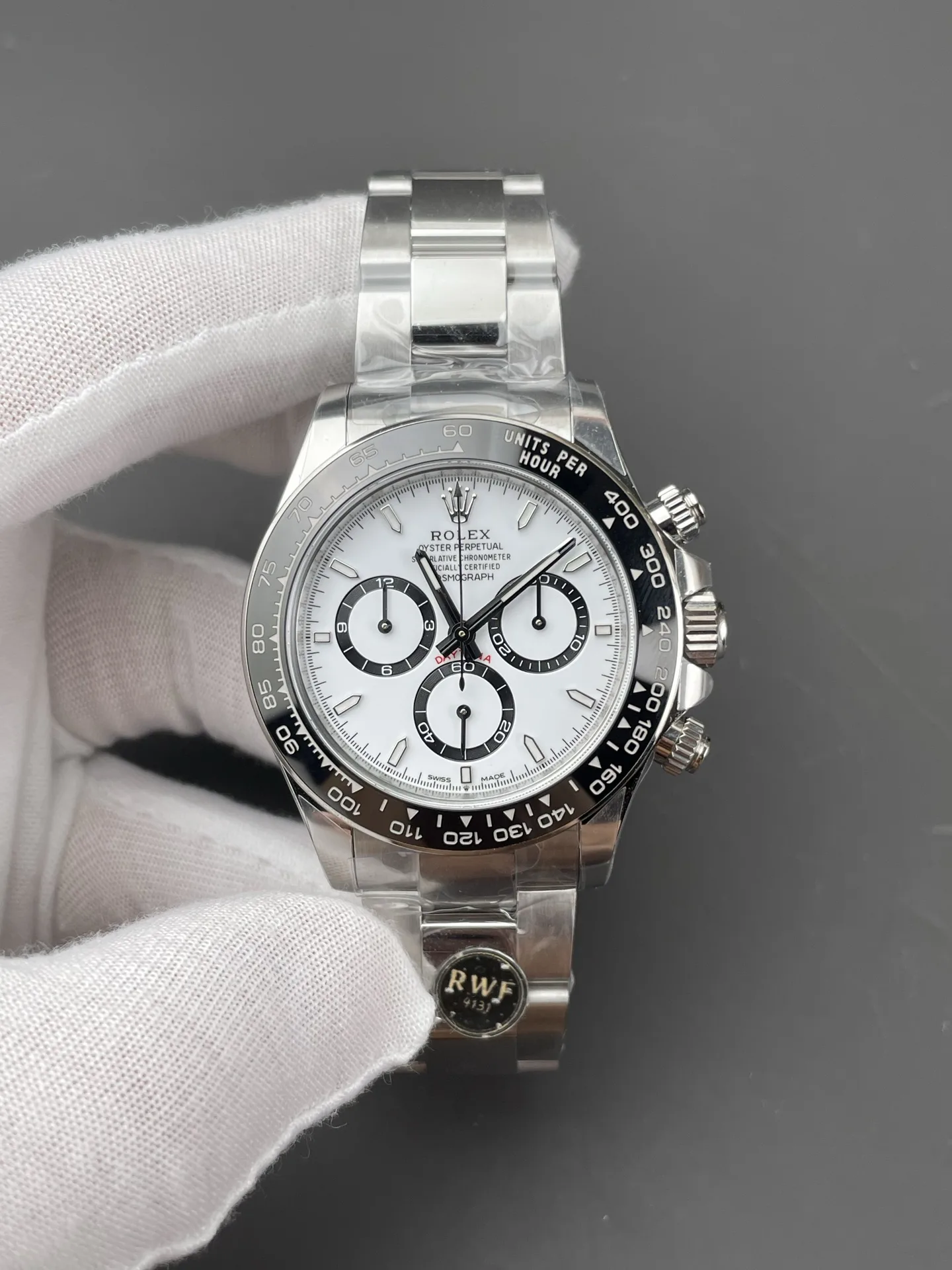
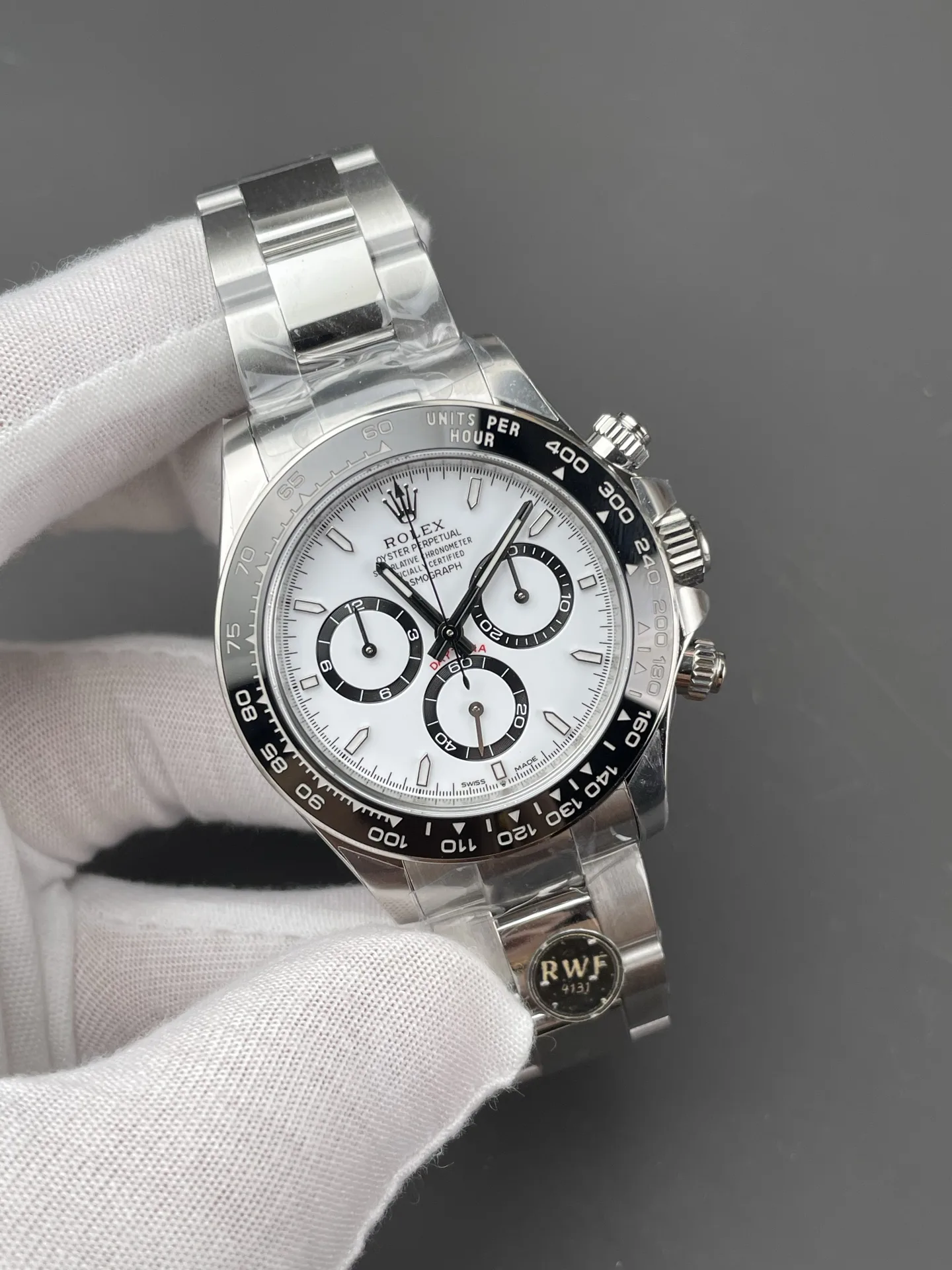
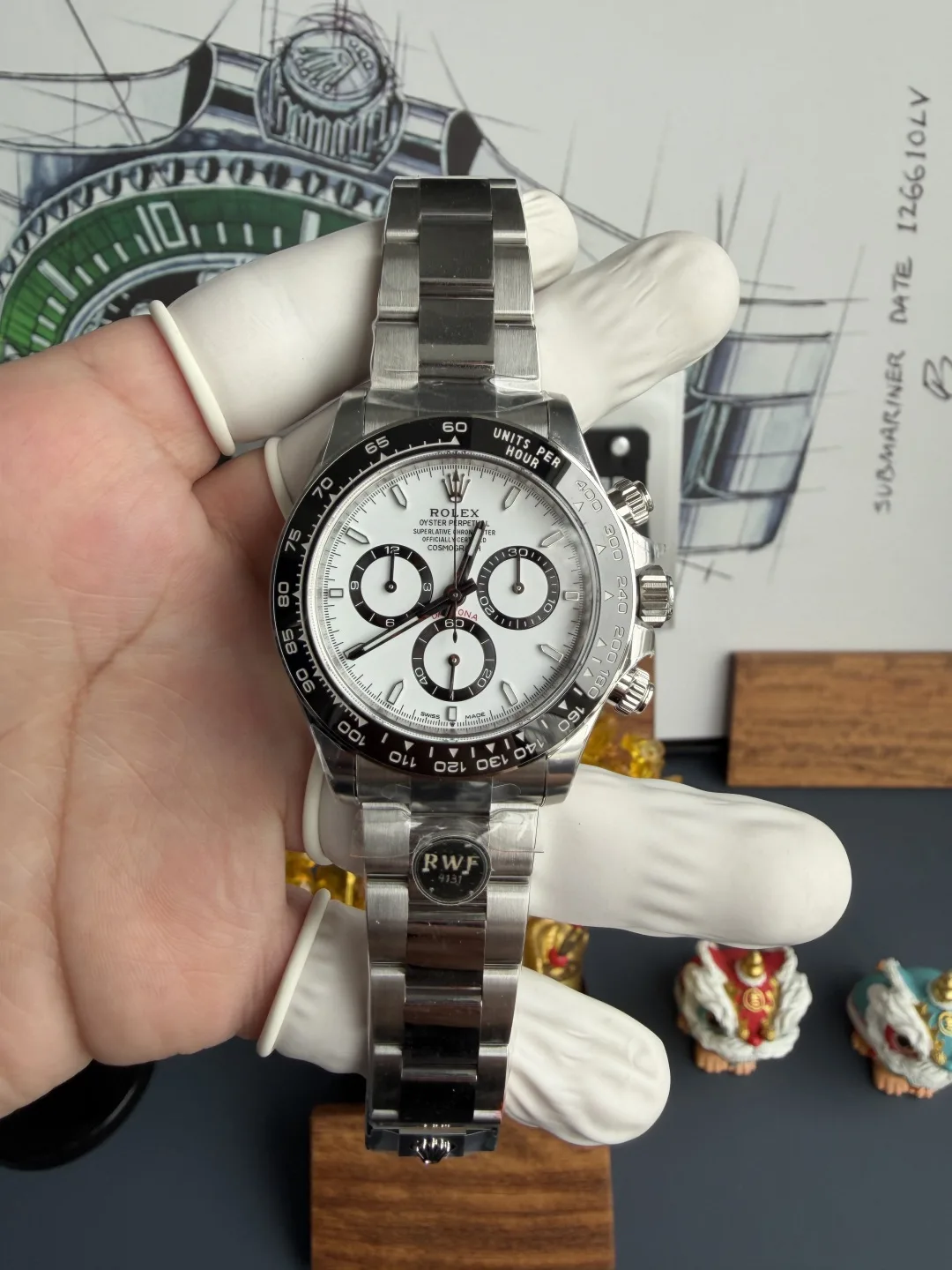
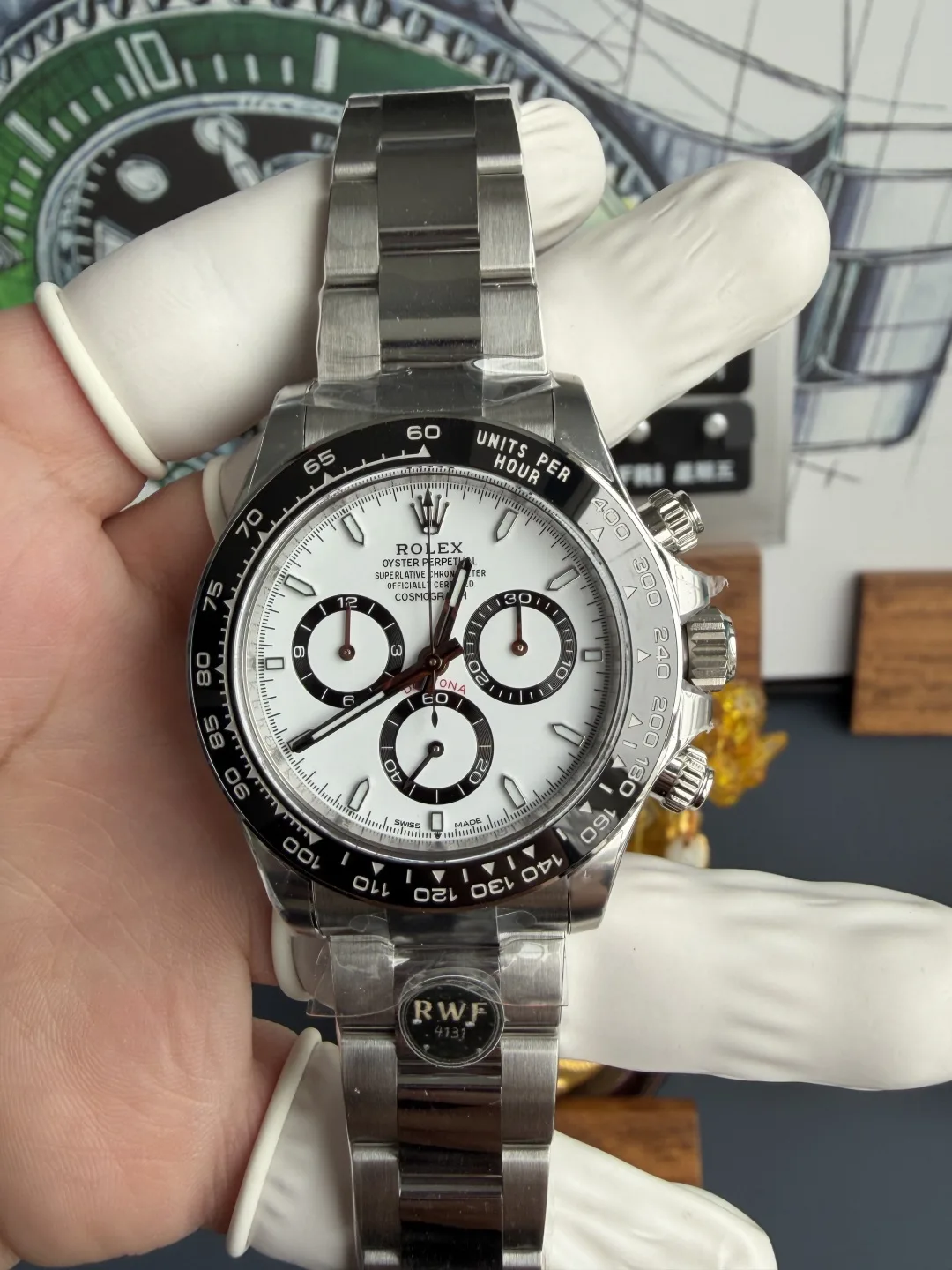
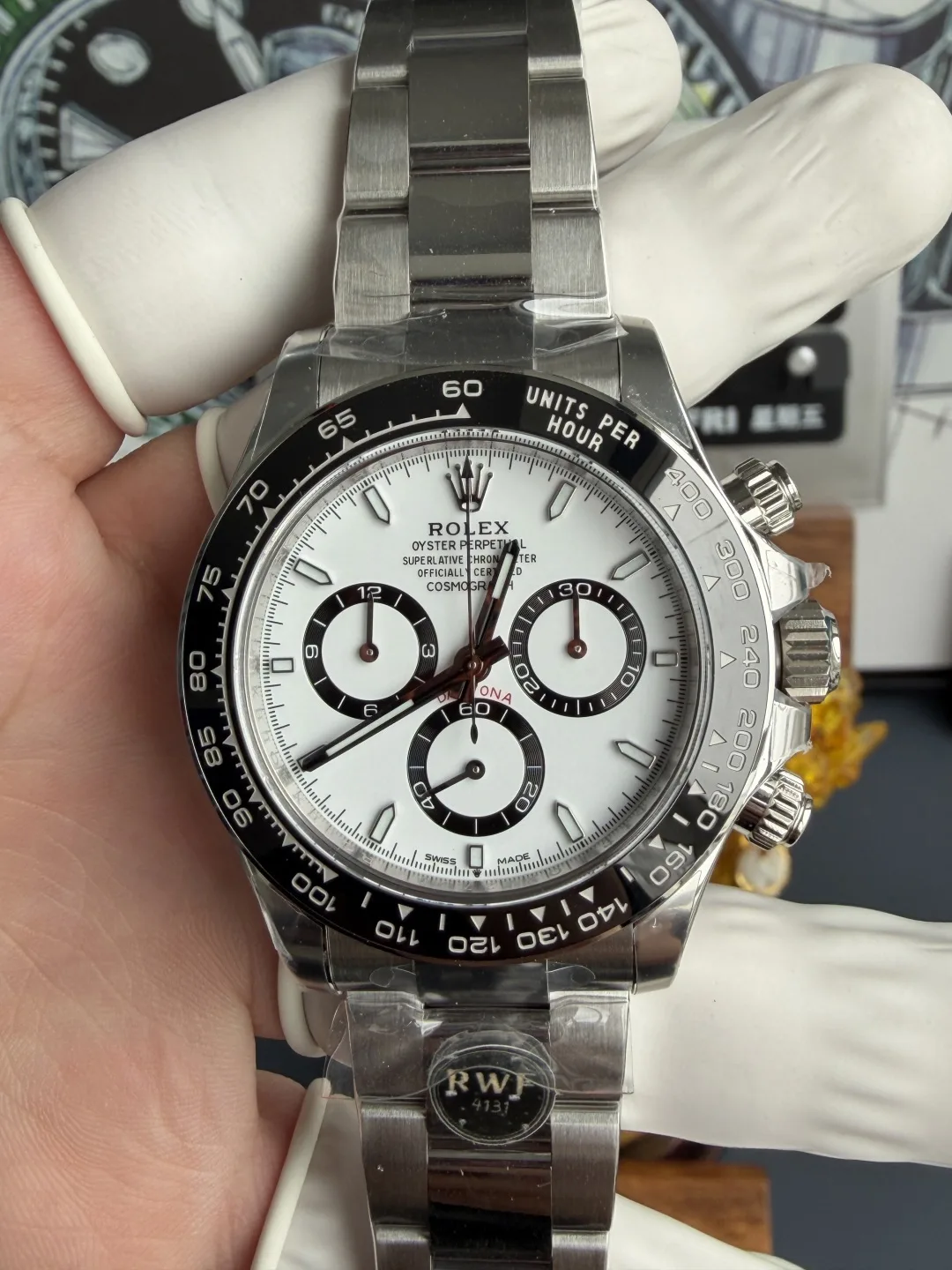
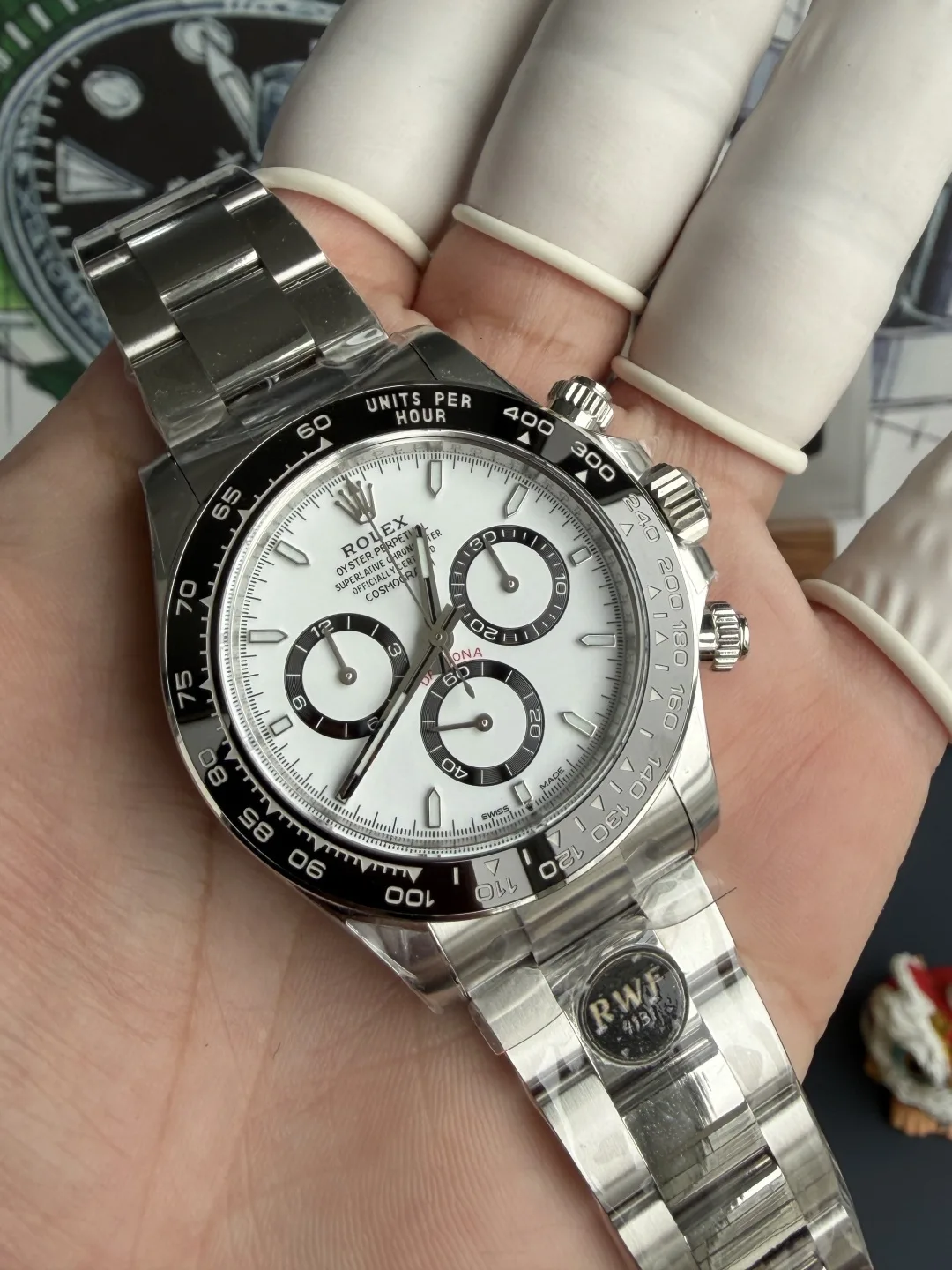
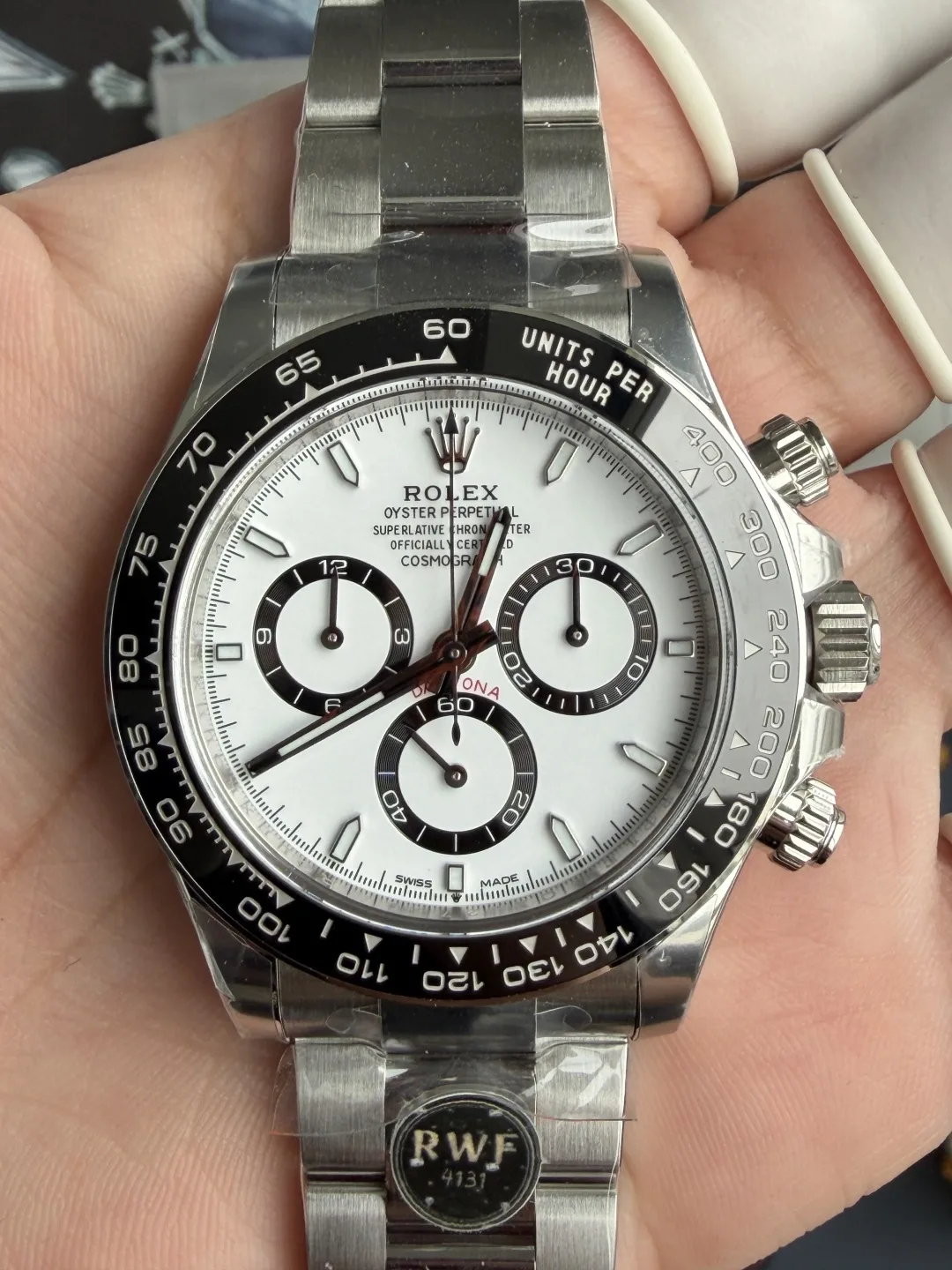
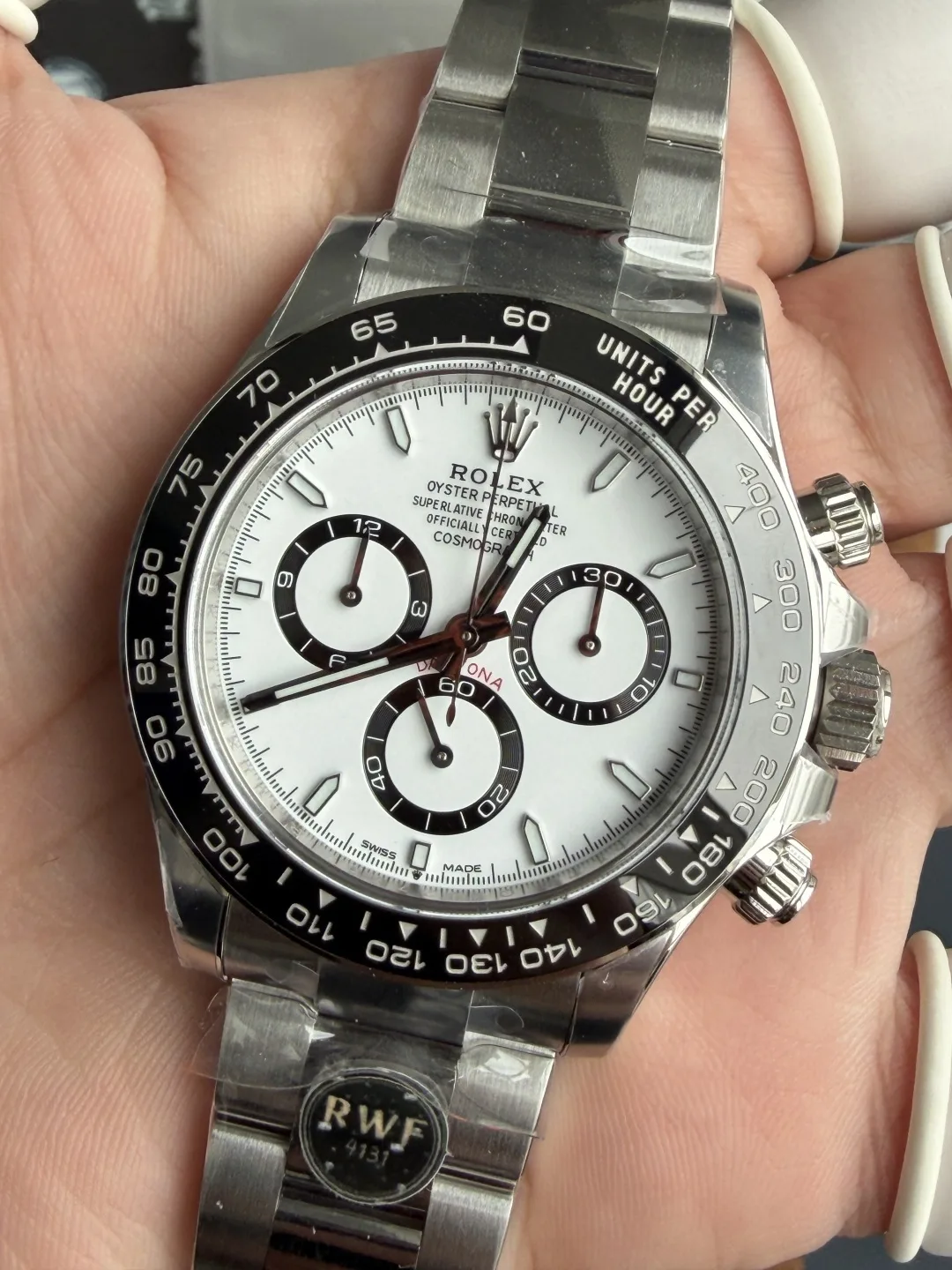
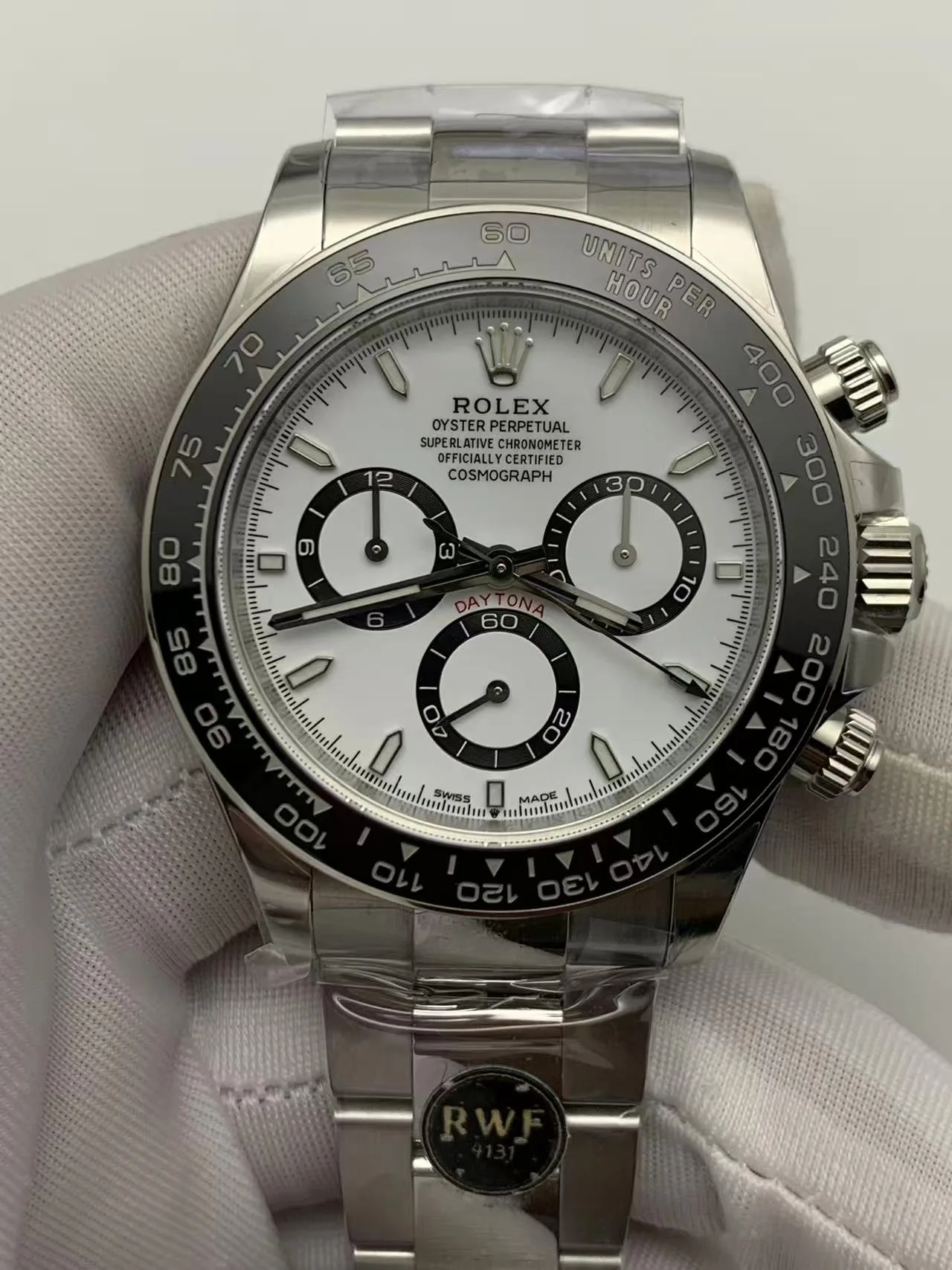
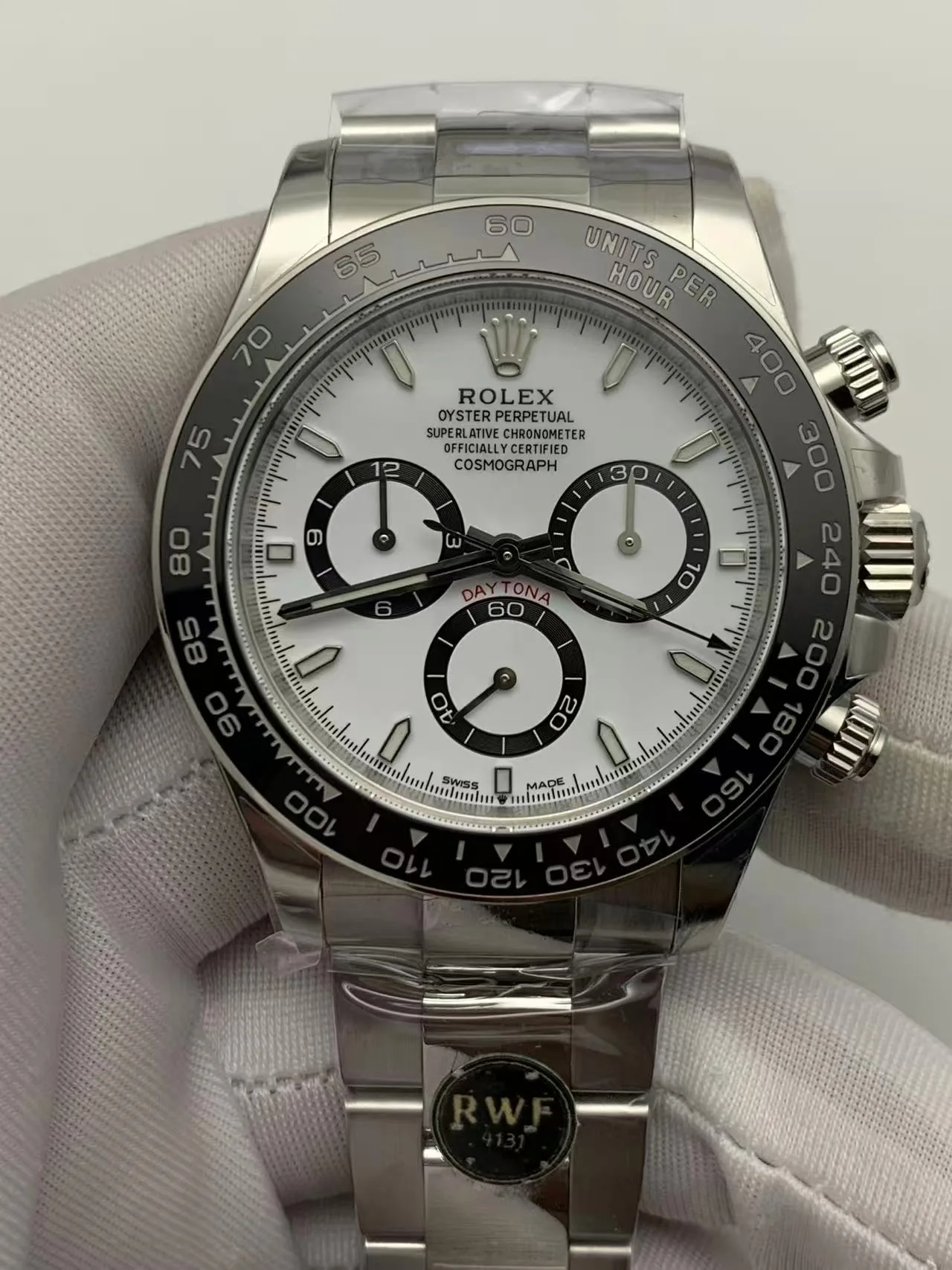
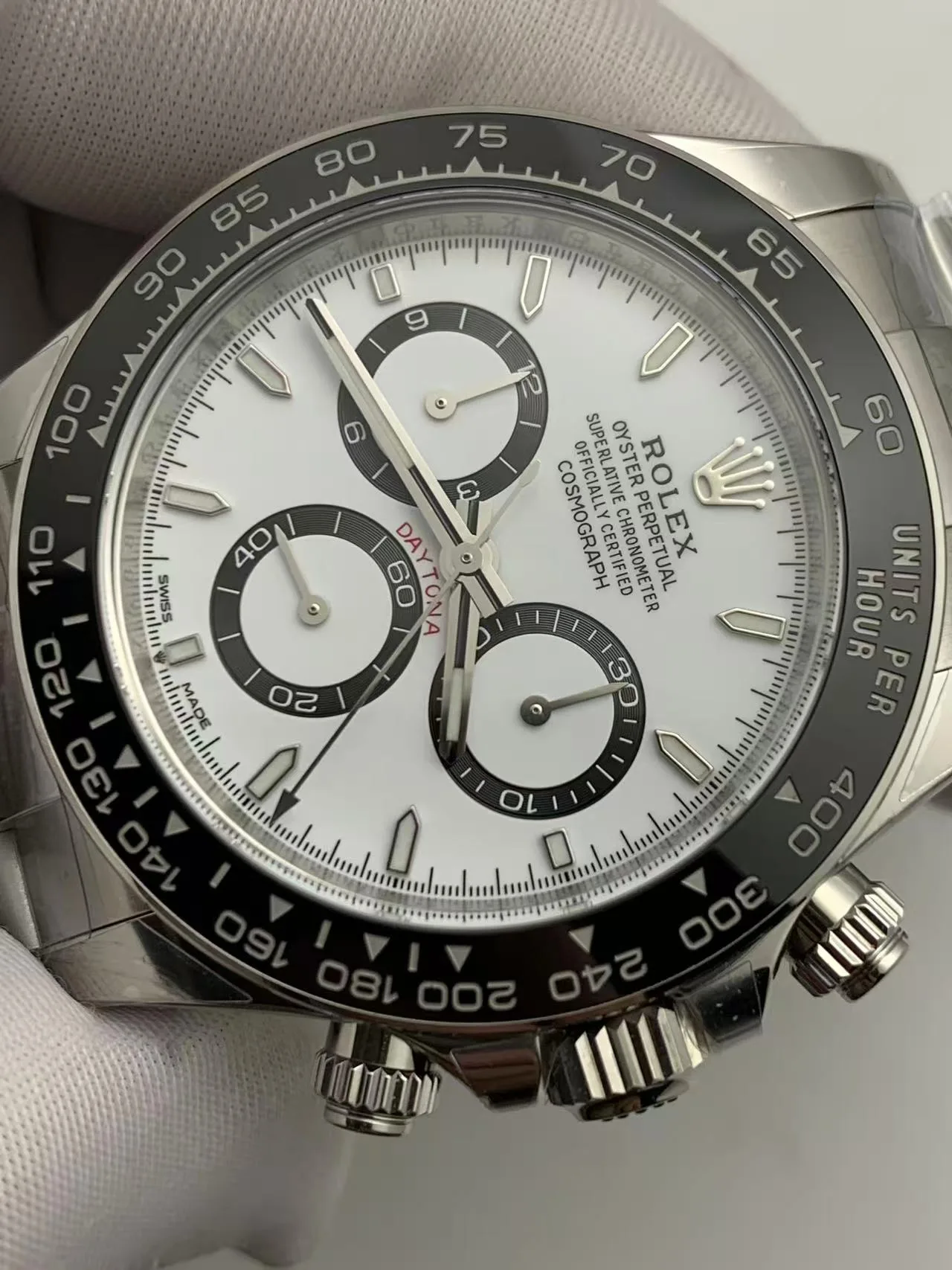
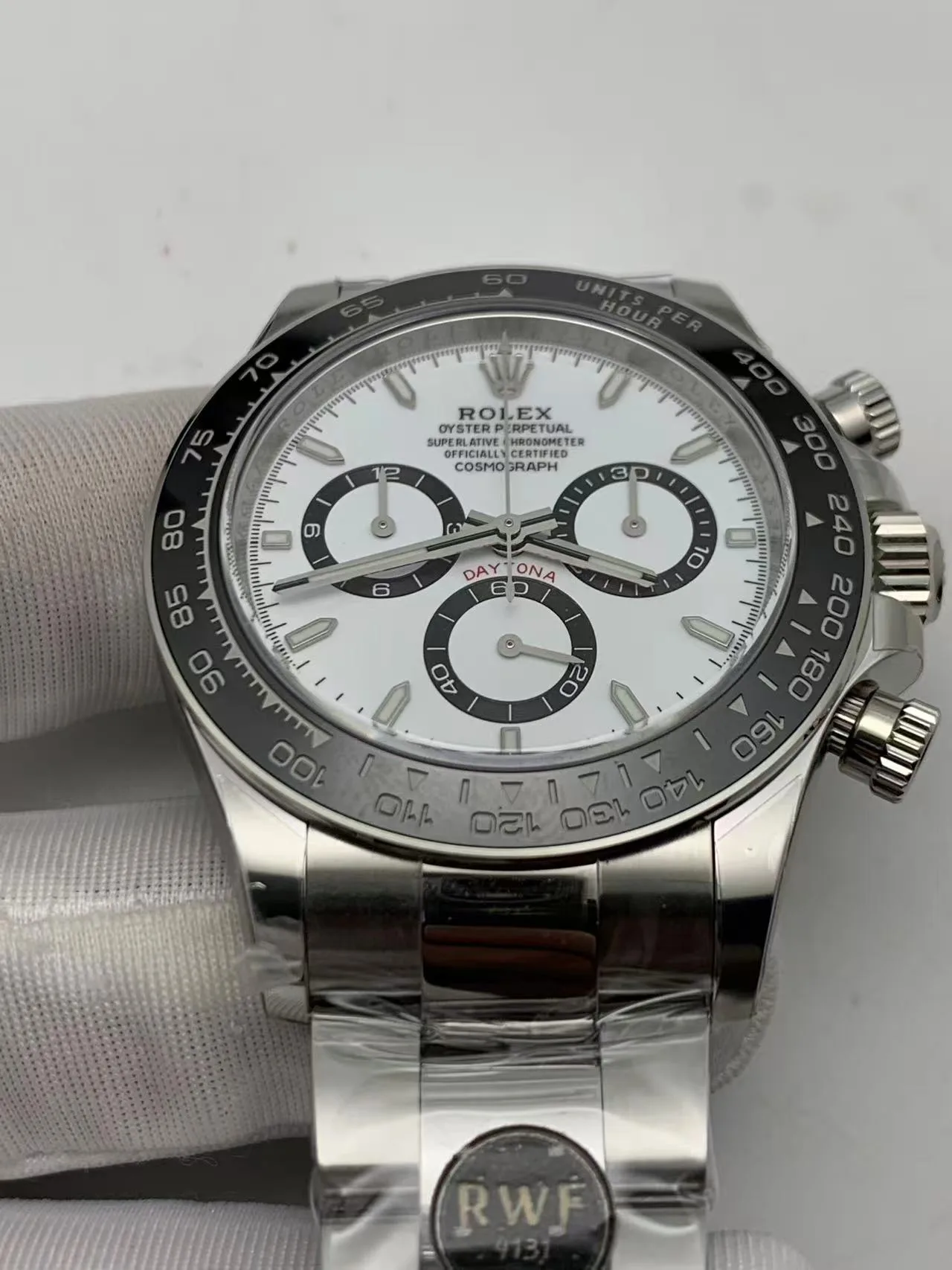
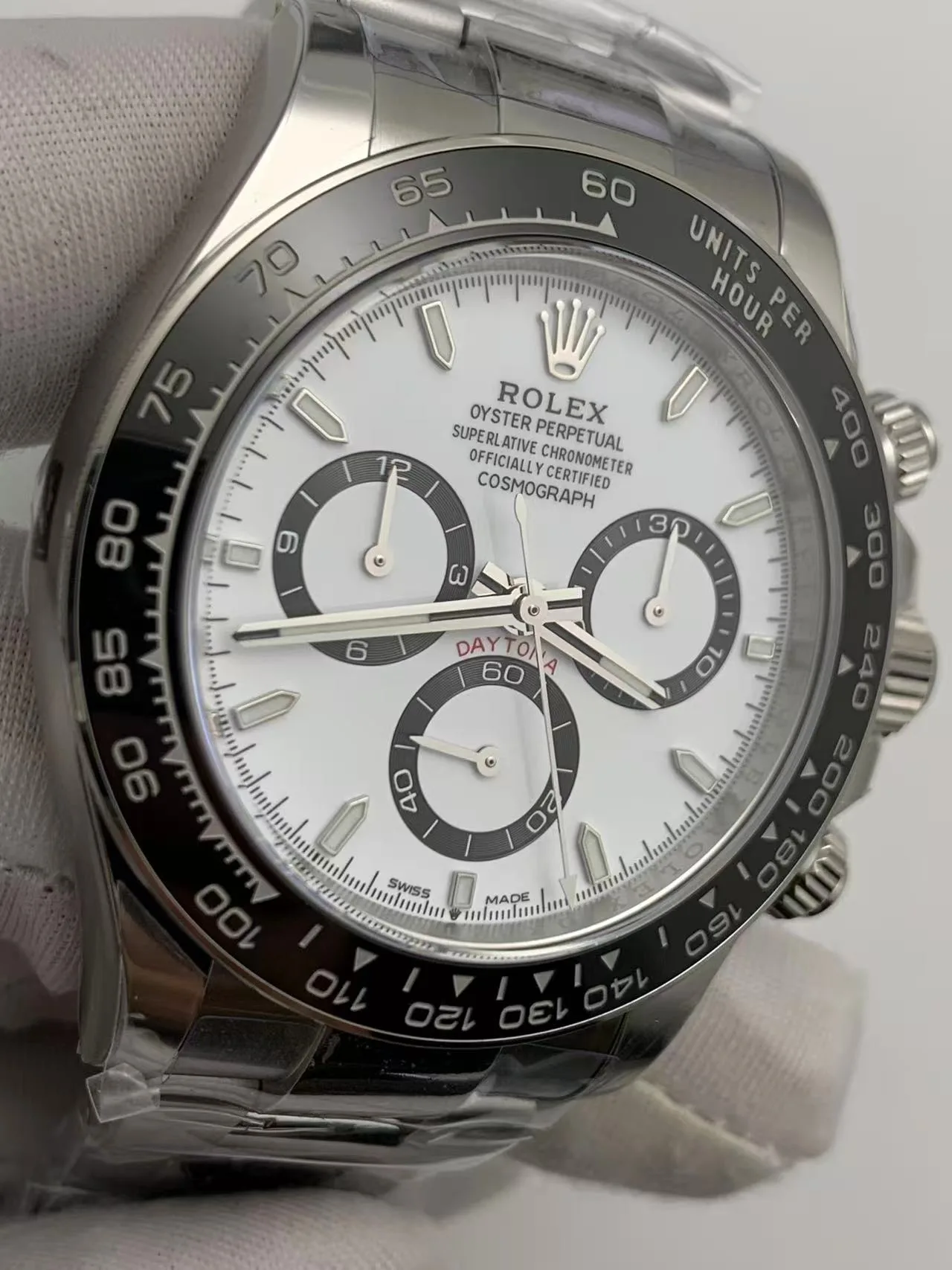
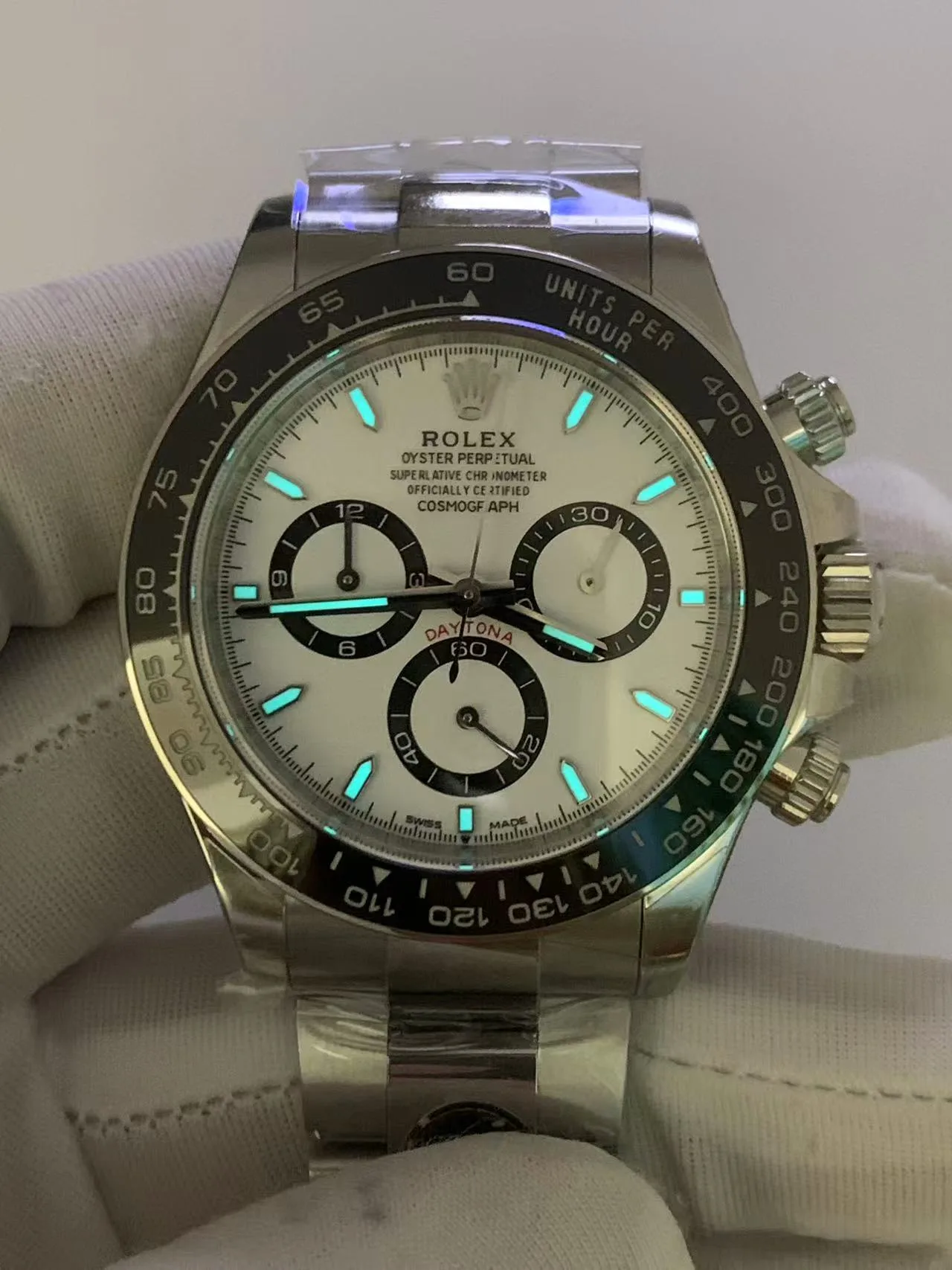
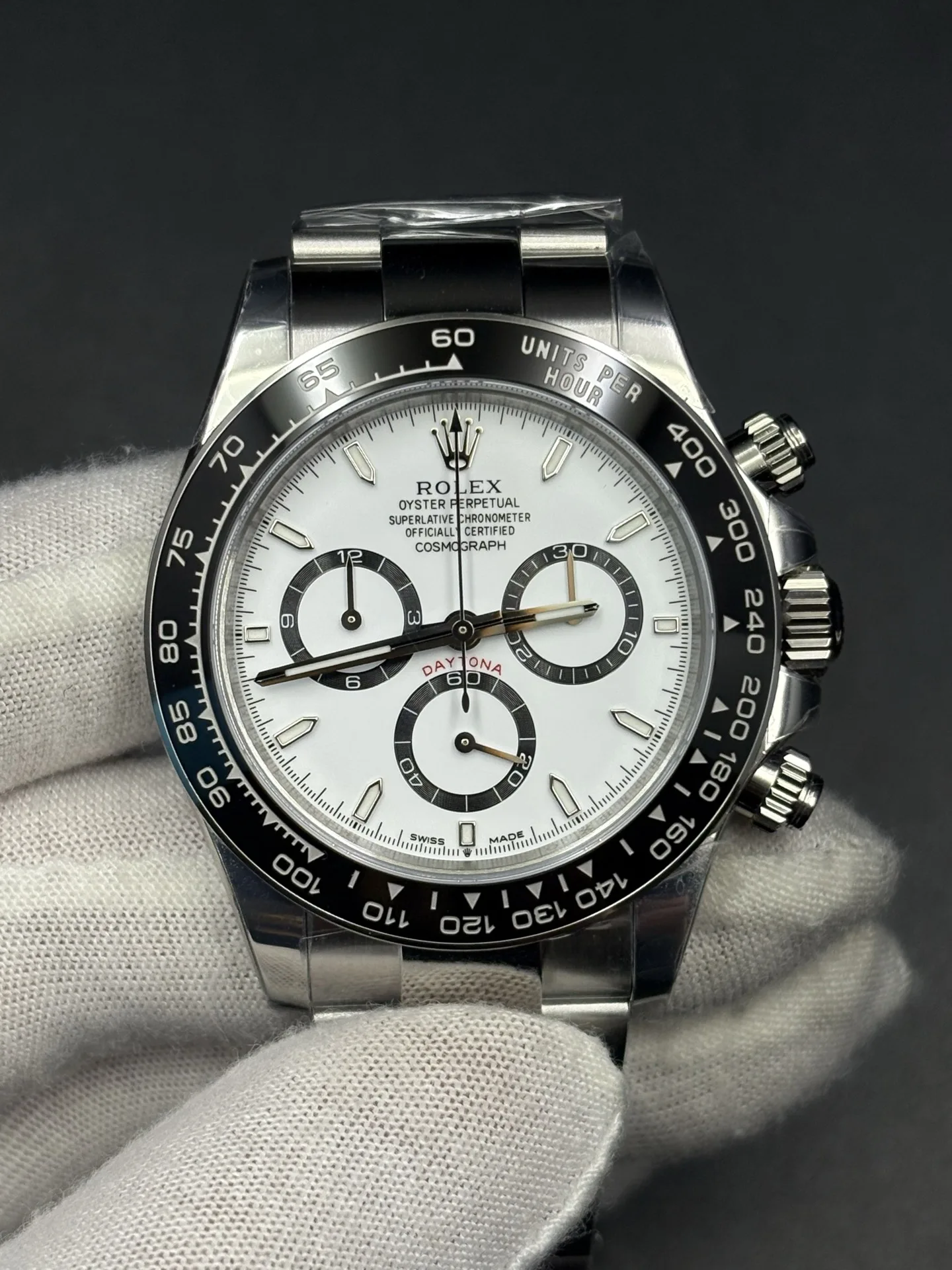
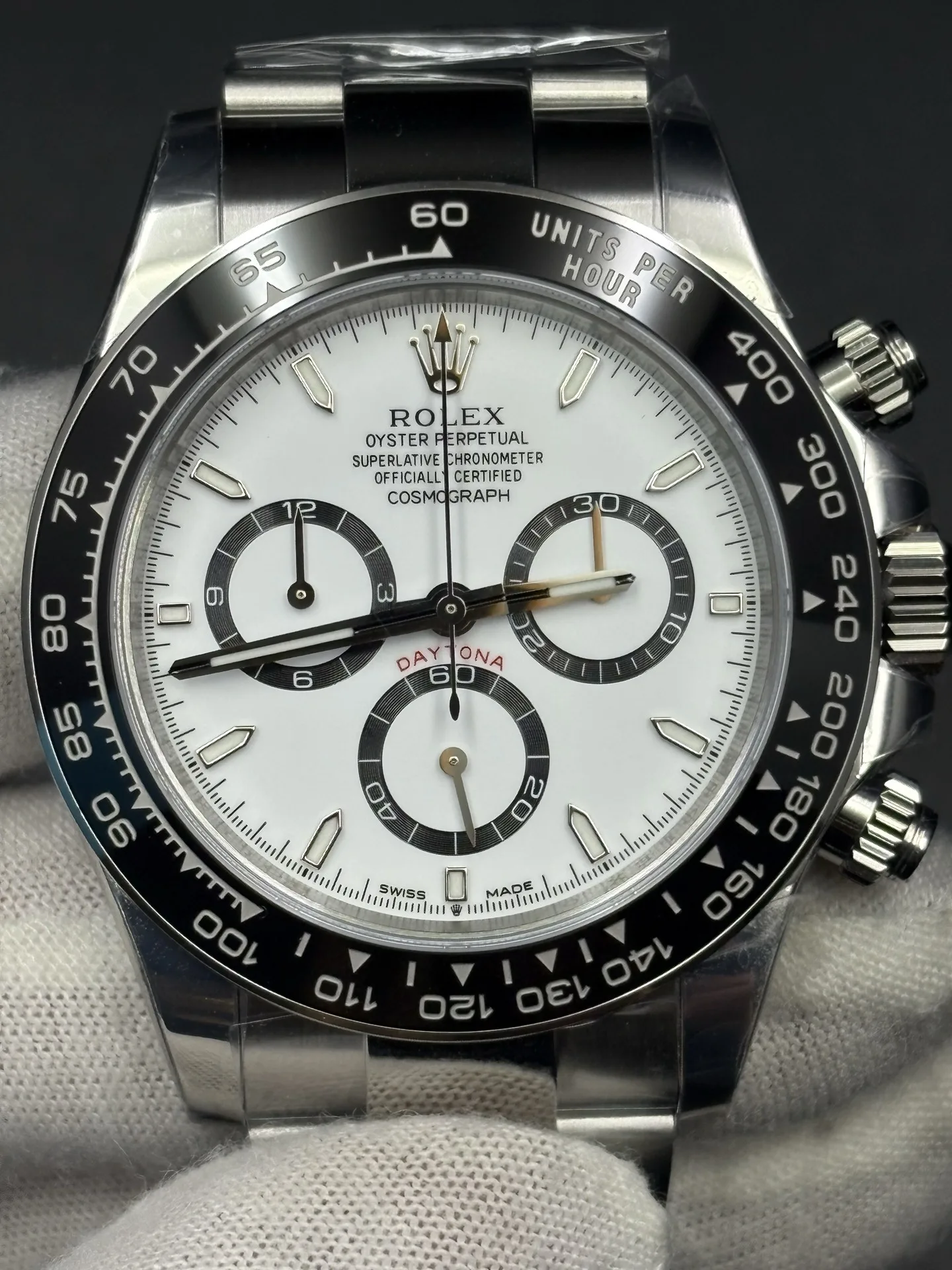
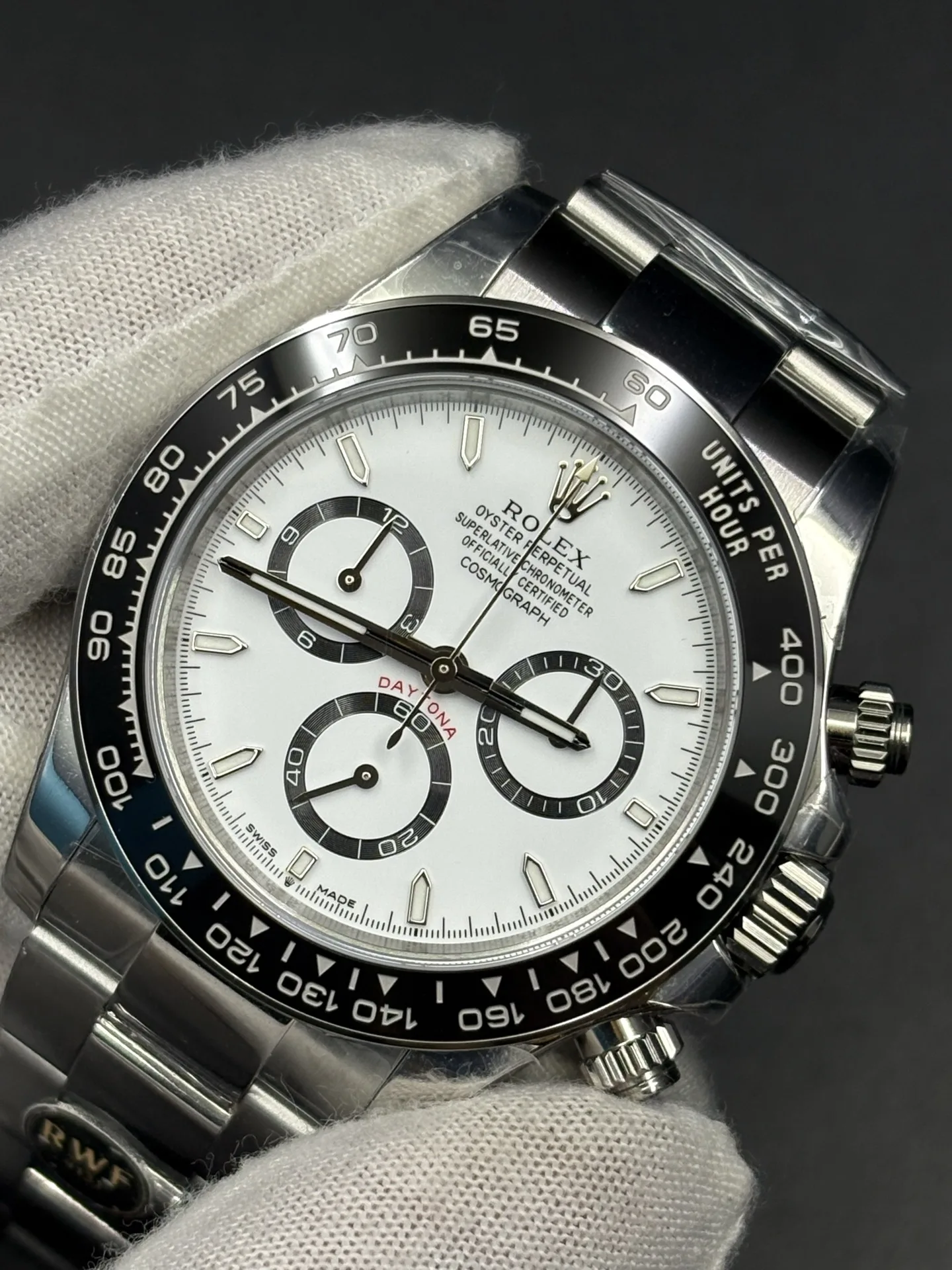
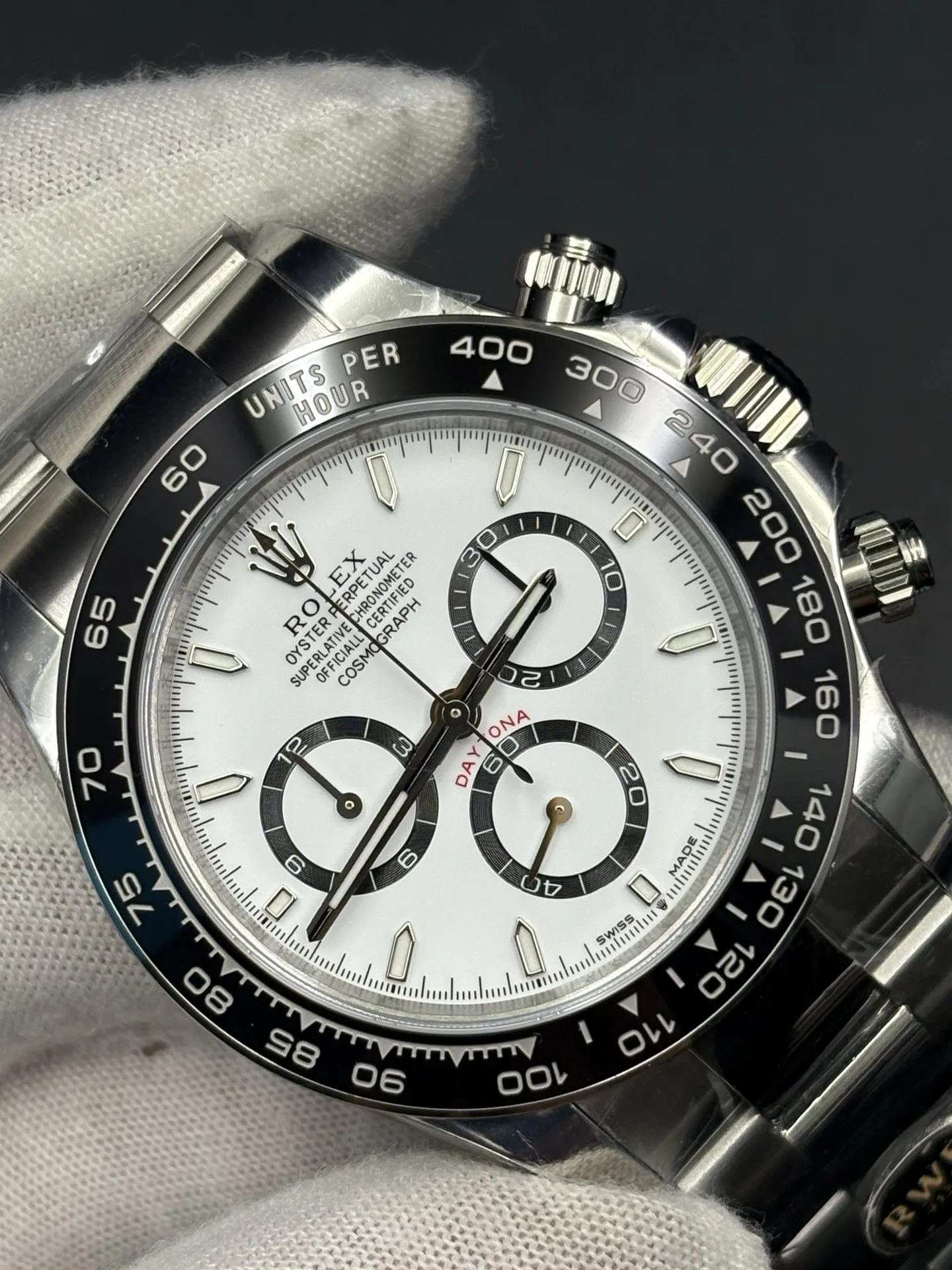
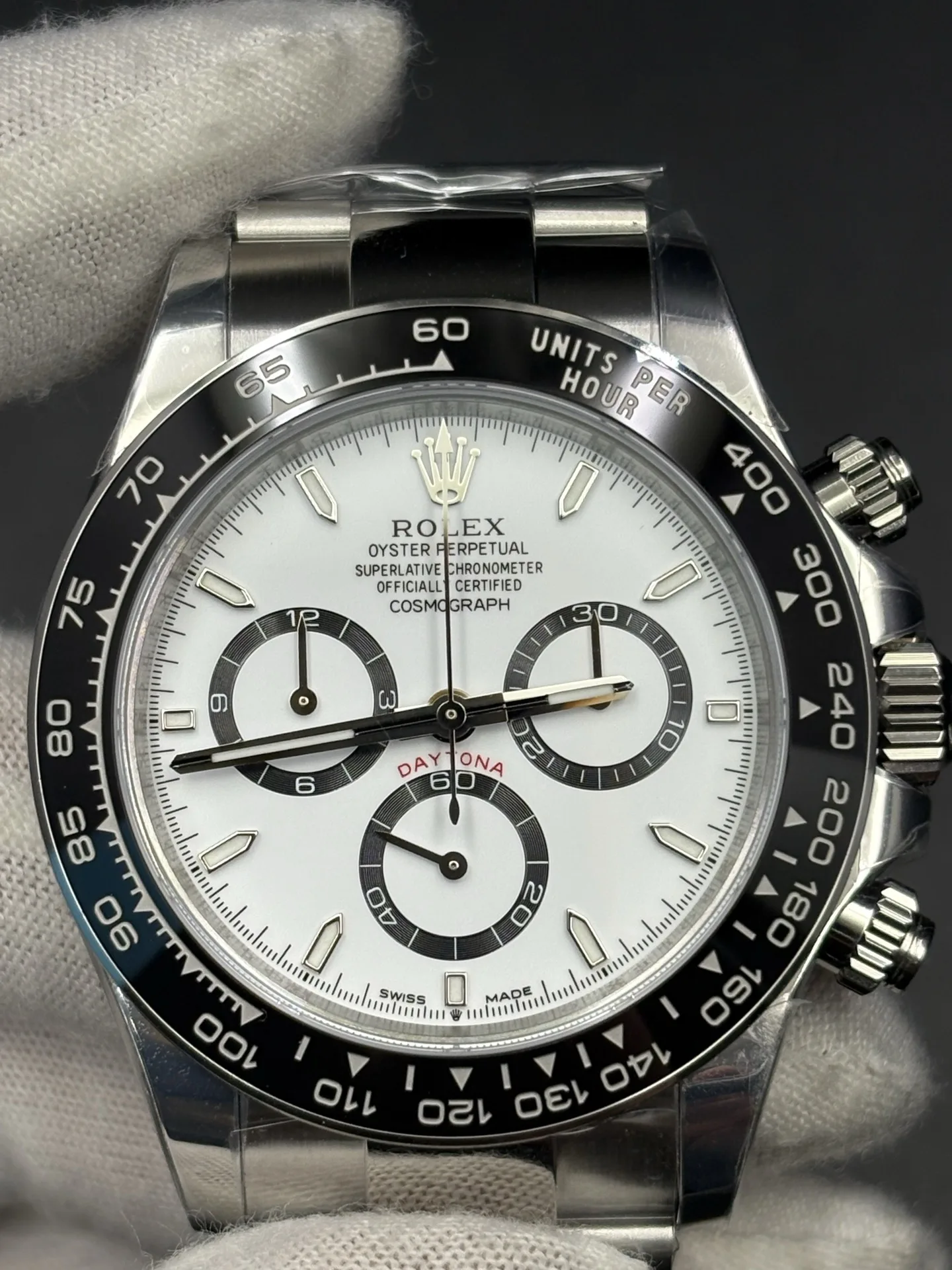
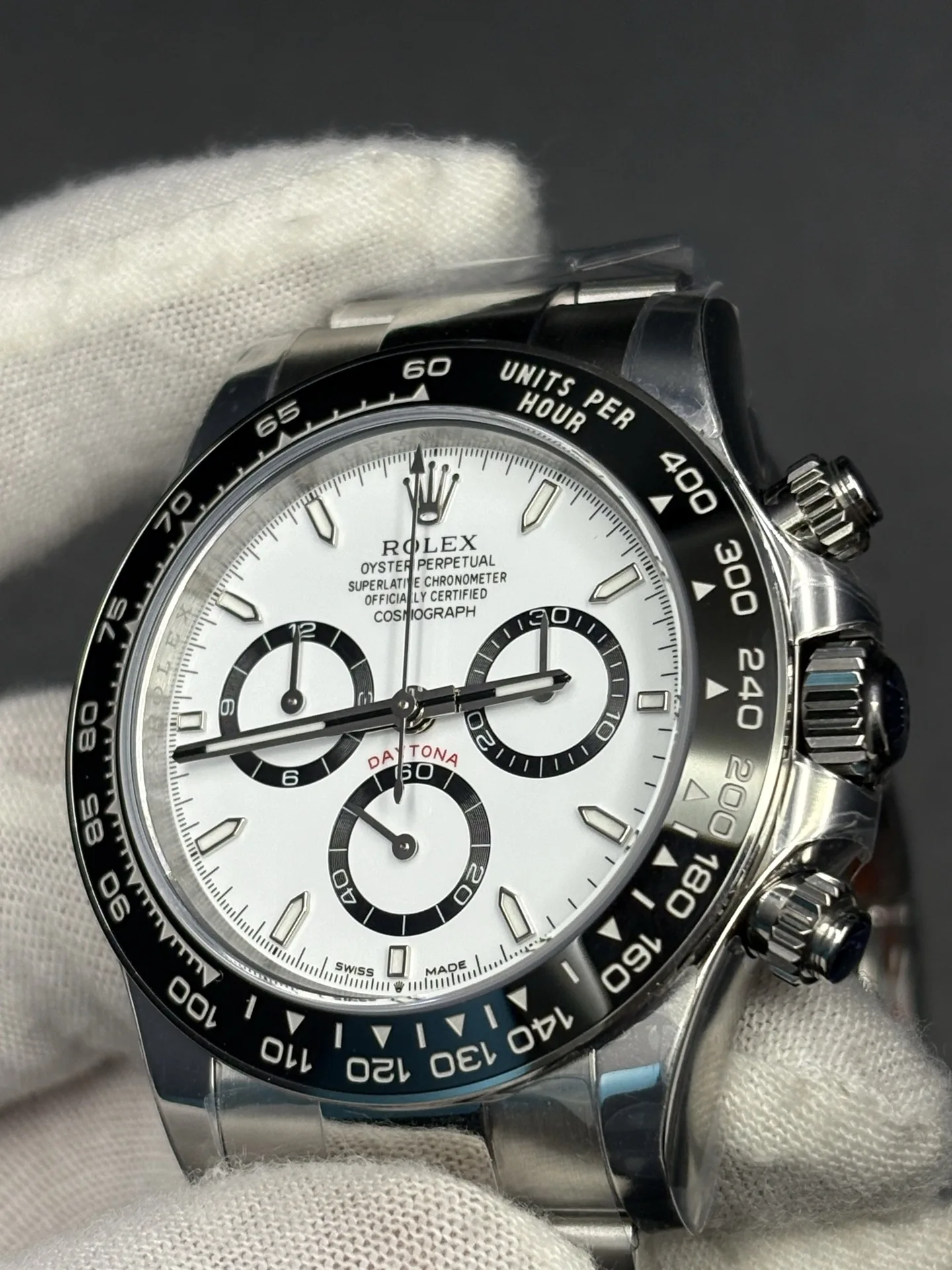
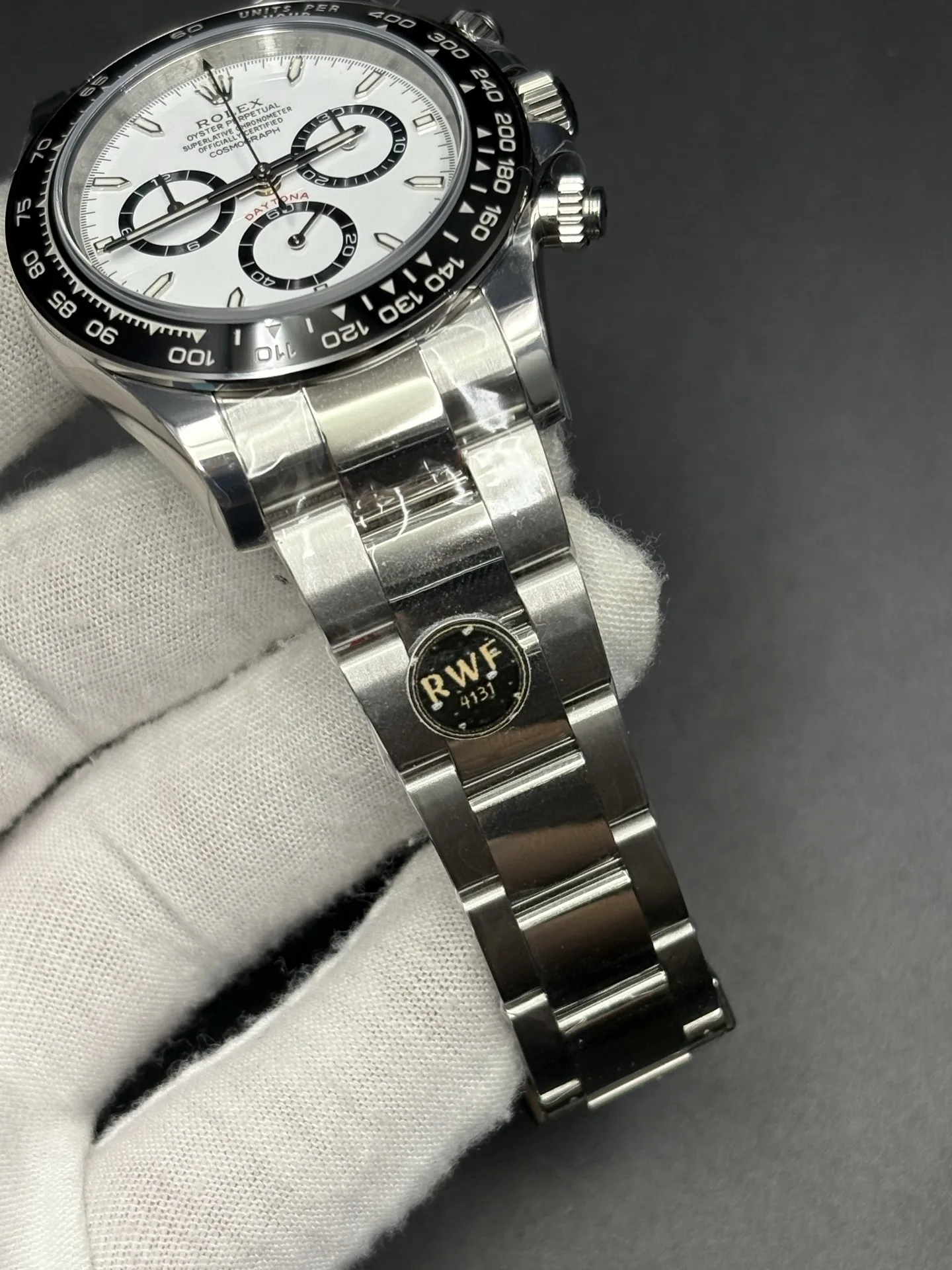
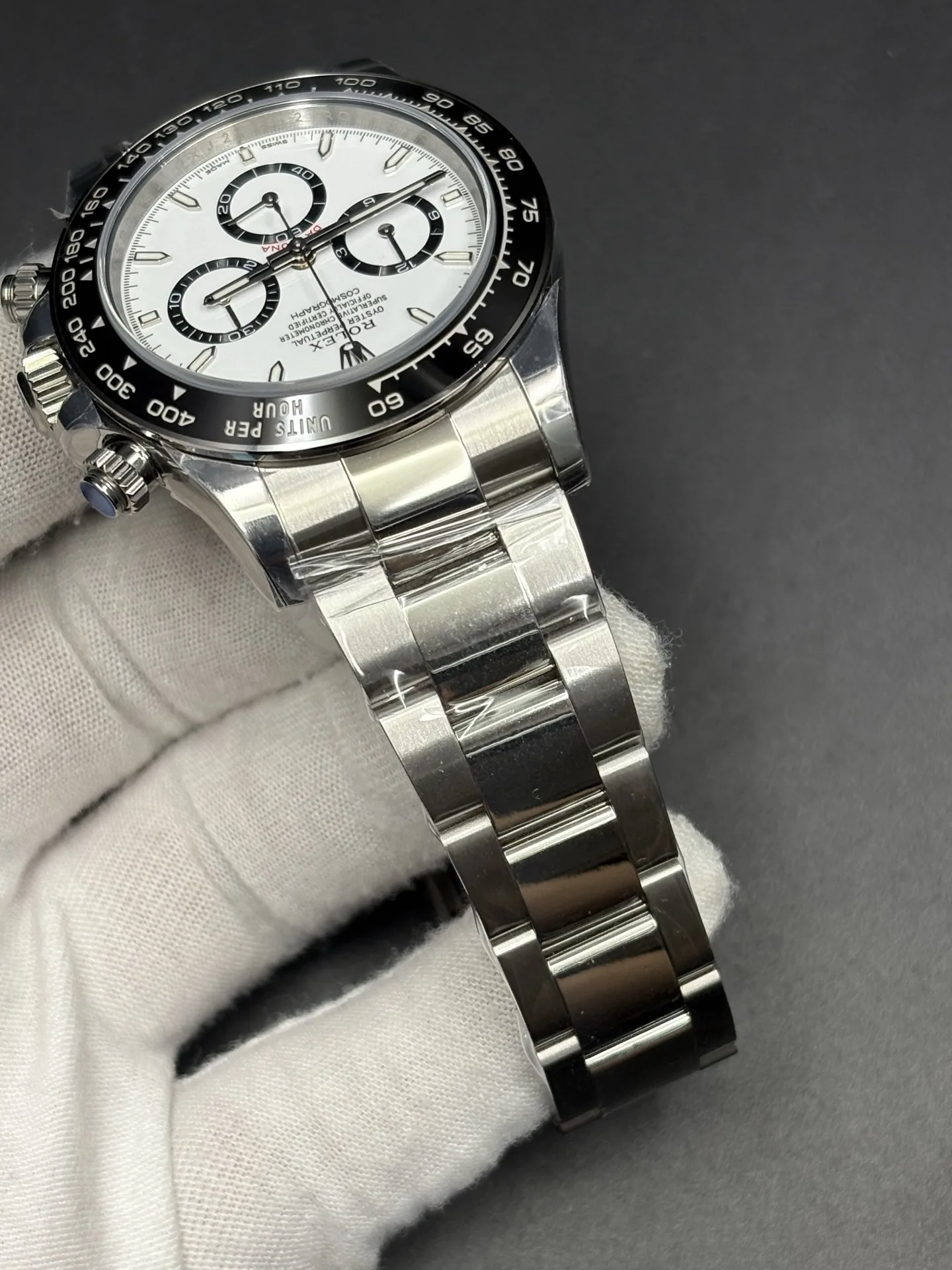
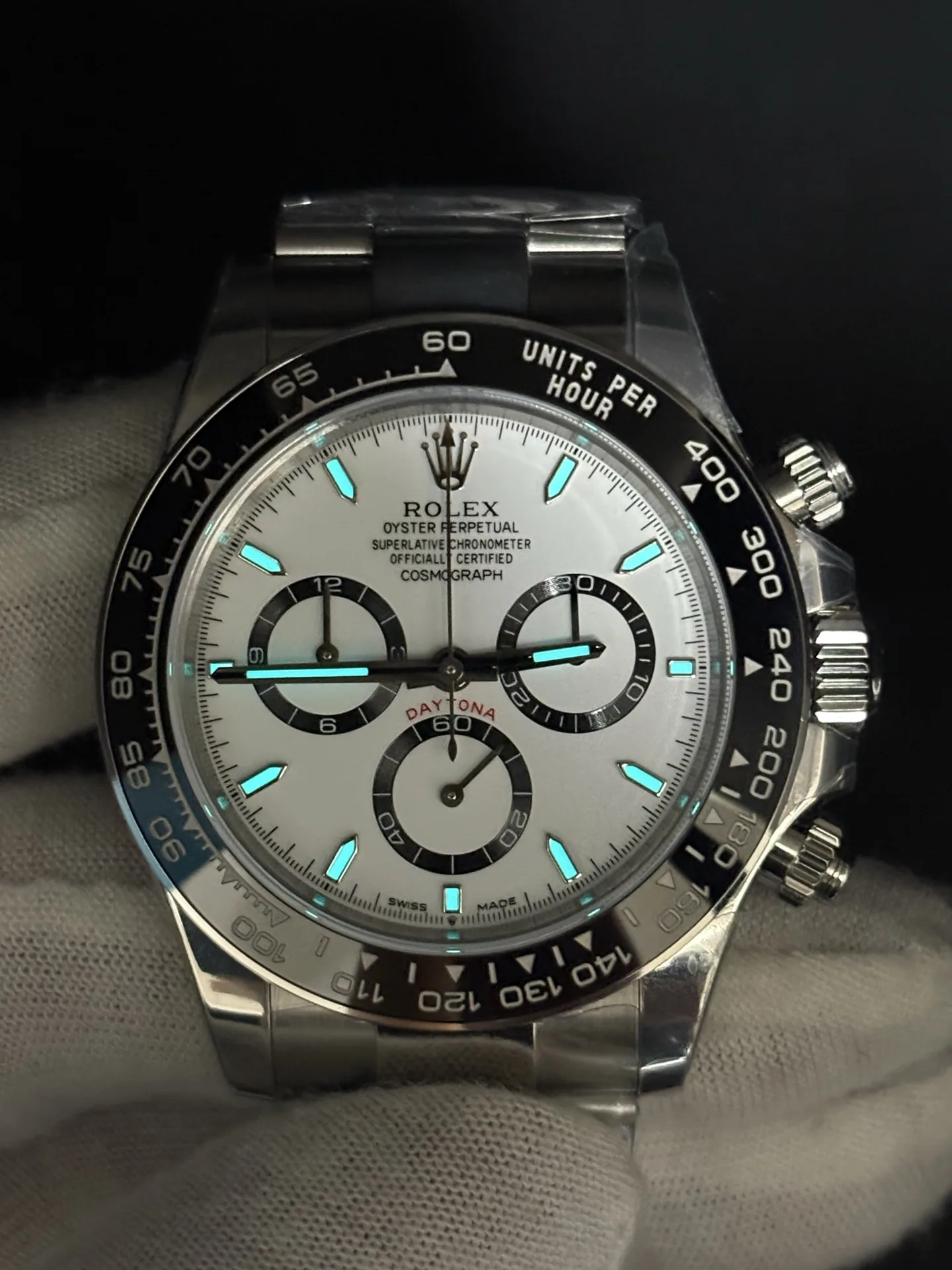
The most persuasive argument for RWF is dial tone. The genuine white has a slight warmth, nearer ivory than paper. A detailed side-by-side review argues that some competing dials have drifted towards a cold, flat white, while RWF’s looks noticeably warmer and closer to the genuine one. Another owner says the same. Photos can’t fully settle this, since lighting and white balance change everything, but the consensus leans RWF’s way.
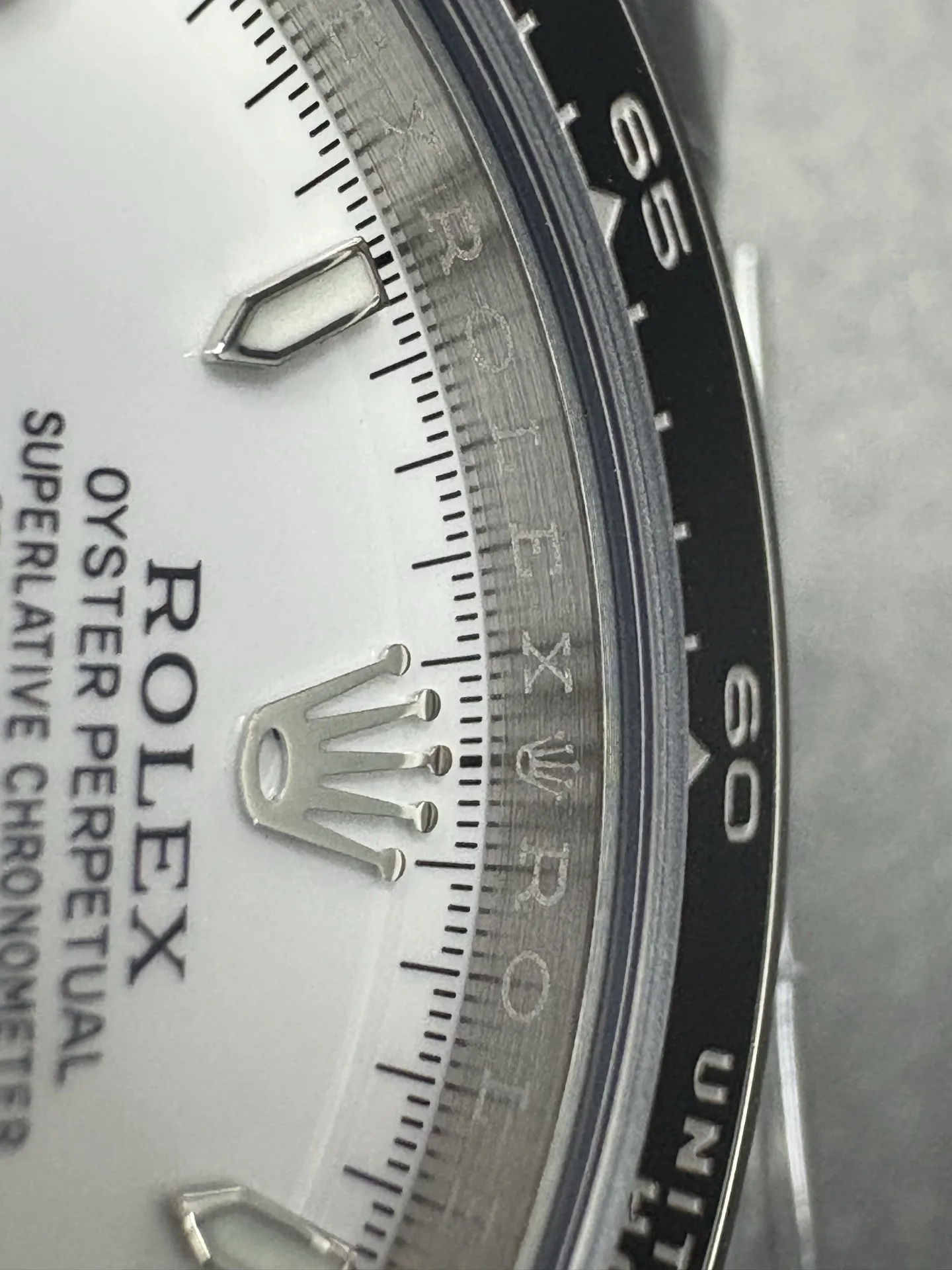
Print quality gets good marks overall. The smaller text, including the model line, runs slightly thin, which the reviewer puts down partly to batch variation on genuine watches too. The applied crown logo on the dial, criticised in some early comments, is described as one of the best around.
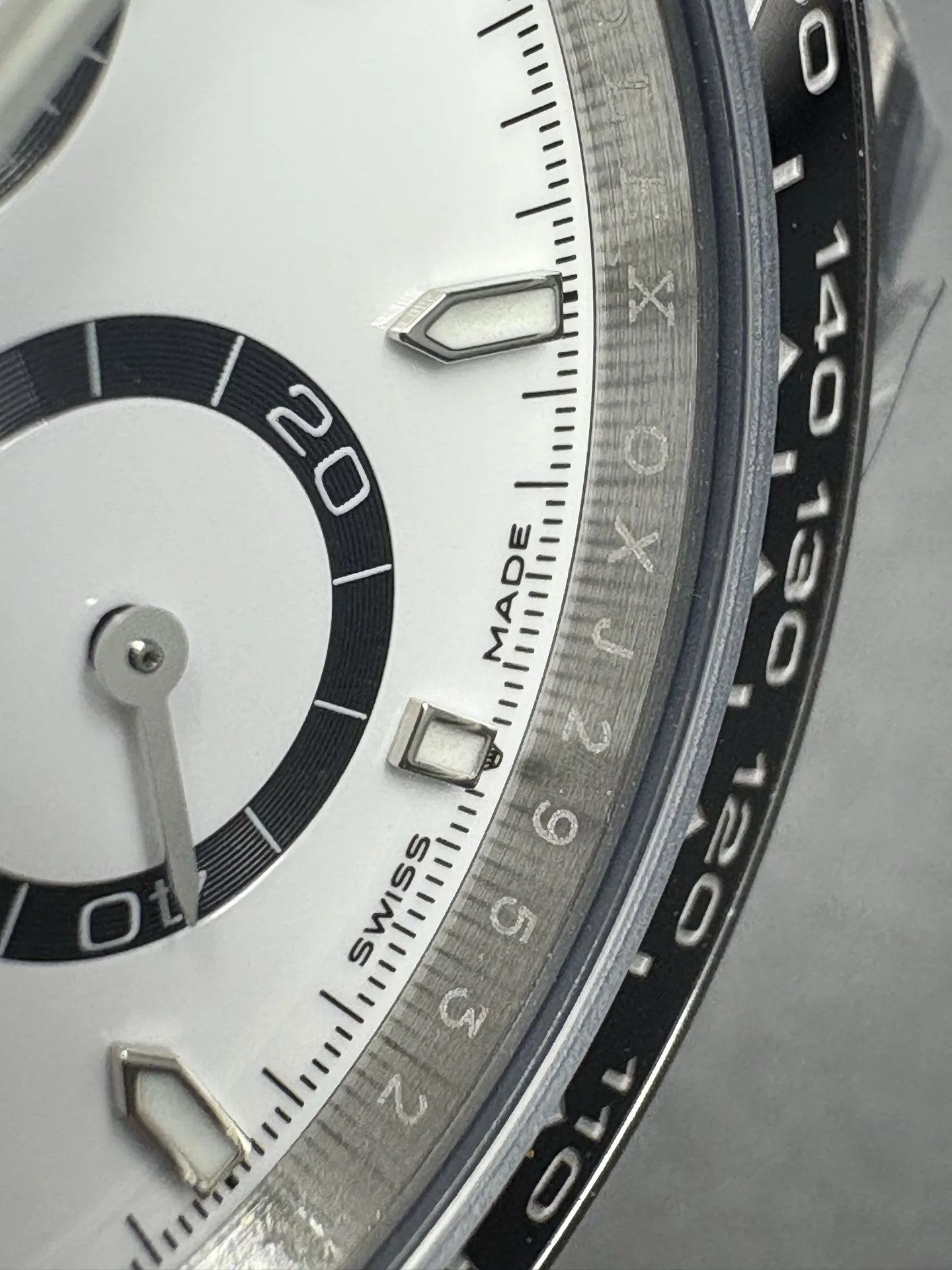
Then there’s 6 o’clock, where most of the arguments start. The small print at the bottom of the dial reportedly sits a little high. More seriously, commenters on that comparison spotted that some of the longer seconds markers under it appear to be missing, a fault several readers called a deal-breaker. One later comment suggests it’s been fixed on newer production. We can’t confirm that, so check your own watch’s photos rather than relying on it.
Index alignment comes up in owner quality checks too. One owner reported the markers at 6 and 9 leaning slightly. Others note that those markers are so small that minor slants rarely show on the wrist. Hand alignment and sub-dial resets are reported as within tolerance, with one hour sub-dial hand slightly off centre at reset.
The bezel: possibly the best part
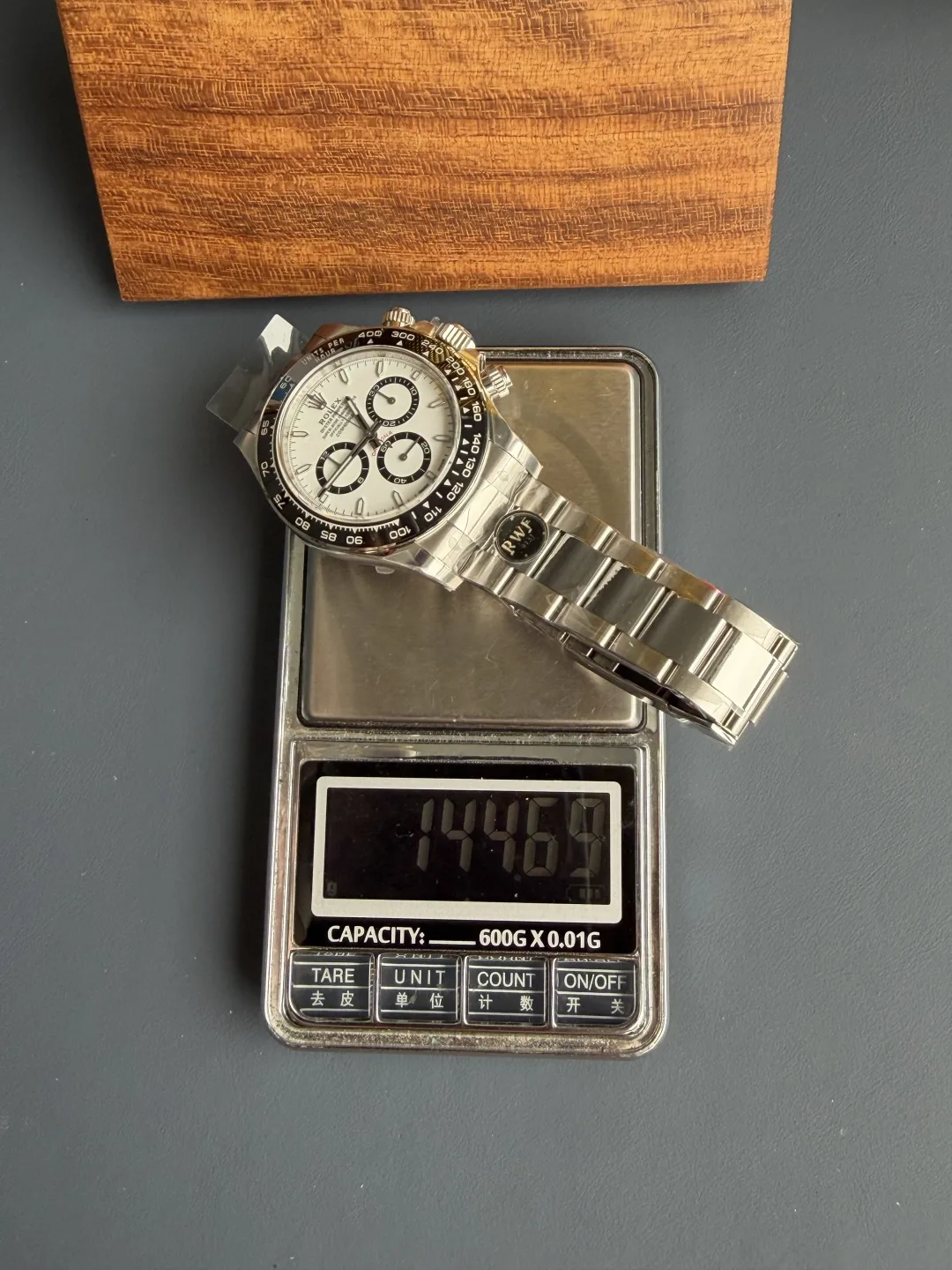
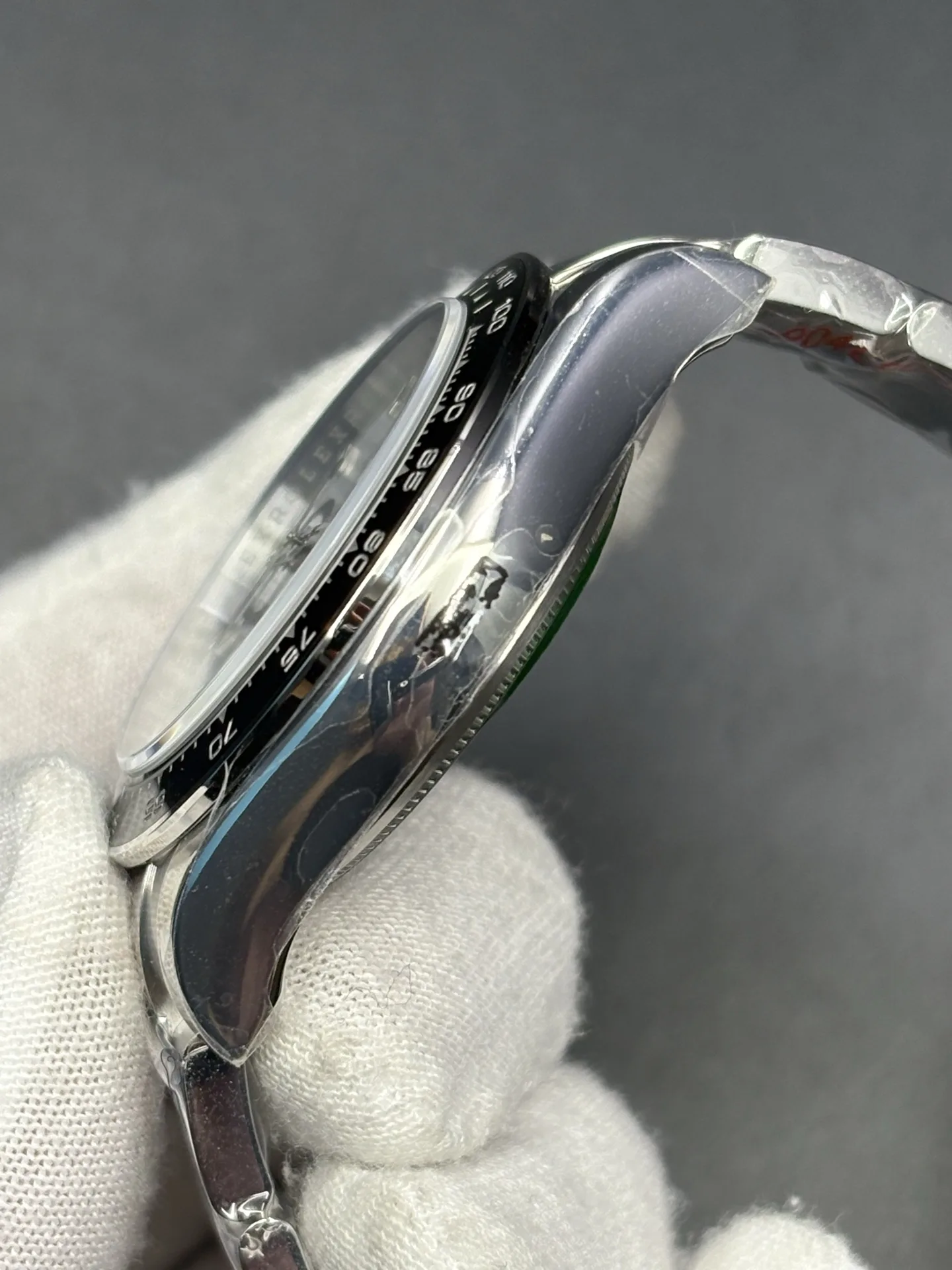
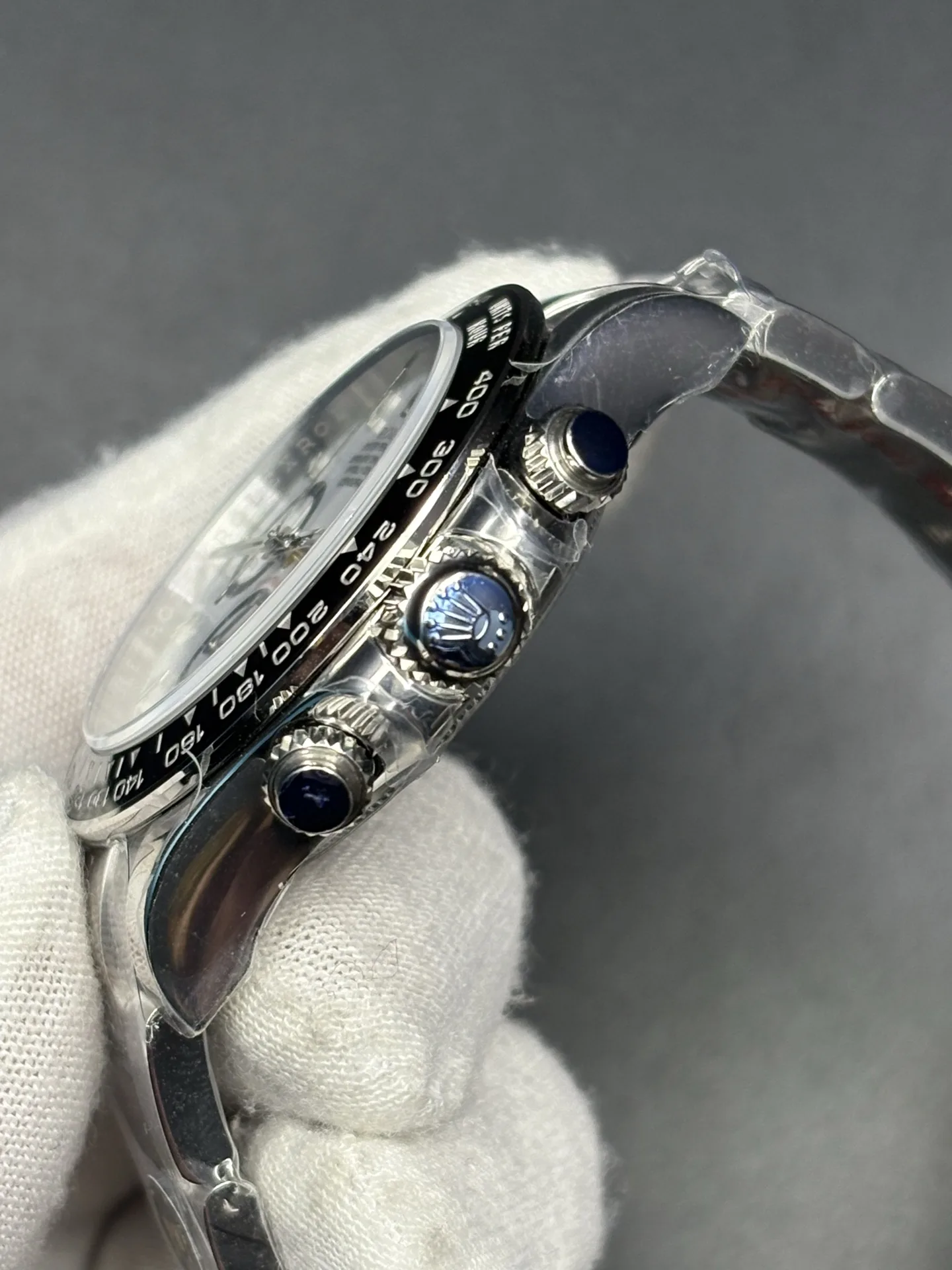
If the dial is the debate, the bezel is the selling point. The detailed comparison says every tachymeter numeral and marker lines up correctly, with the right triangles at 110, 85 and 80, and calls it possibly the best-looking 126500 ceramic bezel on the market. Another owner praises its engraving quality. One commenter thought the 110 sat a fraction to the left, so even here opinions vary.
Case, bracelet and crystal
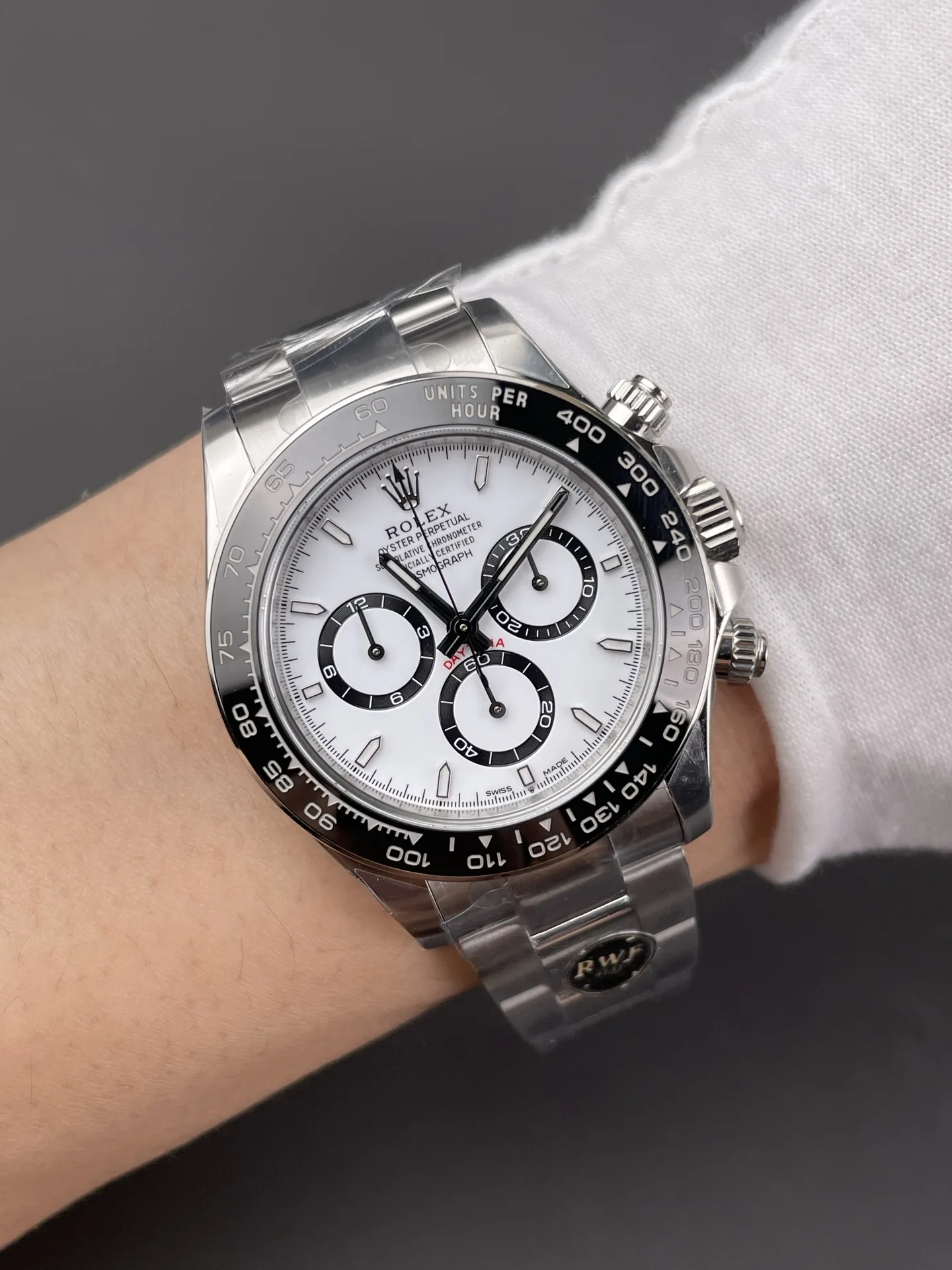
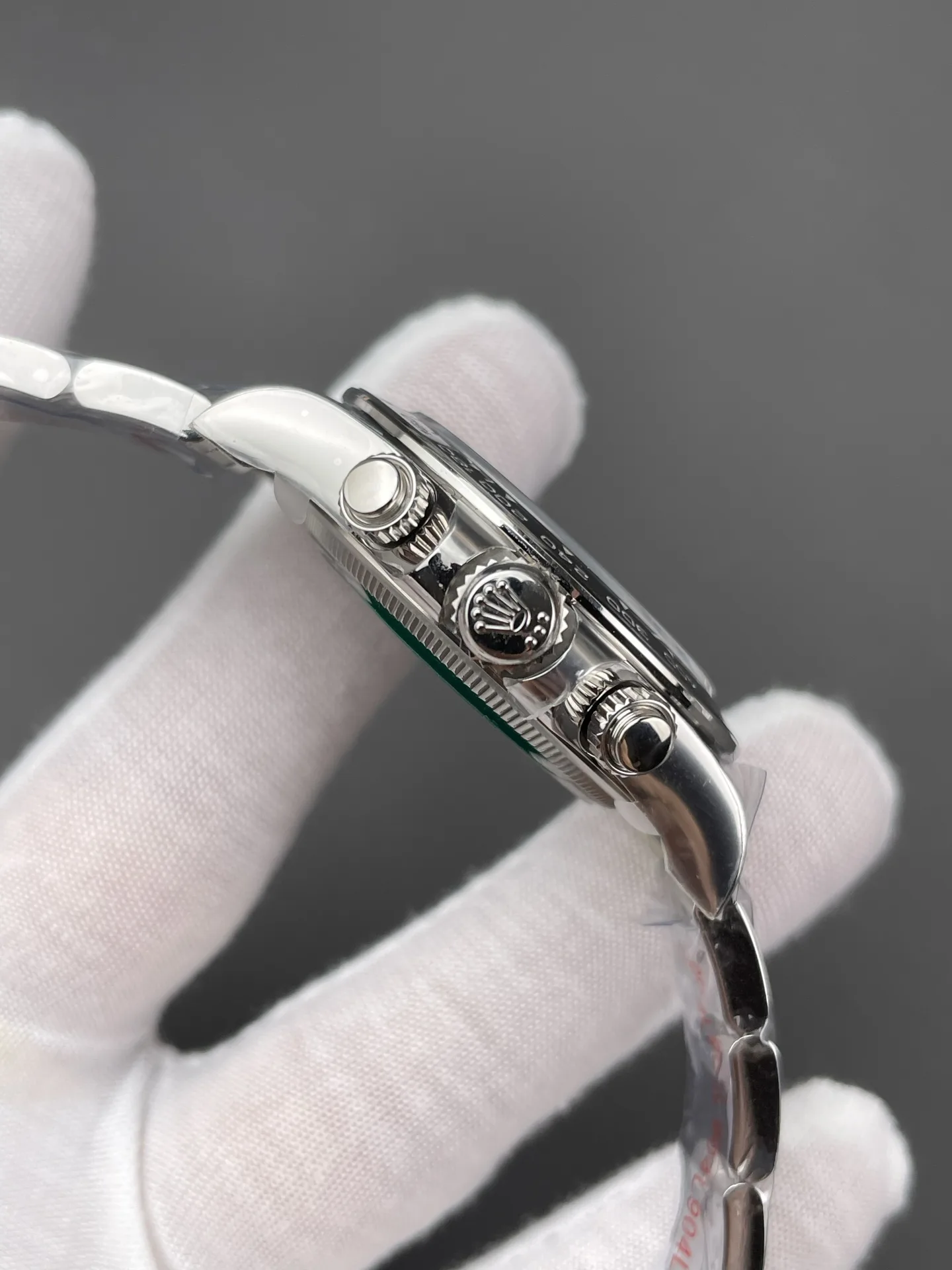
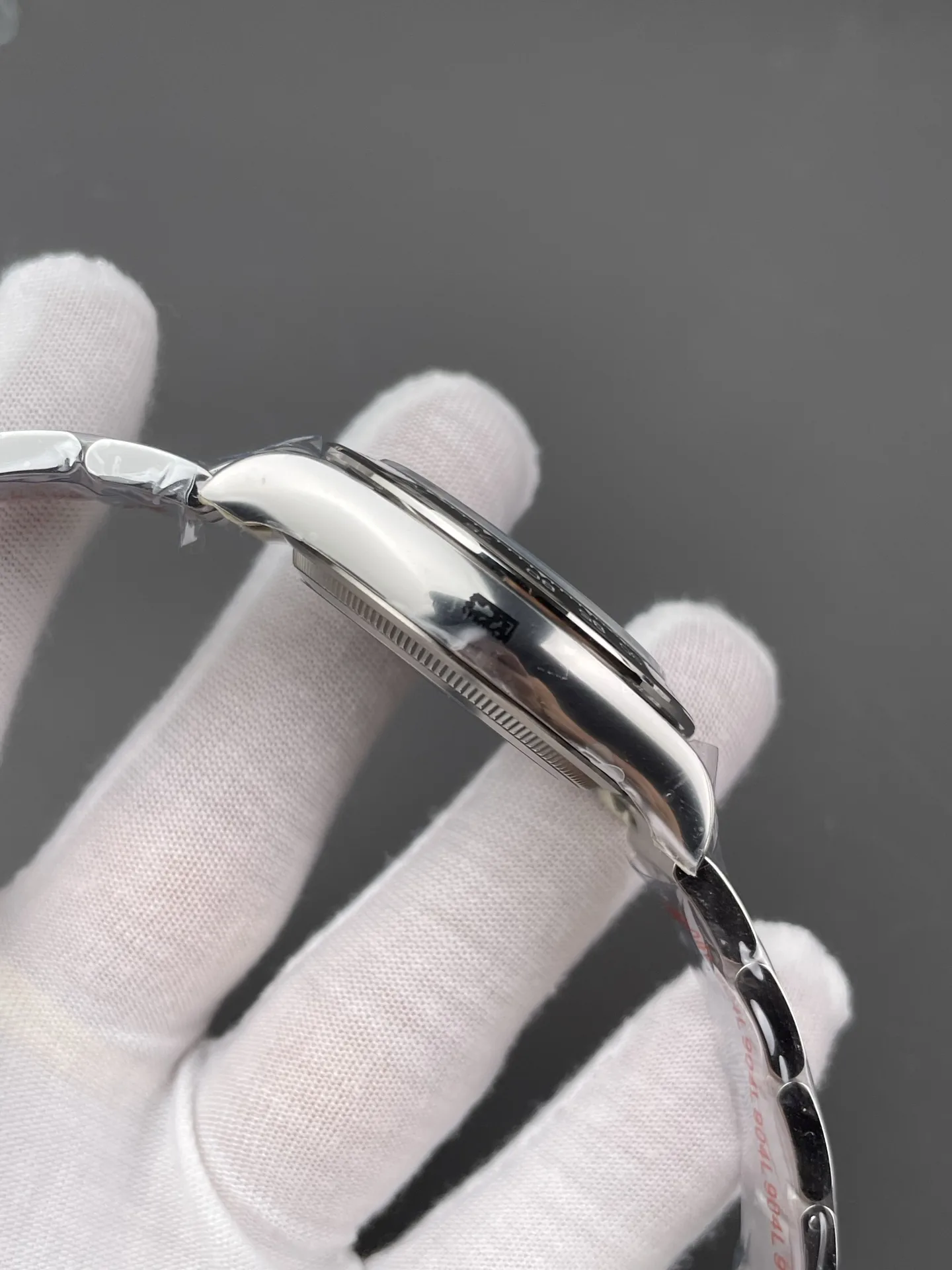
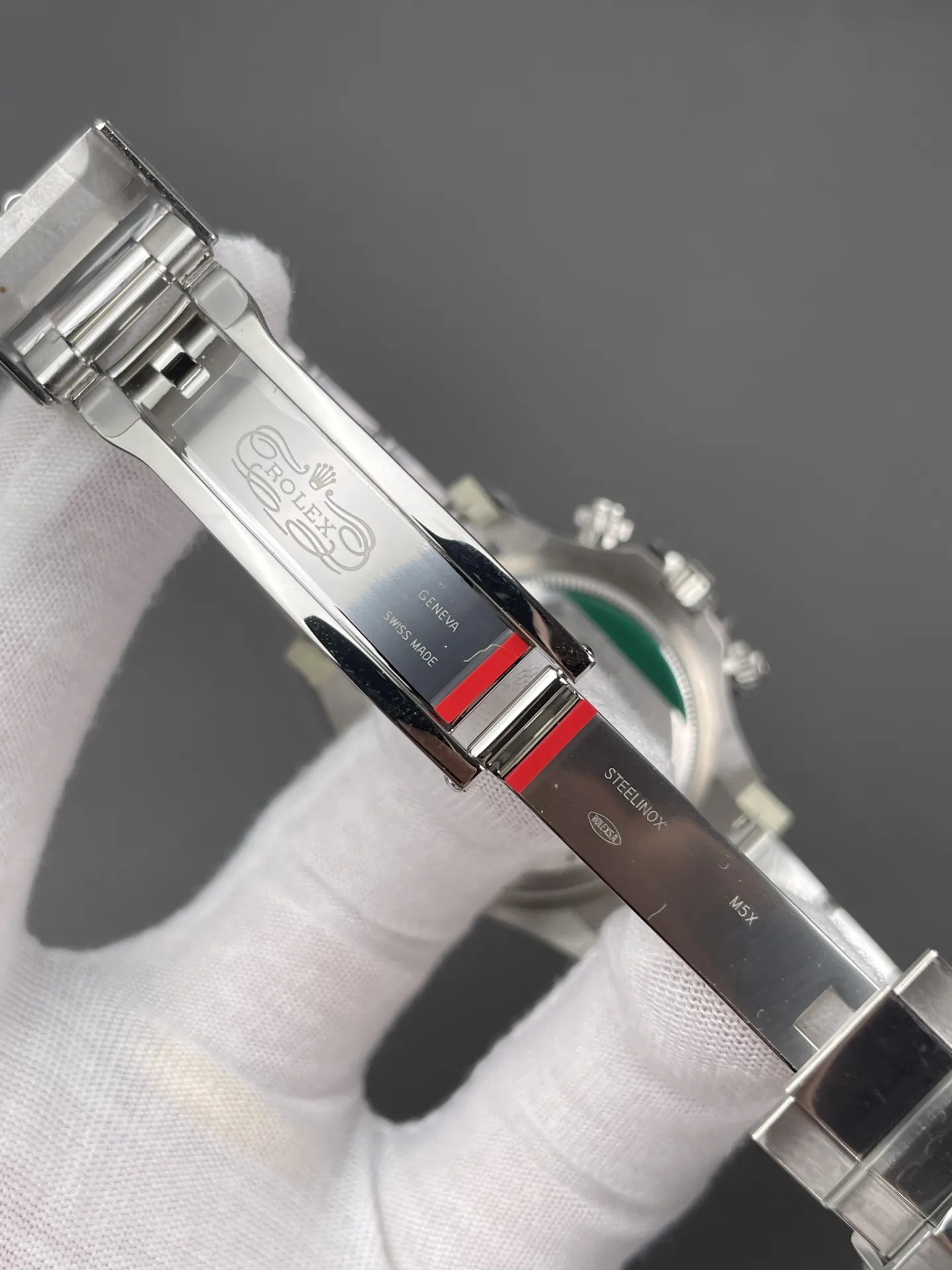
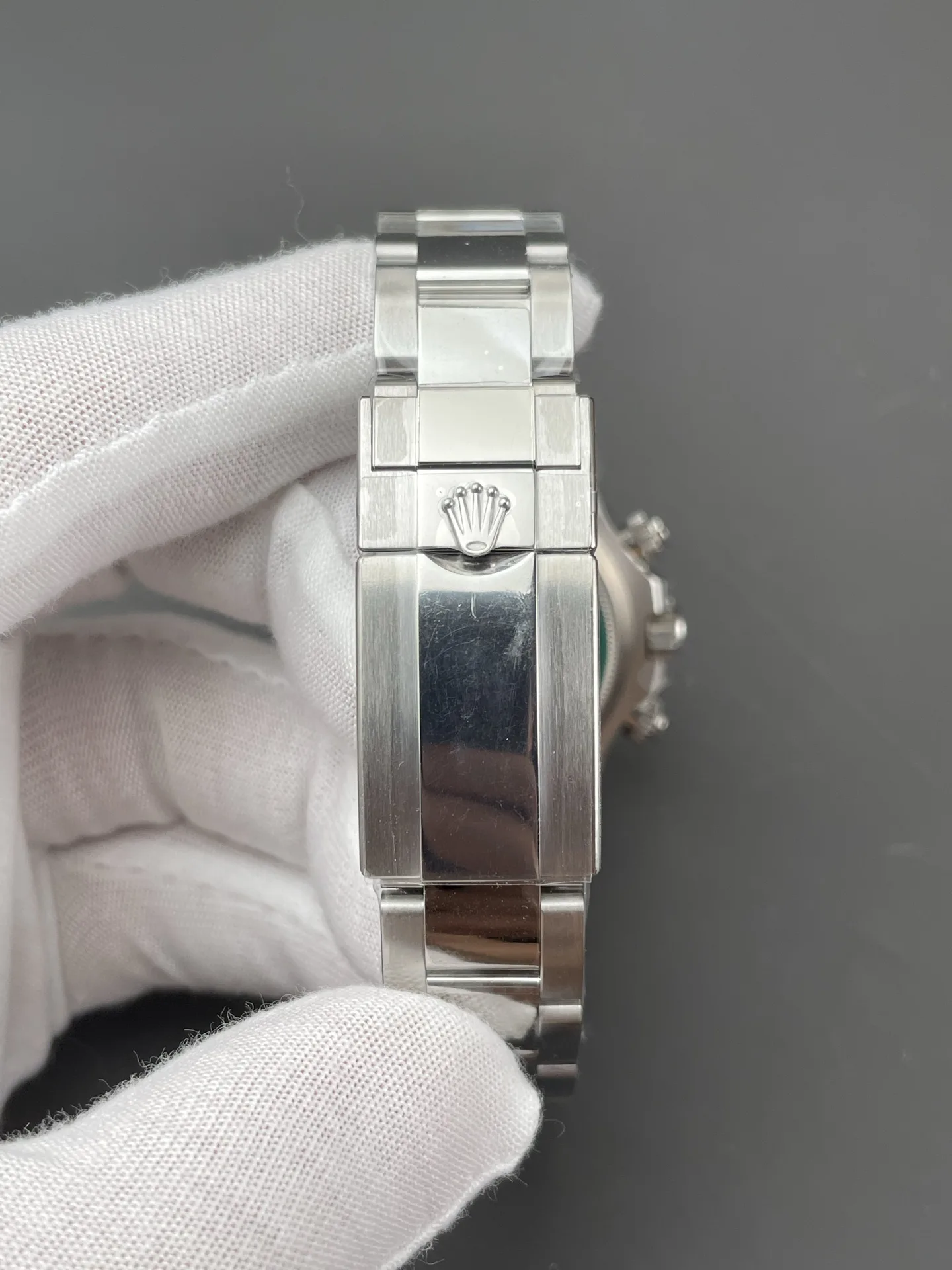
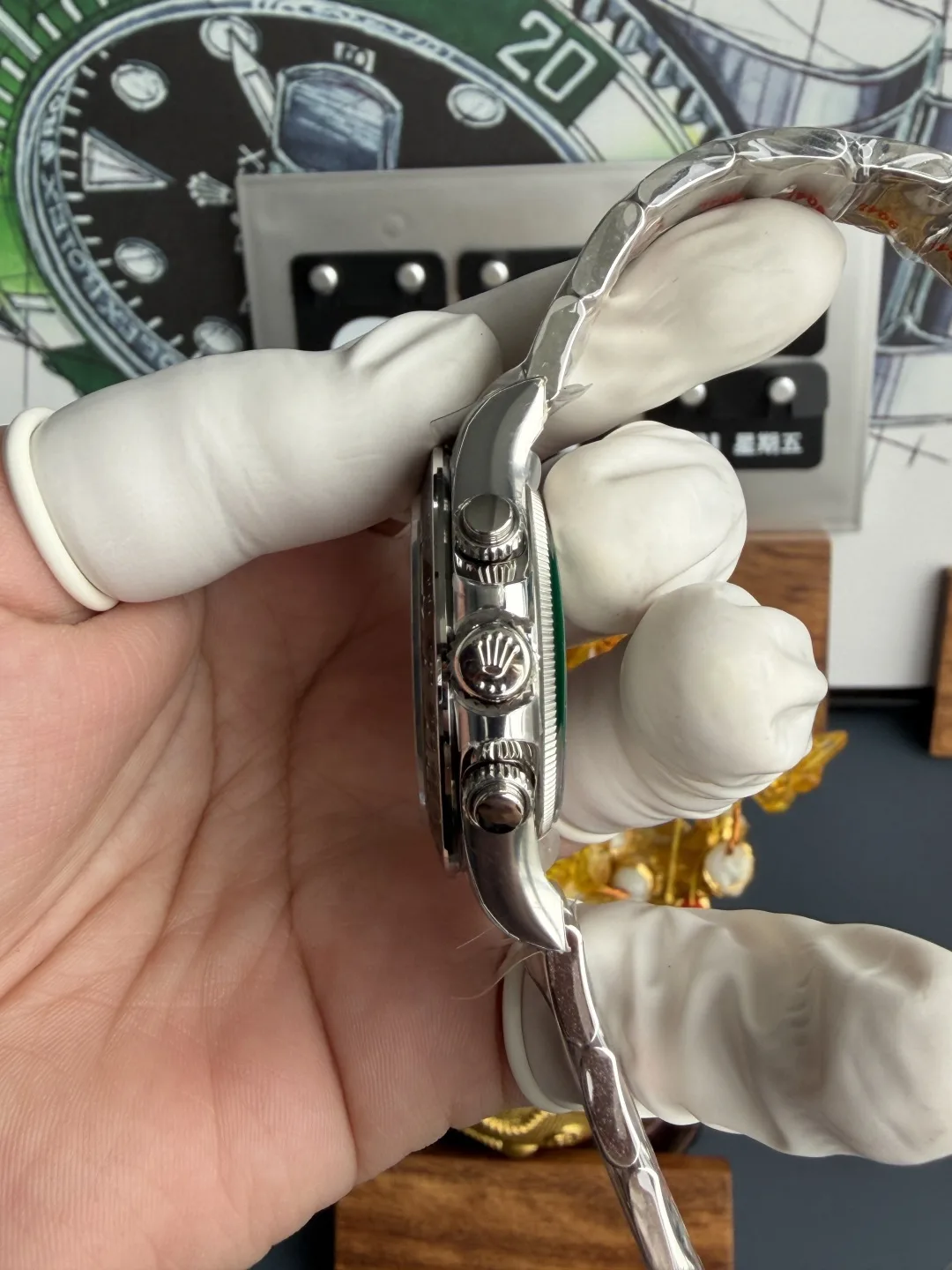
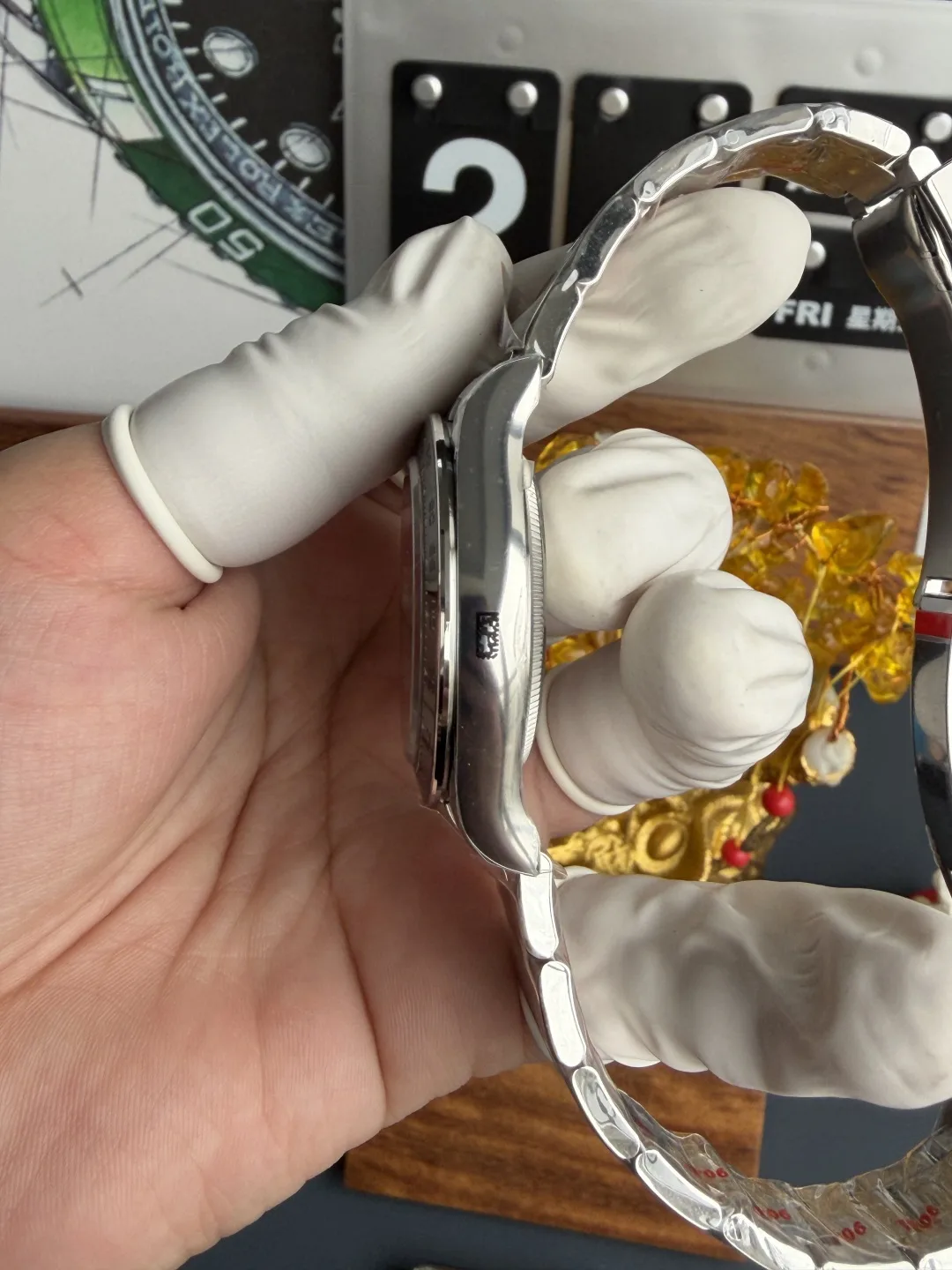
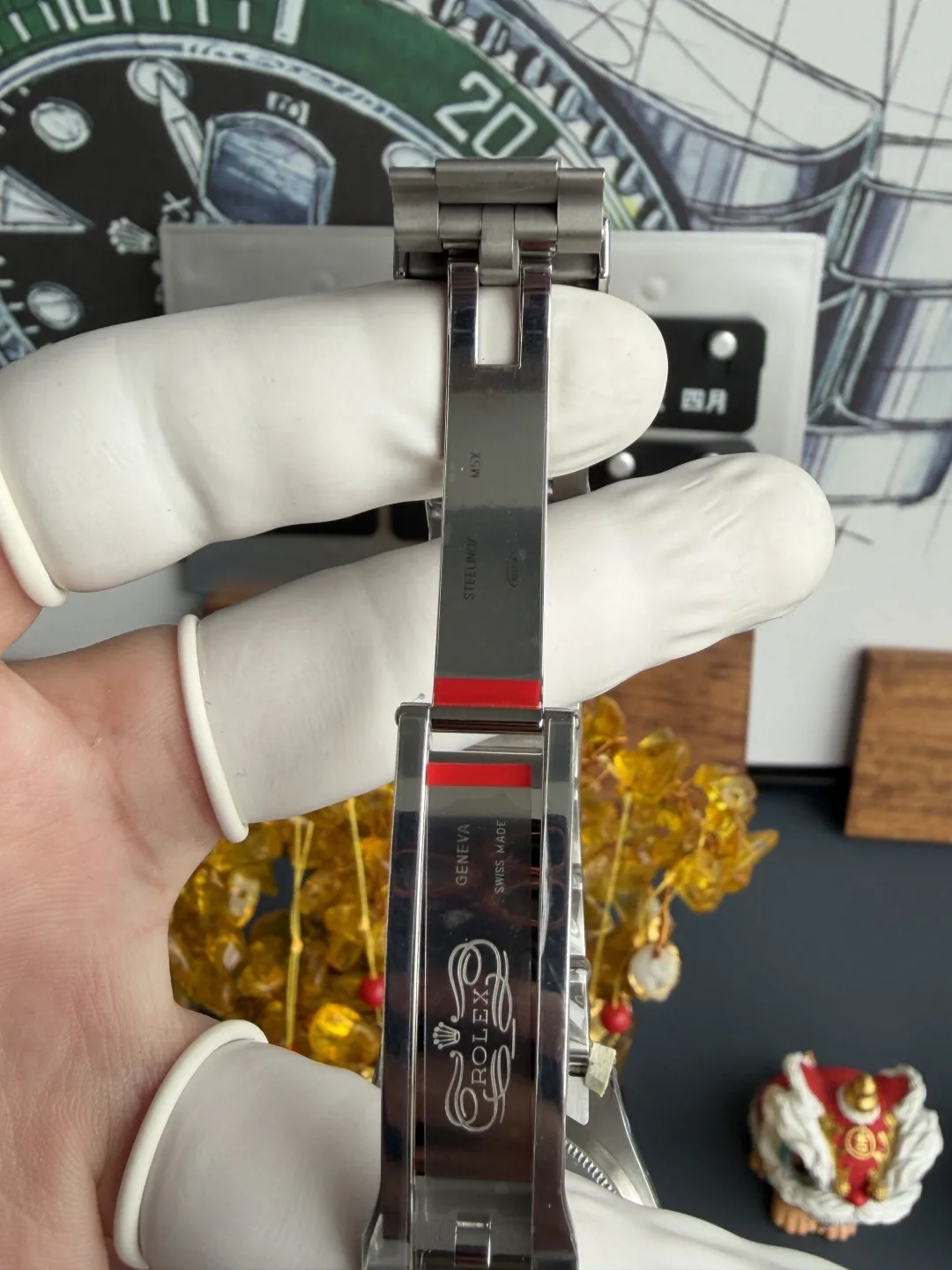
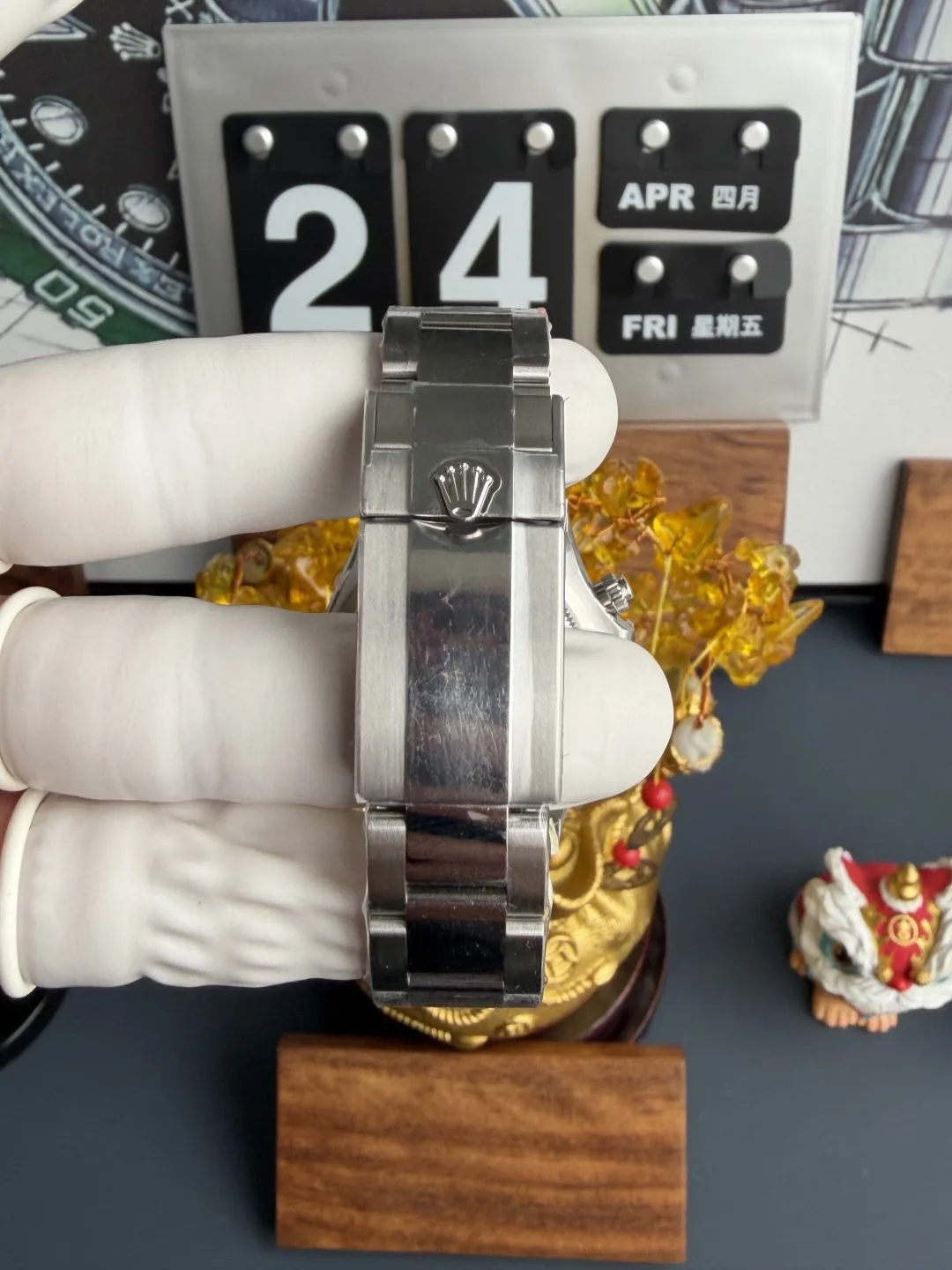
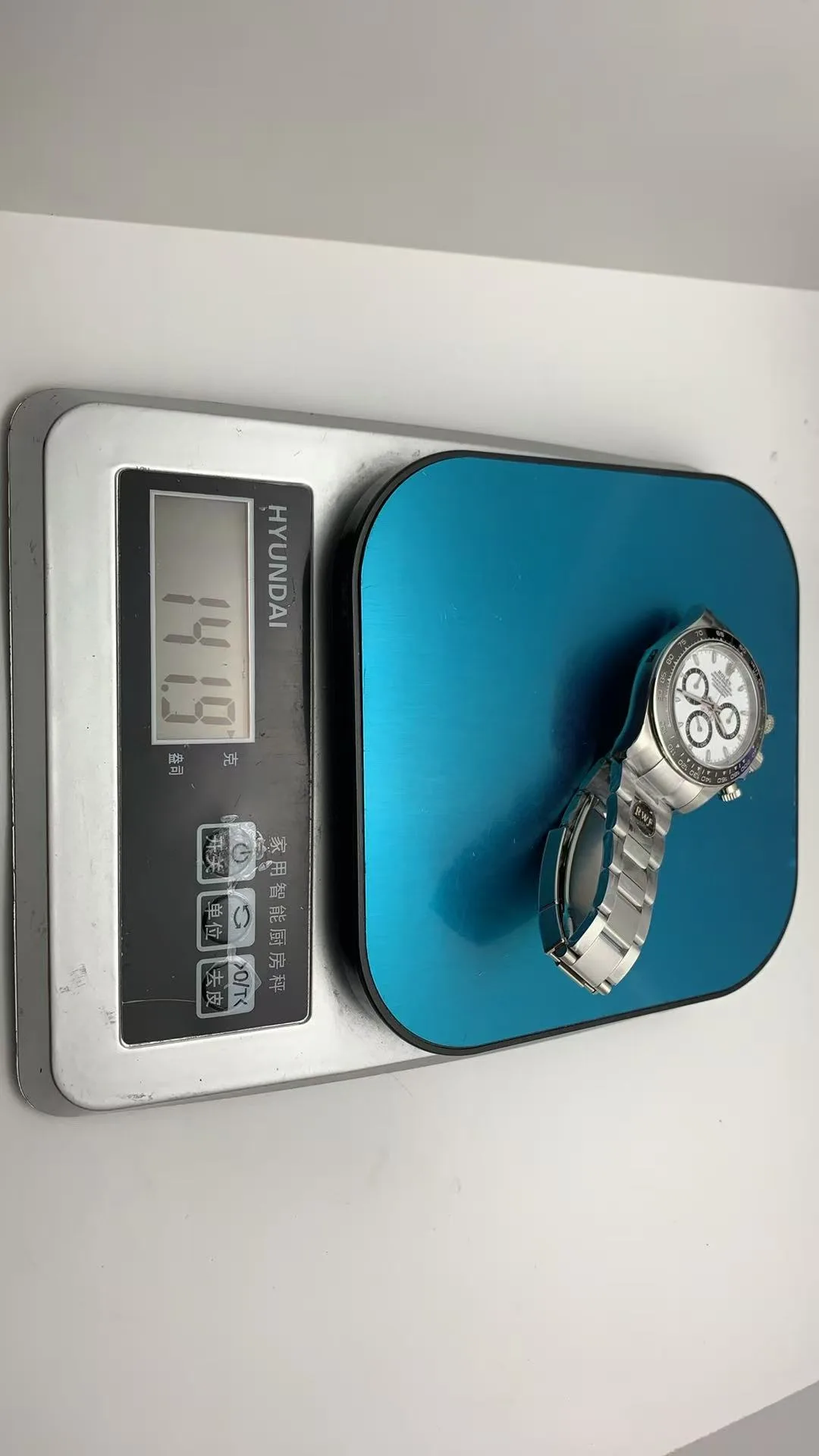
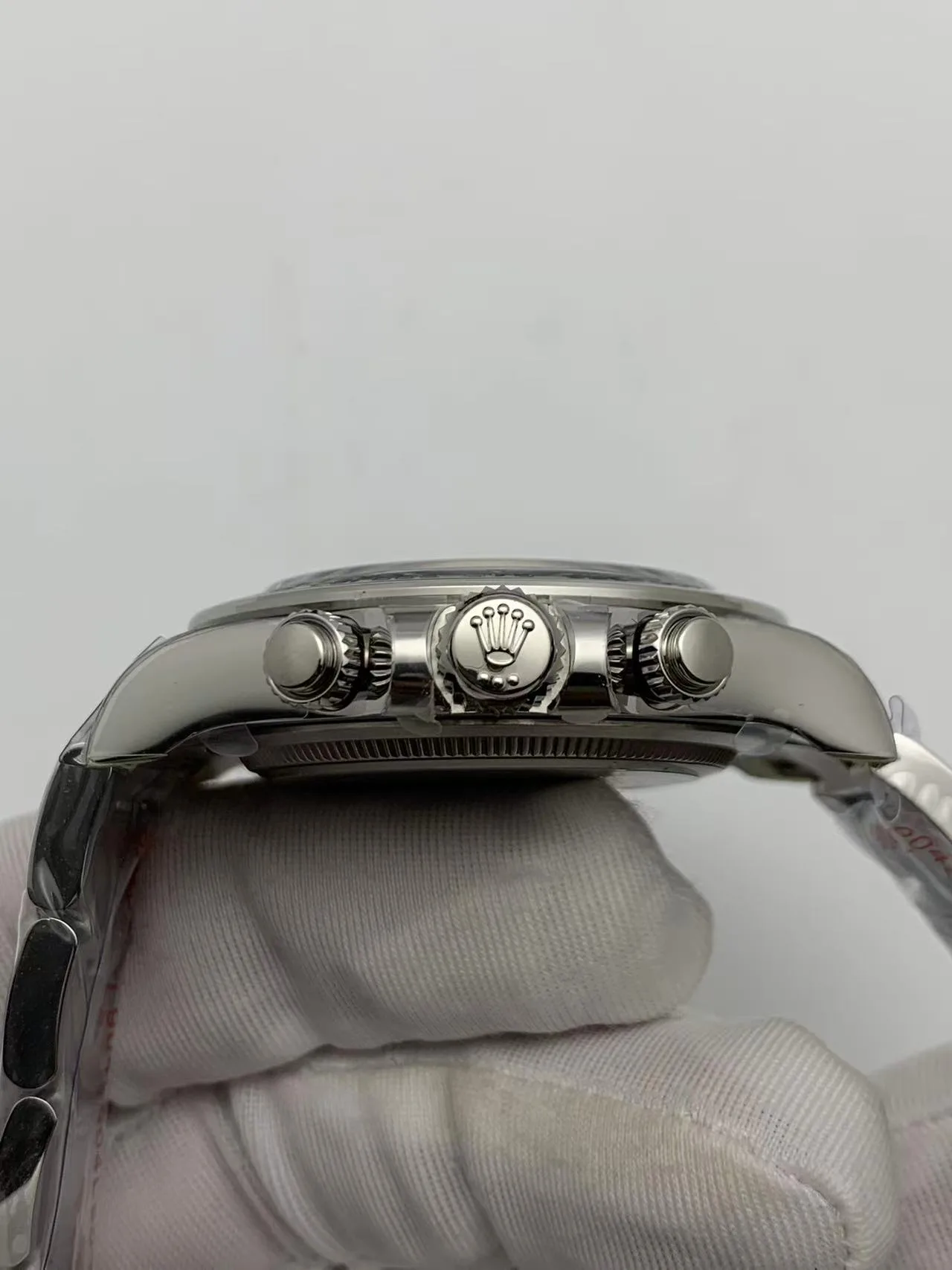
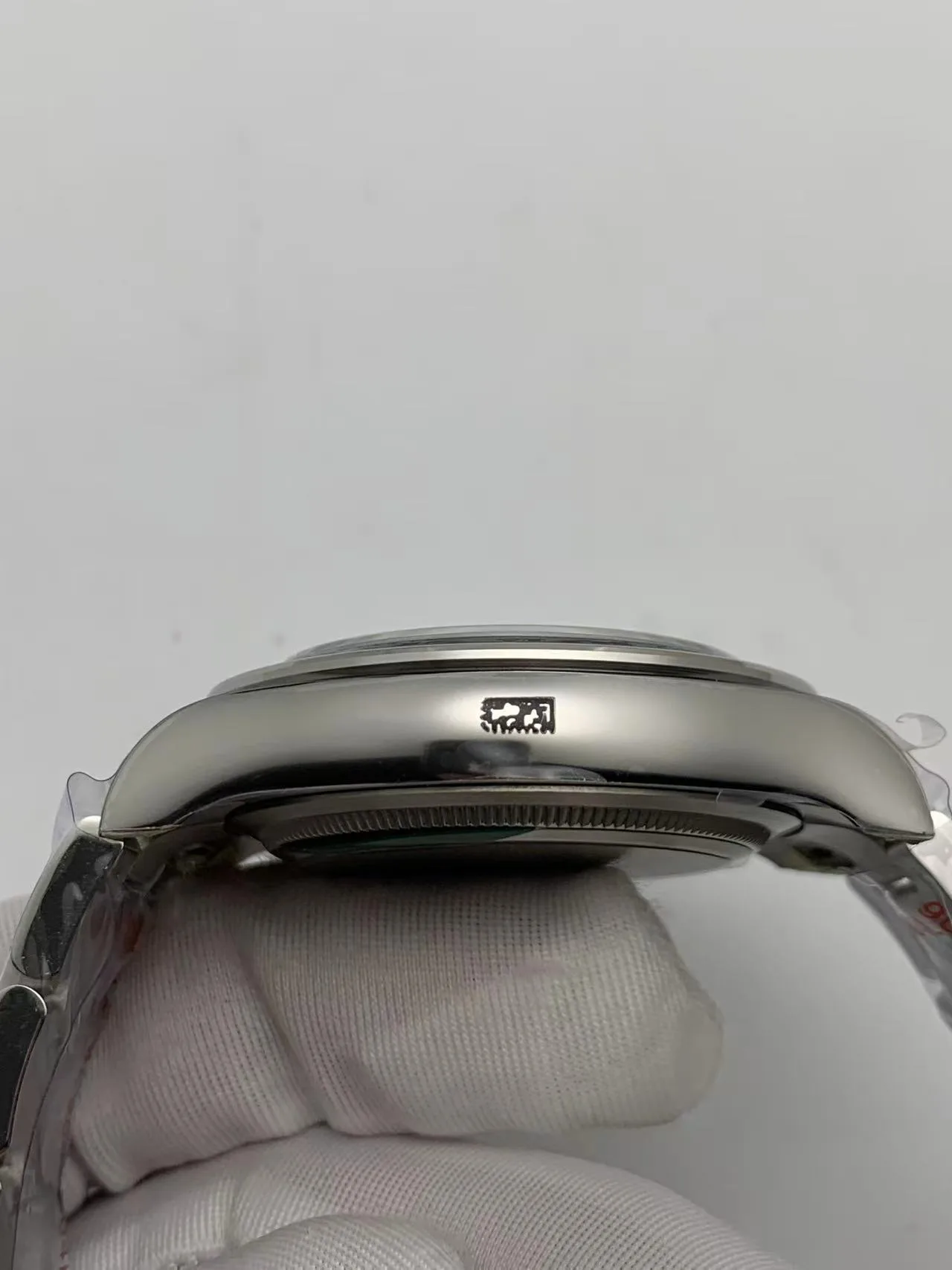
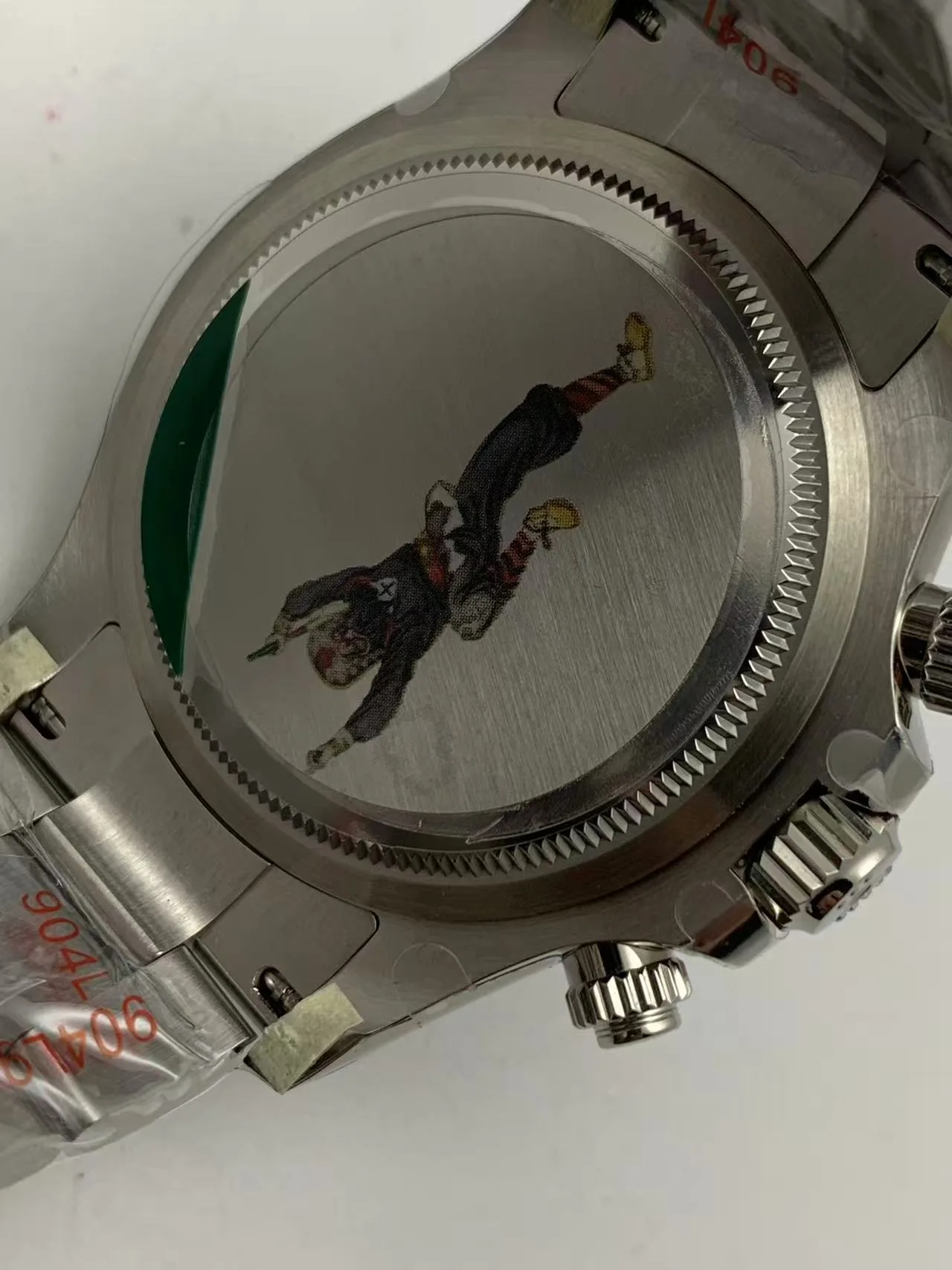
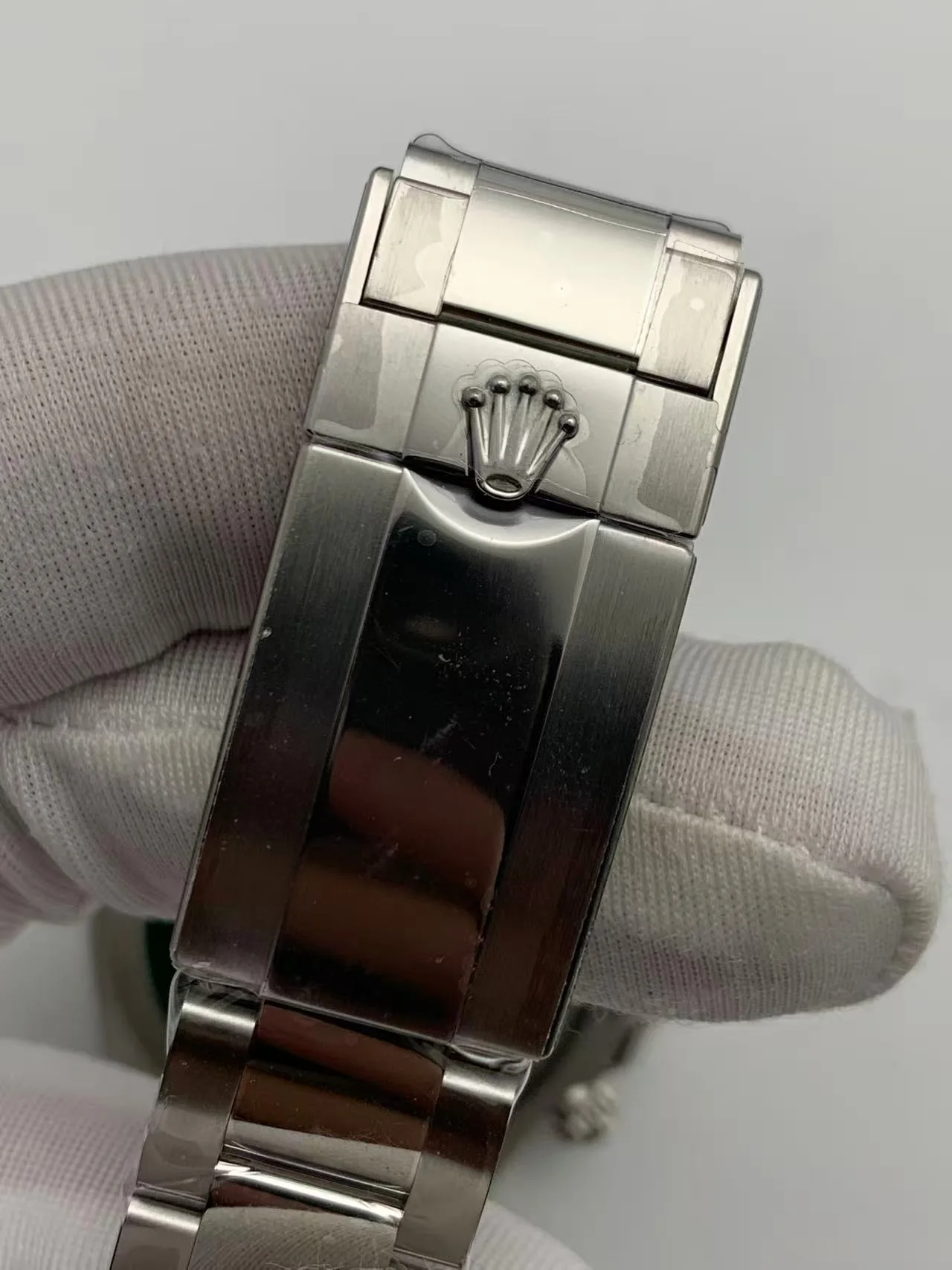
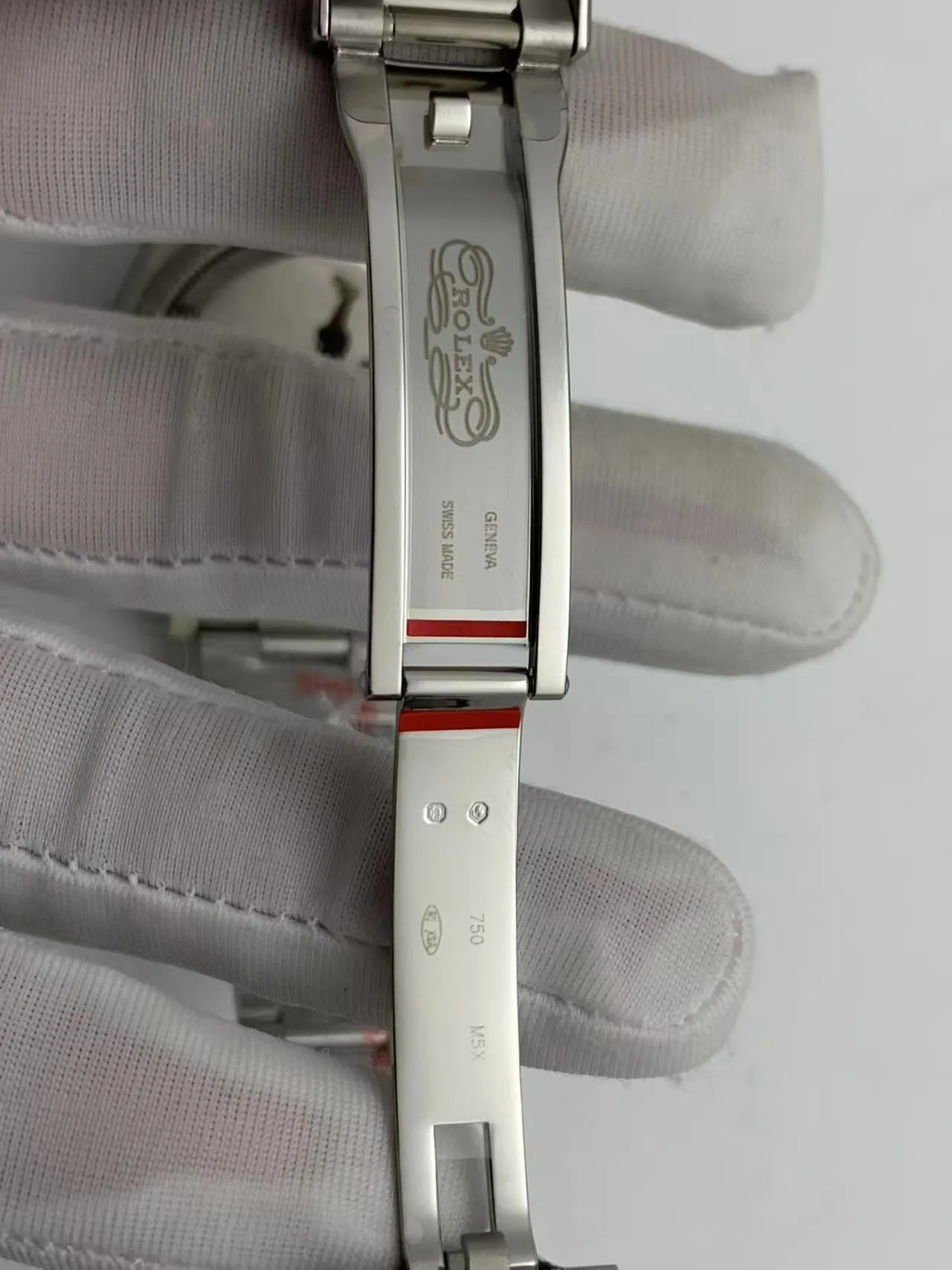
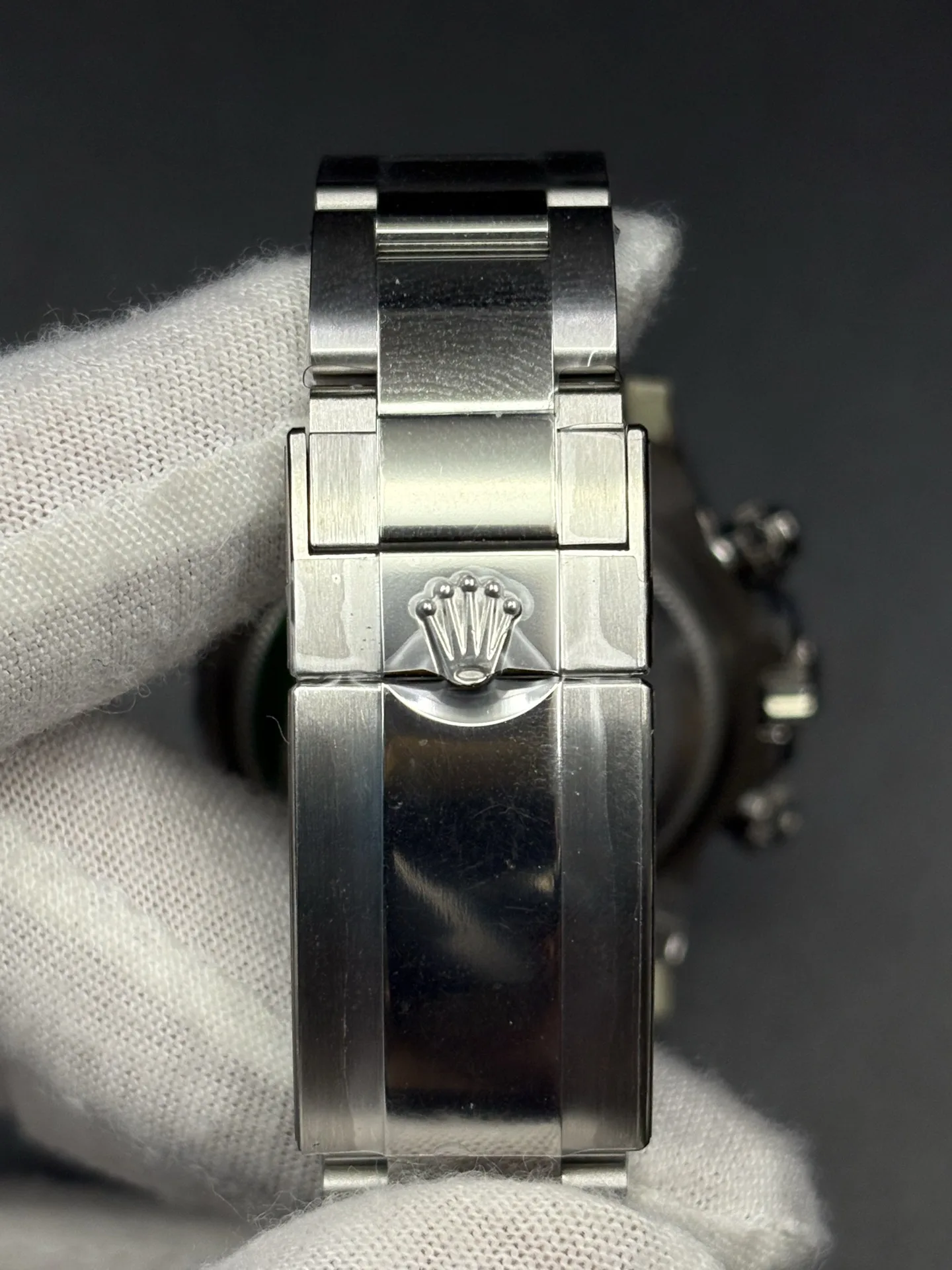
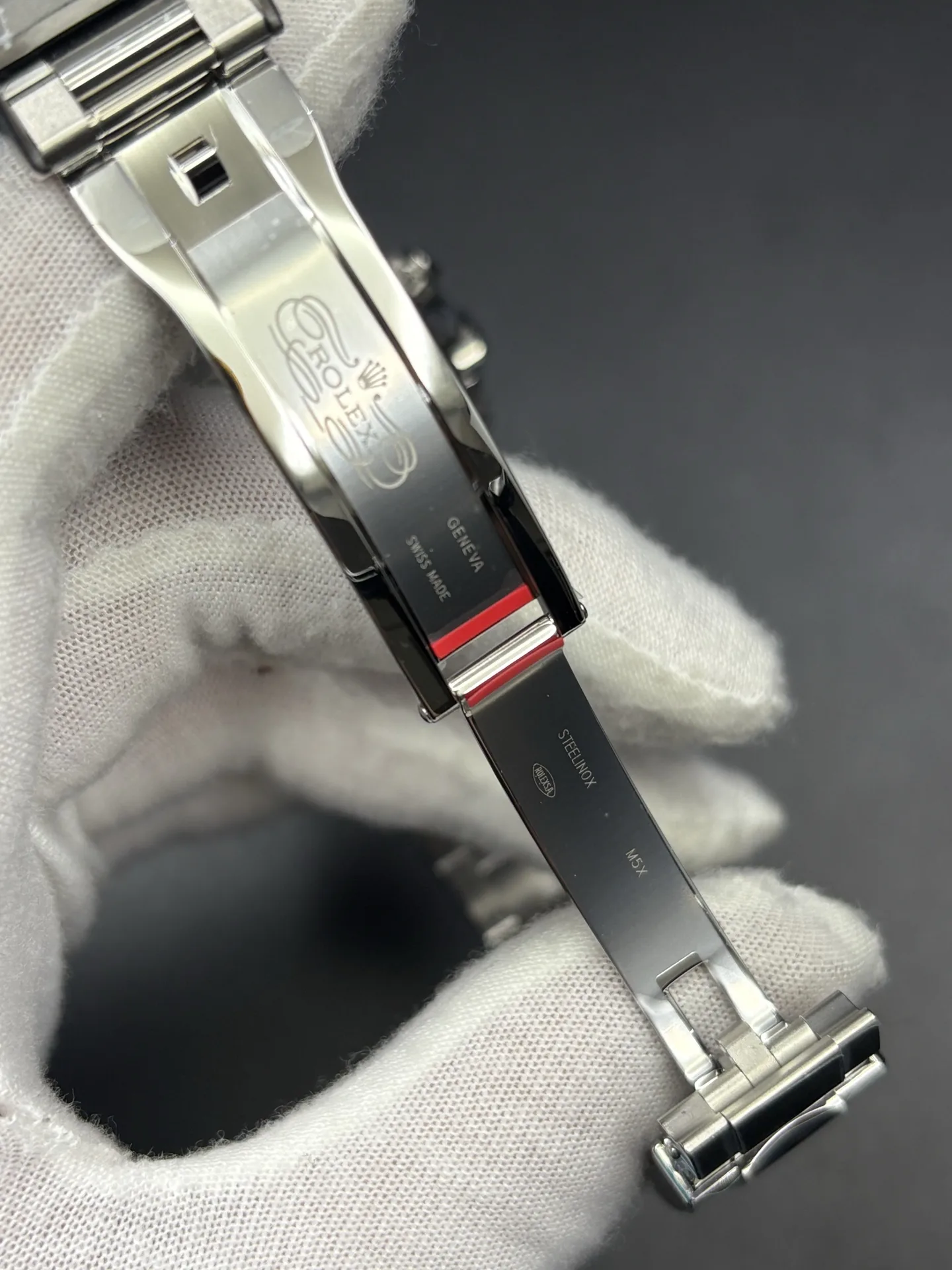
Case dimensions reportedly match the genuine watch closely, and owners praise the finishing of the case and bracelet out of the box. One owner says the bracelet already has chamfered edges. Another weighed theirs at about 142 g on a full bracelet, which is plausible for a steel Daytona, though weights vary with link count.
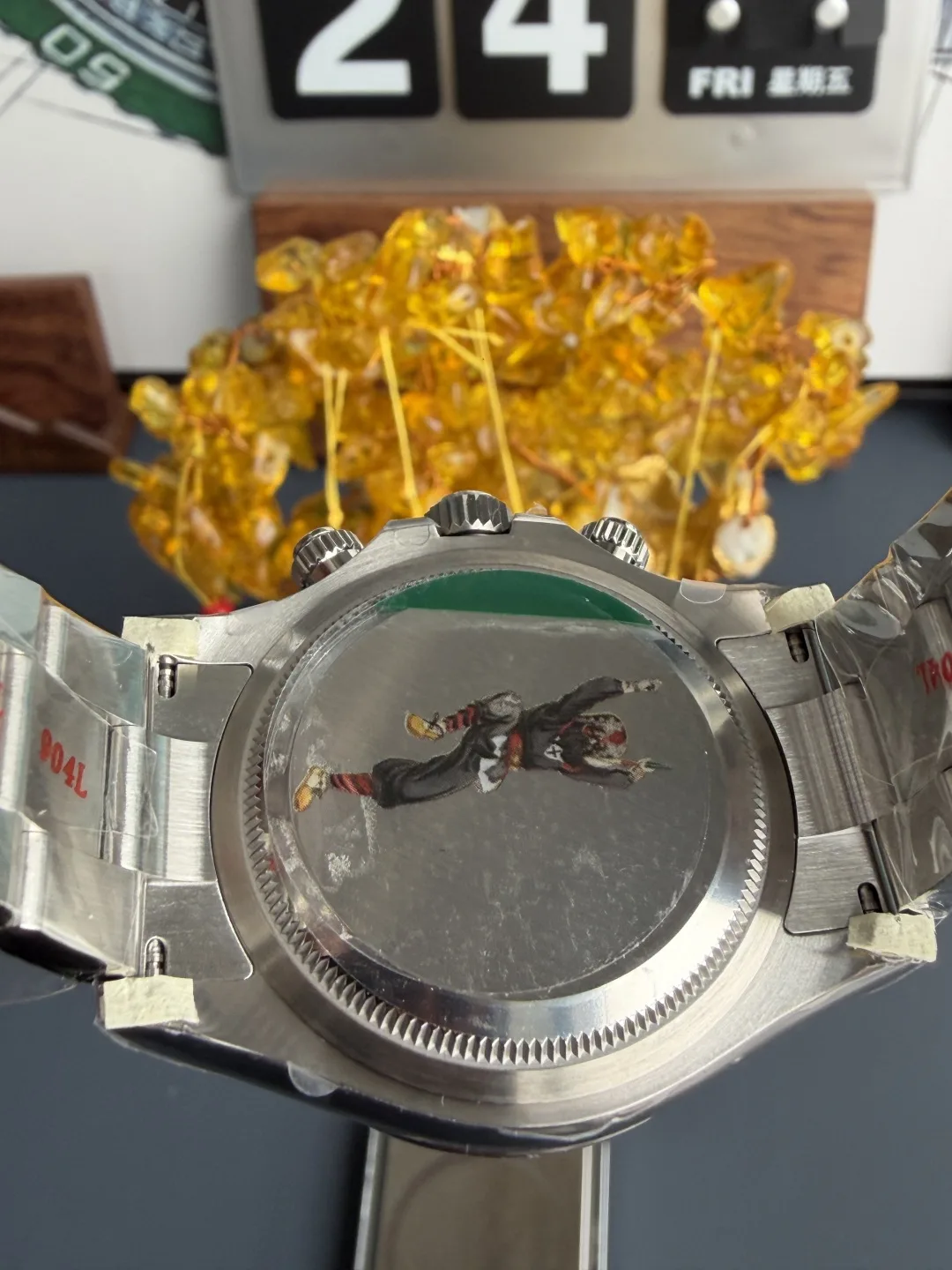
The crystal is the most consistent criticism after the dial. Several owners describe it as inferior to the best aftermarket options, and one noticed a faintly warm tinge at some angles. A more accurate crystal is a popular upgrade, at a reported extra cost of about $60–90. Without a cyclops, the difference is reportedly less obvious than on a date watch.
The movement
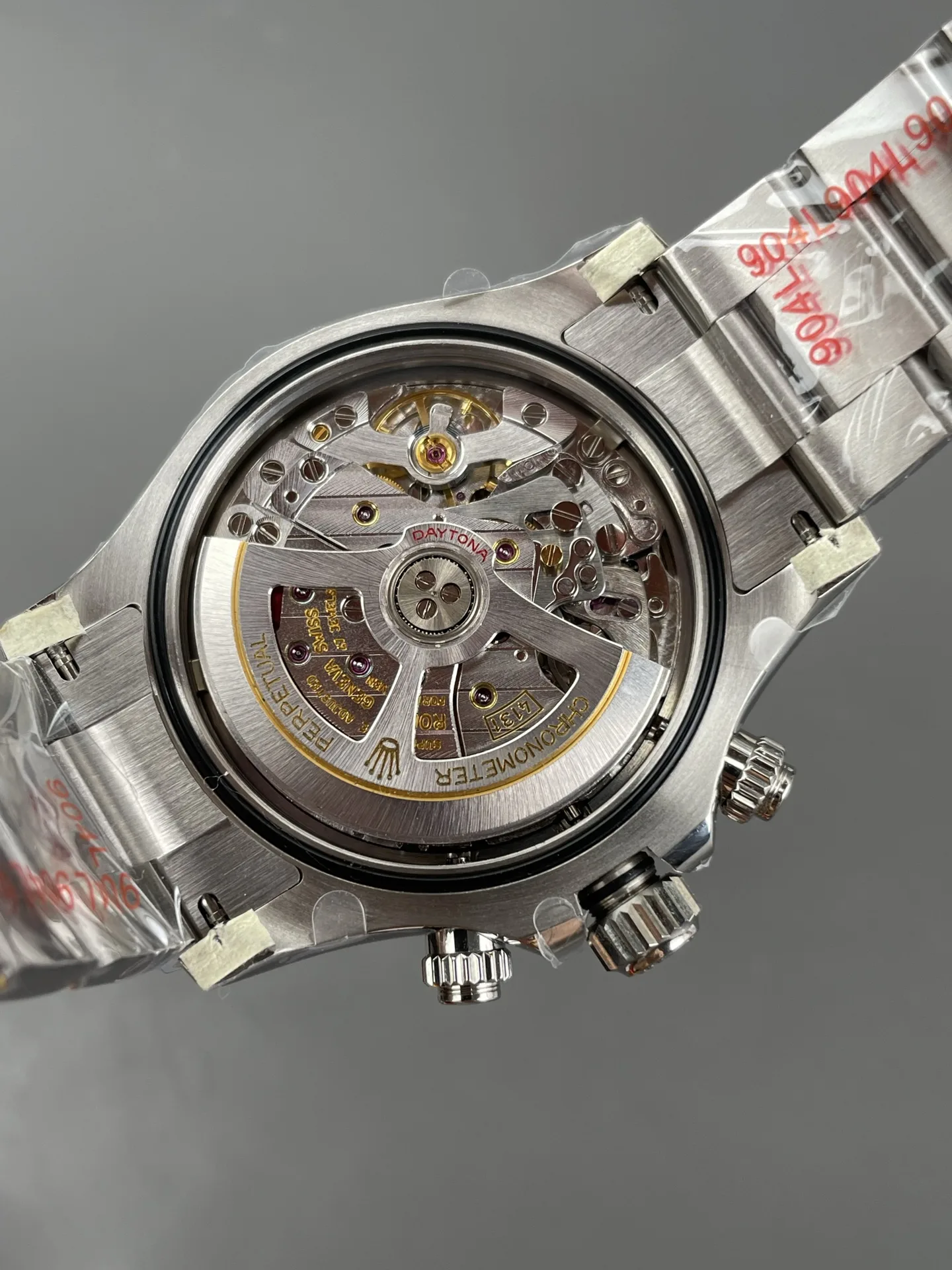
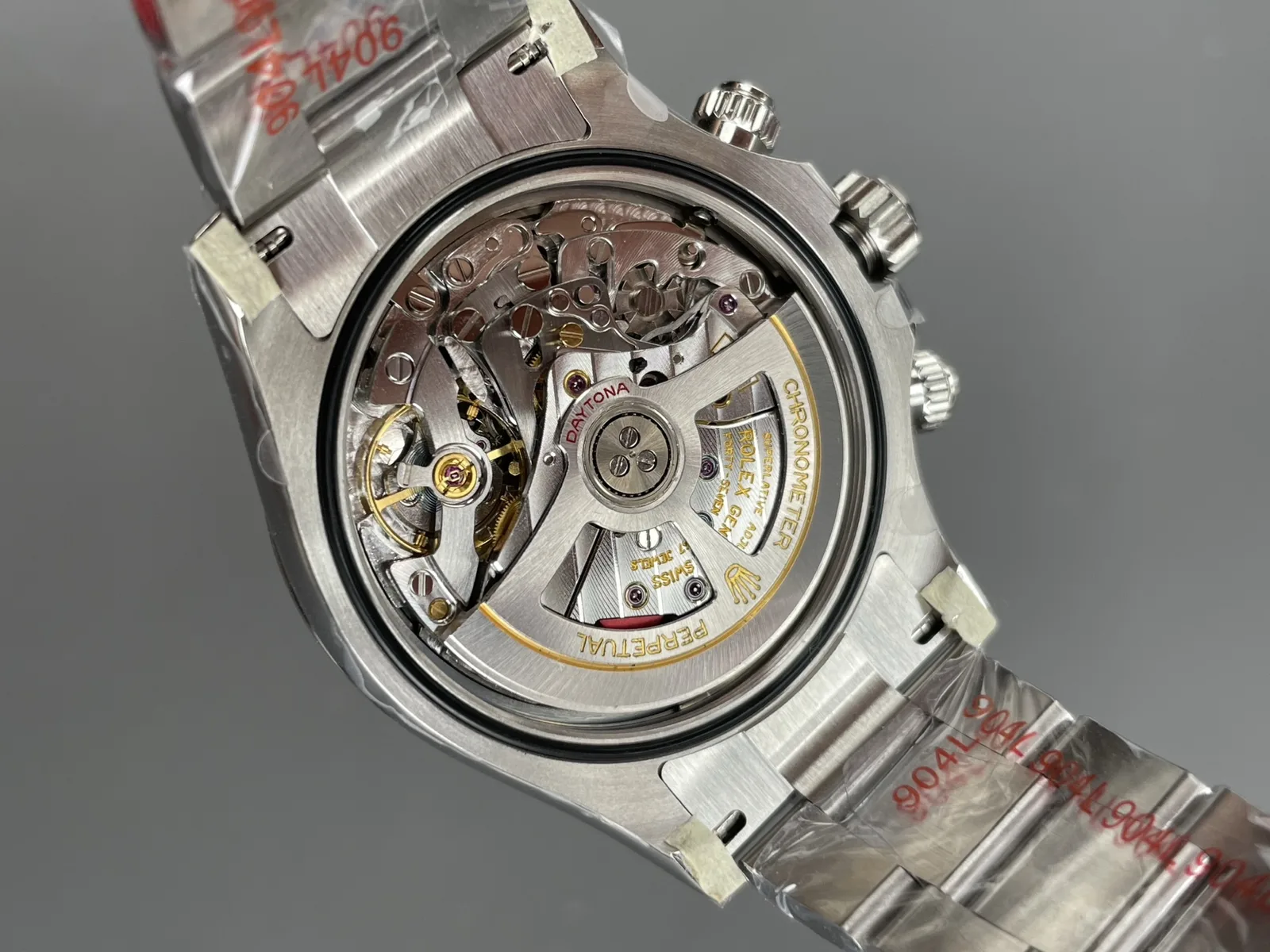
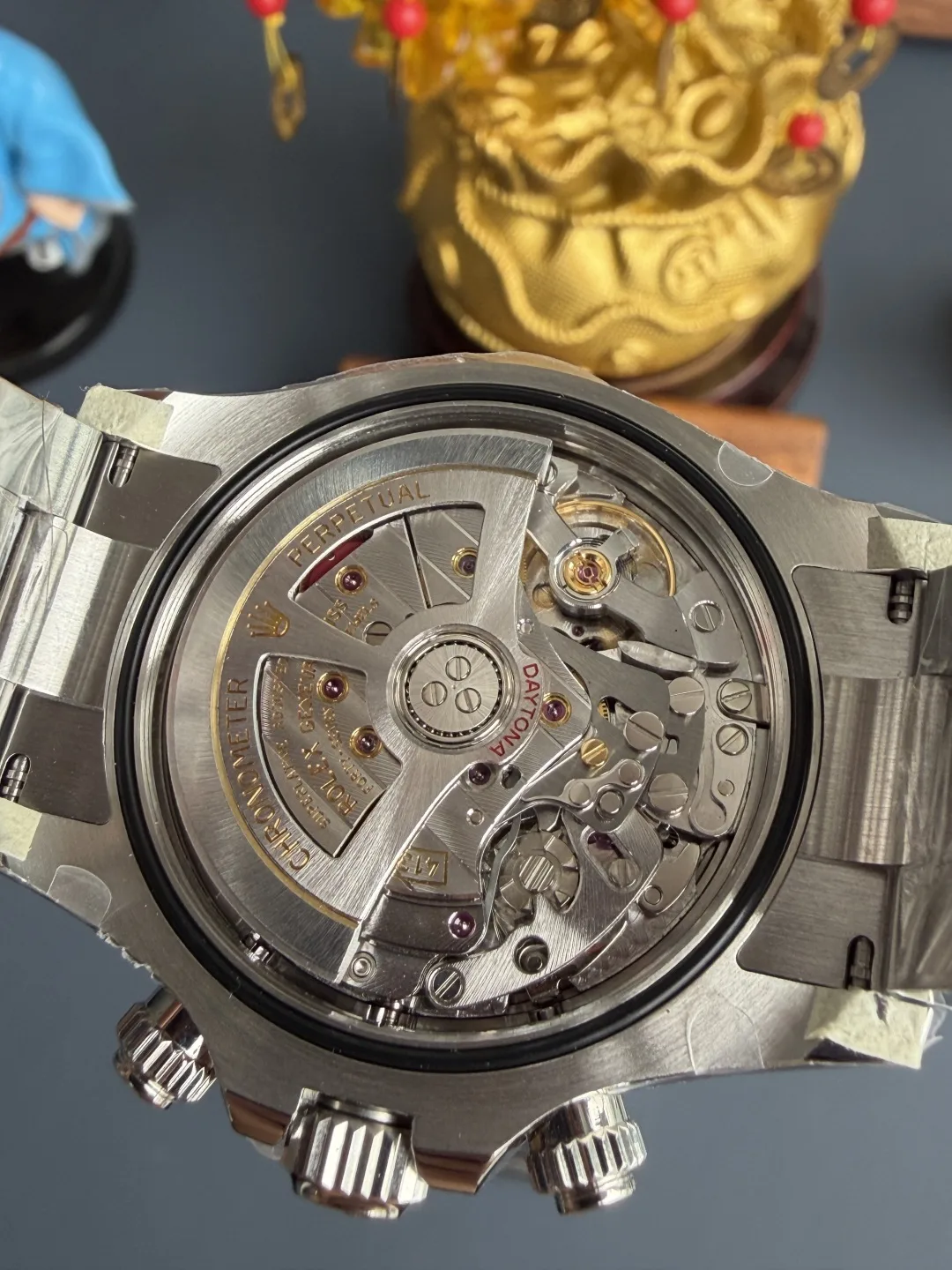
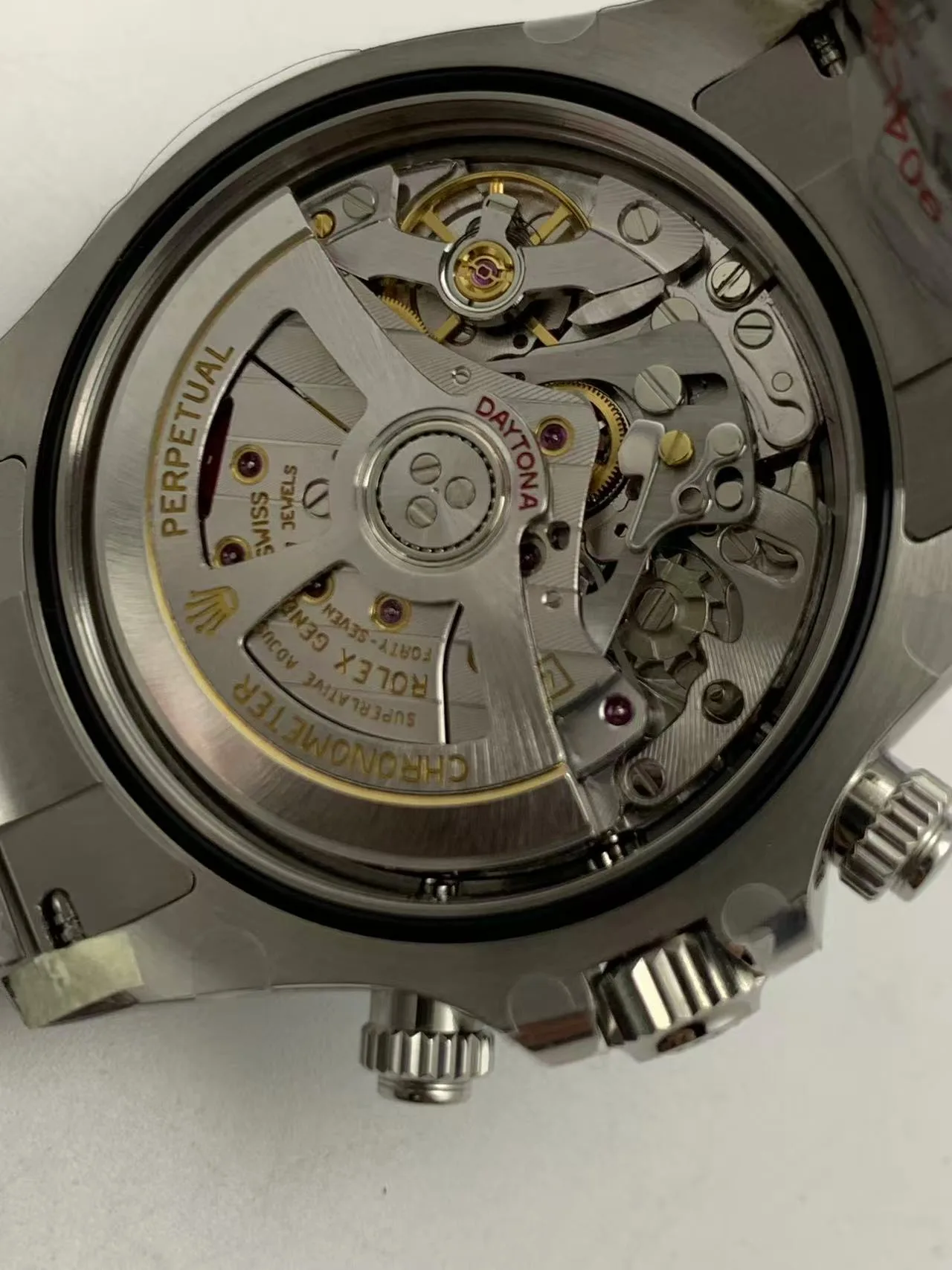
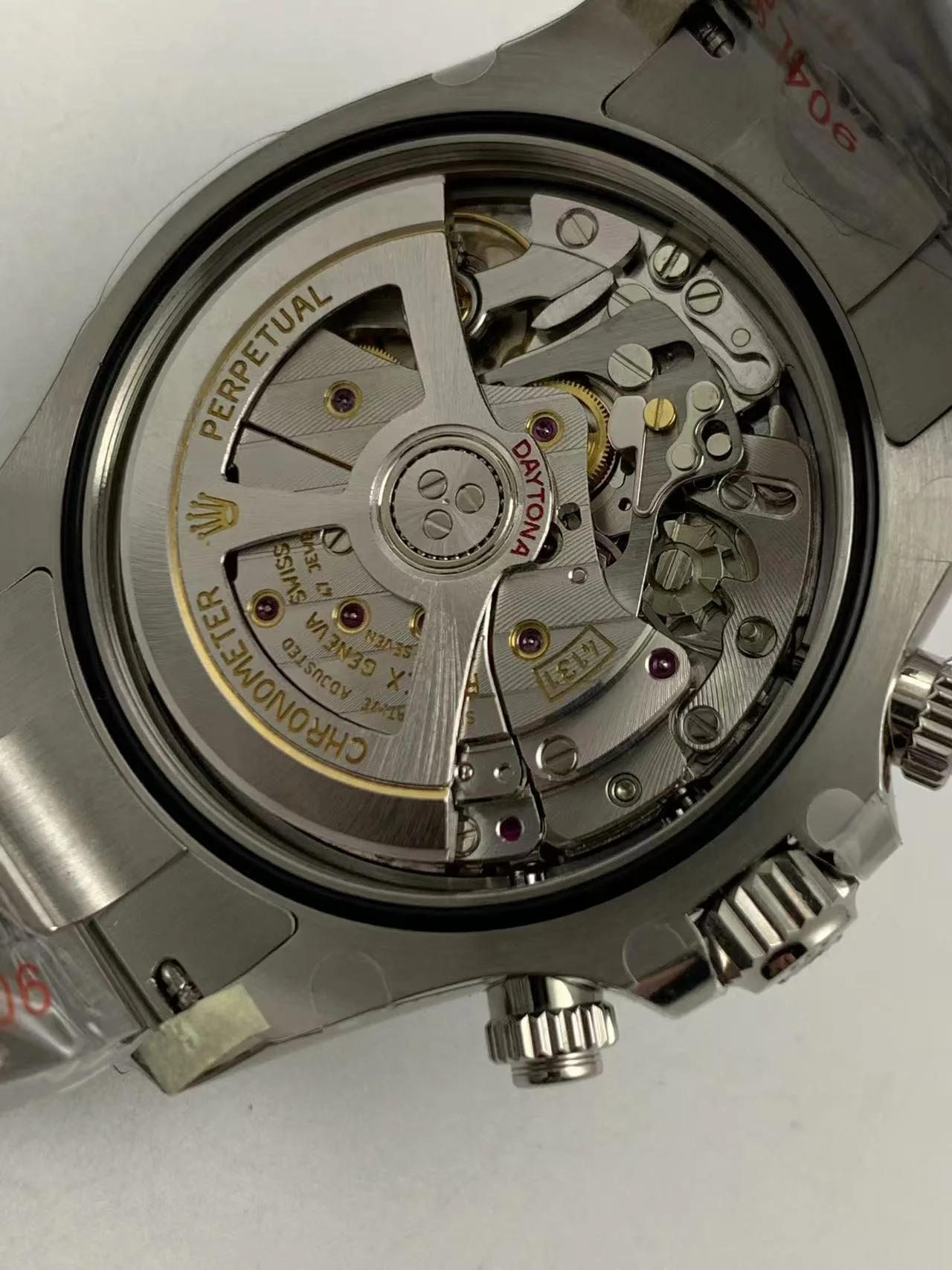
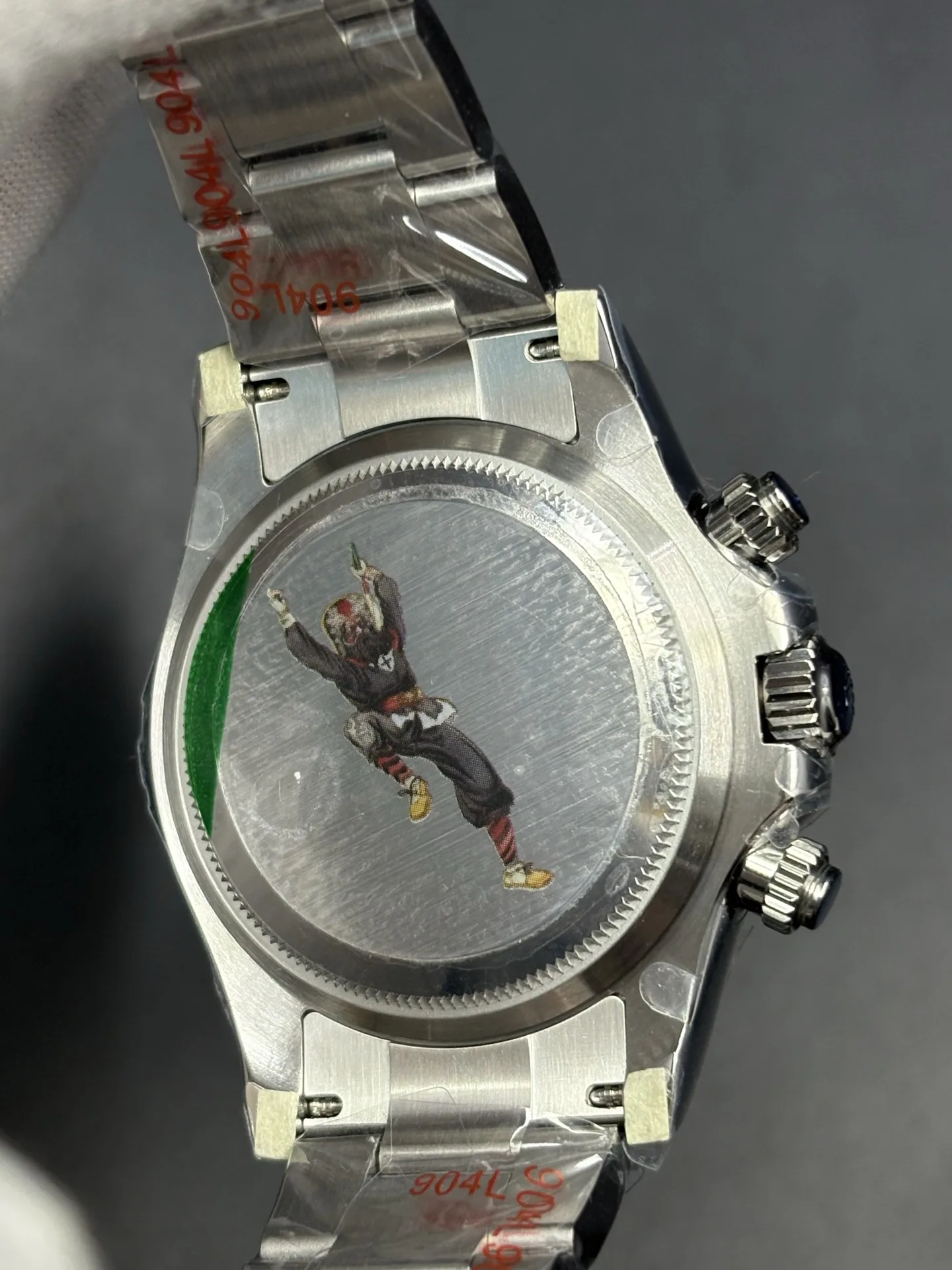
Everything in the range uses a free-sprung movement, and here that’s the JH4131: a 4131-type chronograph with a free-sprung balance and weights on the rim. The reviewer, who has owned several of these movements for about six months, says they’ve kept time very well. Owner timegrapher readings back that up: one reports about +0 s/day with 278° amplitude, another +1 to +2 s/day at 300–302° with zero beat error. These are early, single readings from fresh watches, so treat them as promising rather than proof of long-term behaviour.
The usual caveat applies. A free-sprung balance has no regulator arm, so adjusting the rate means working on the balance weights. That requires specialist tools and a watchmaker who’s done it before. The reviewer’s view is that any modern clone movement needs spare parts and a skilled watchmaker, so the JH is worth having for its looks and timing. Some readers clearly disagree, and if you’d rather have something easier to service, other movements exist on other factories’ versions.
The trade-offs
The case for RWF is a warmer dial, an excellent bezel, good case finishing and movements that are timing well so far. The case against is the detail at 6 o’clock, slightly inconsistent indices, a crystal owners often want to replace and a movement that’s harder to adjust. Most of the strengths are things you notice on the wrist. Most of the weaknesses show up in close-up comparison photos. Whether that’s a fair trade depends on how closely you look at your own watch.
What to check before you accept one
- The markers and print at 6 o’clock: check that the longer seconds markers are there and the text isn’t sitting high.
- Dial tone in neutral light: look for the slight warmth rather than a cold white.
- The indices at 3, 6 and 9, and sub-dial hand resets.
- Bezel numerals, particularly the 110.
- The crystal for tint or haze, and whether you want to budget for an upgrade.
- Timegrapher readings, including amplitude and beat error.
The verdict
RW Factory’s Panda is a credible newcomer rather than a clear winner. If the dial tone and bezel matter most to you, owner reviews suggest it may be one of the best options available. Check the 6 o’clock area carefully, make sure you have access to a watchmaker comfortable with free-sprung balances and accept that you may want to upgrade the crystal. If those don’t put you off, this Daytona deserves serious consideration.
Daytona 126500LN Panda
Factory lineup
RW Factory flyer
Hands-on
White dial, black ceramic bezel