VSF Daytona 116508 “John Mayer”: The Gold Standard Is Complicated
A deep look at the green dial, the DD4130, and the compromises hiding beneath all that yellow gold.
Some watches disappear under a cuff. This one would like a table near the window.
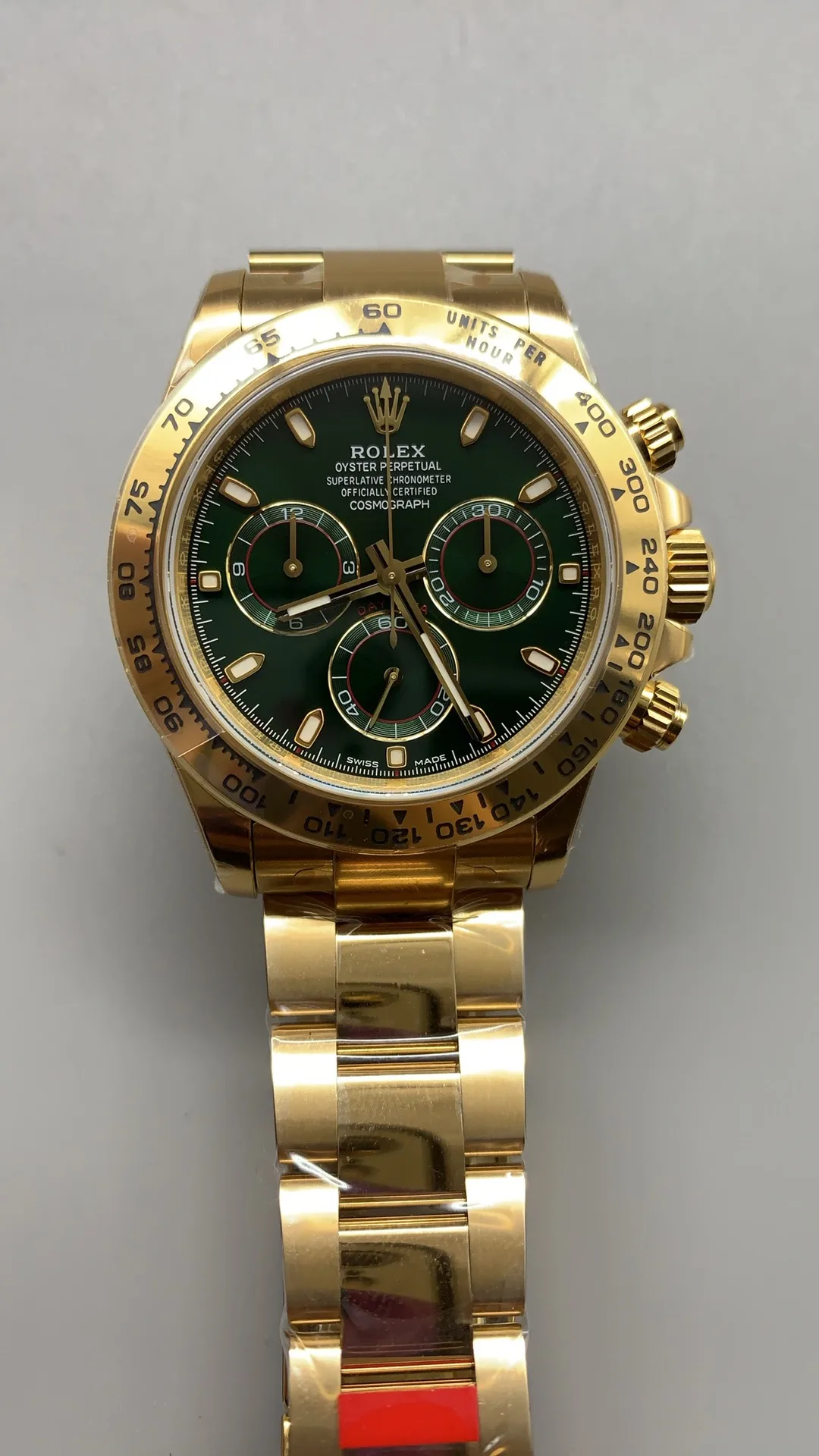
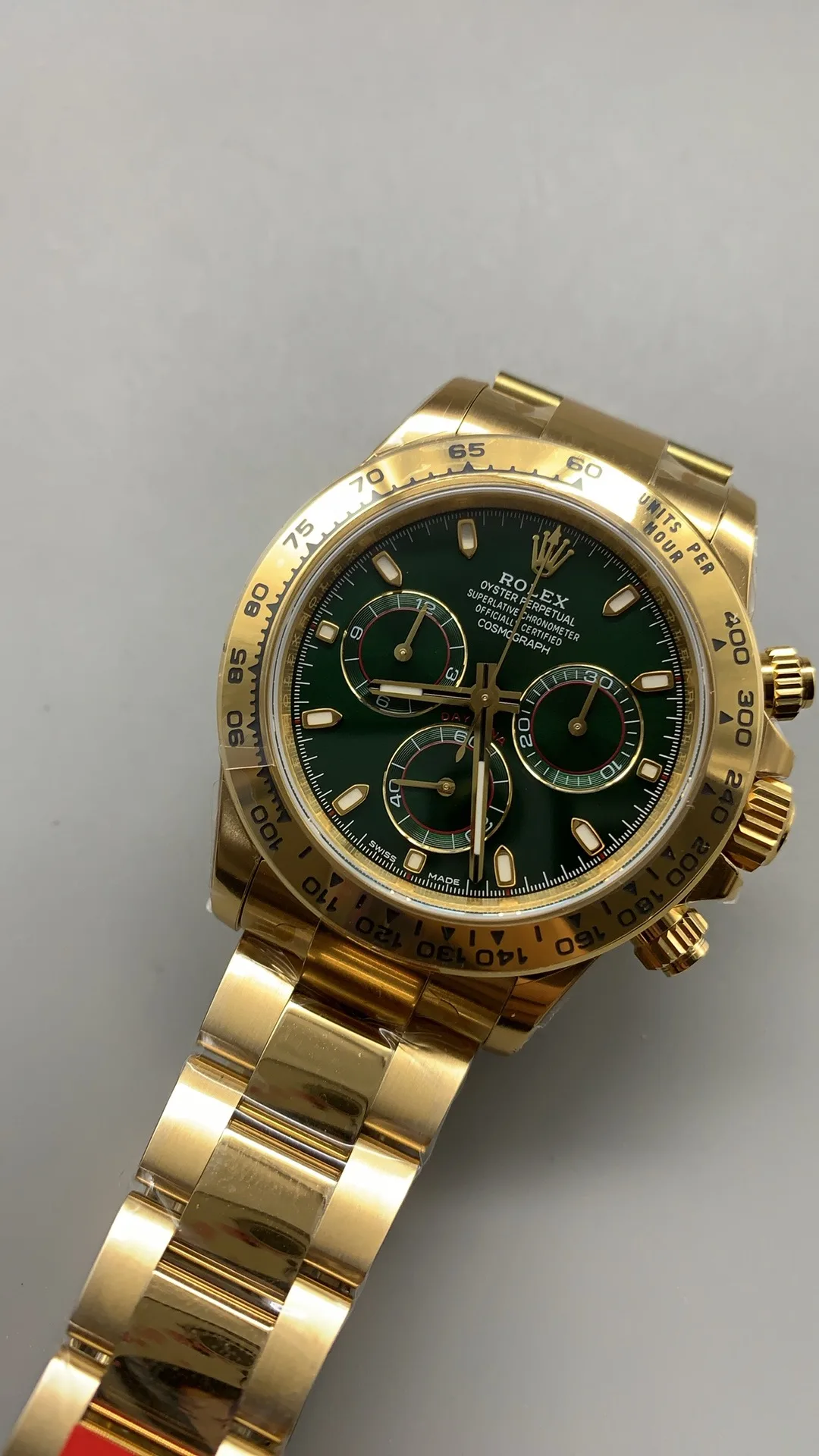
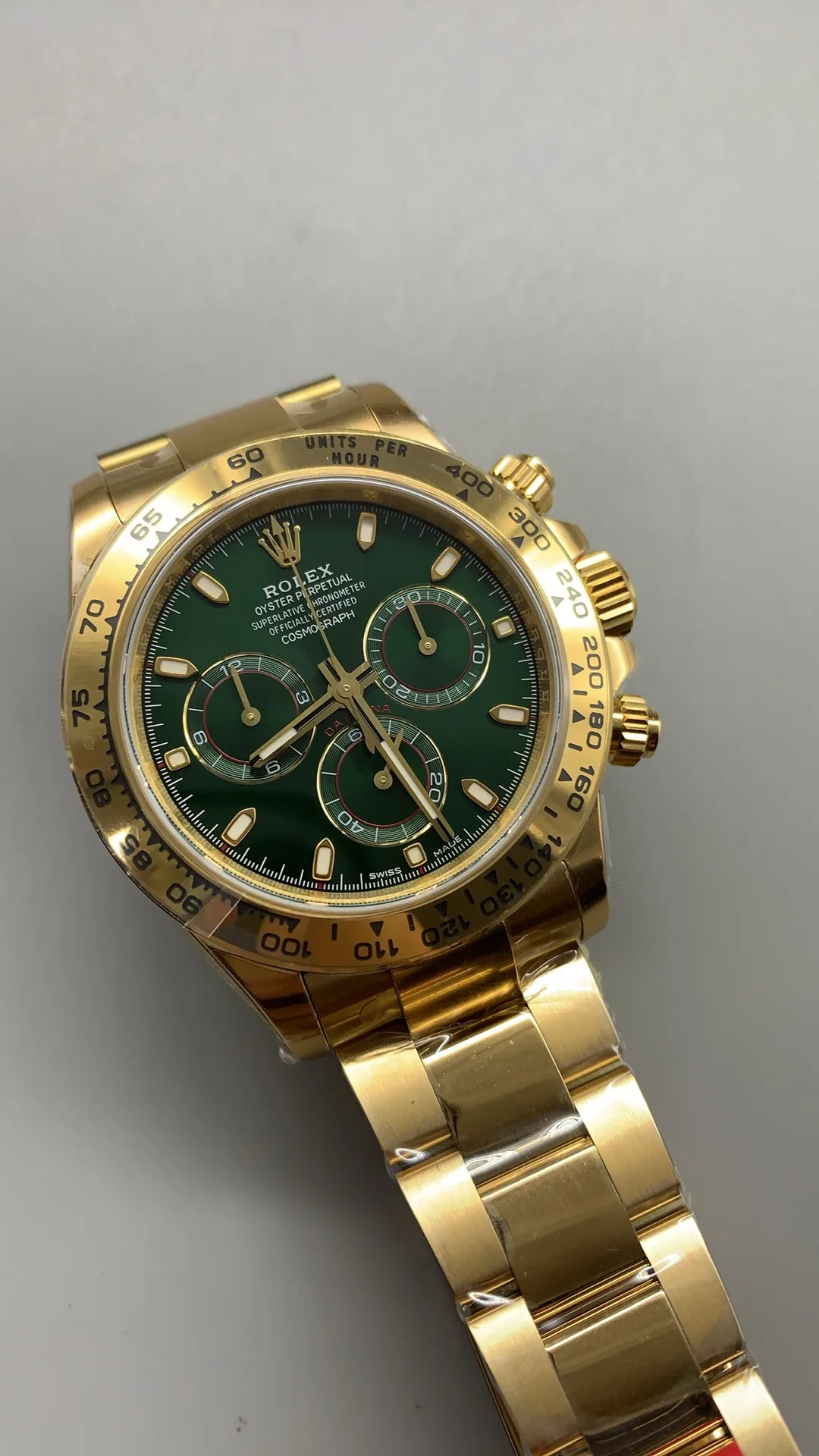
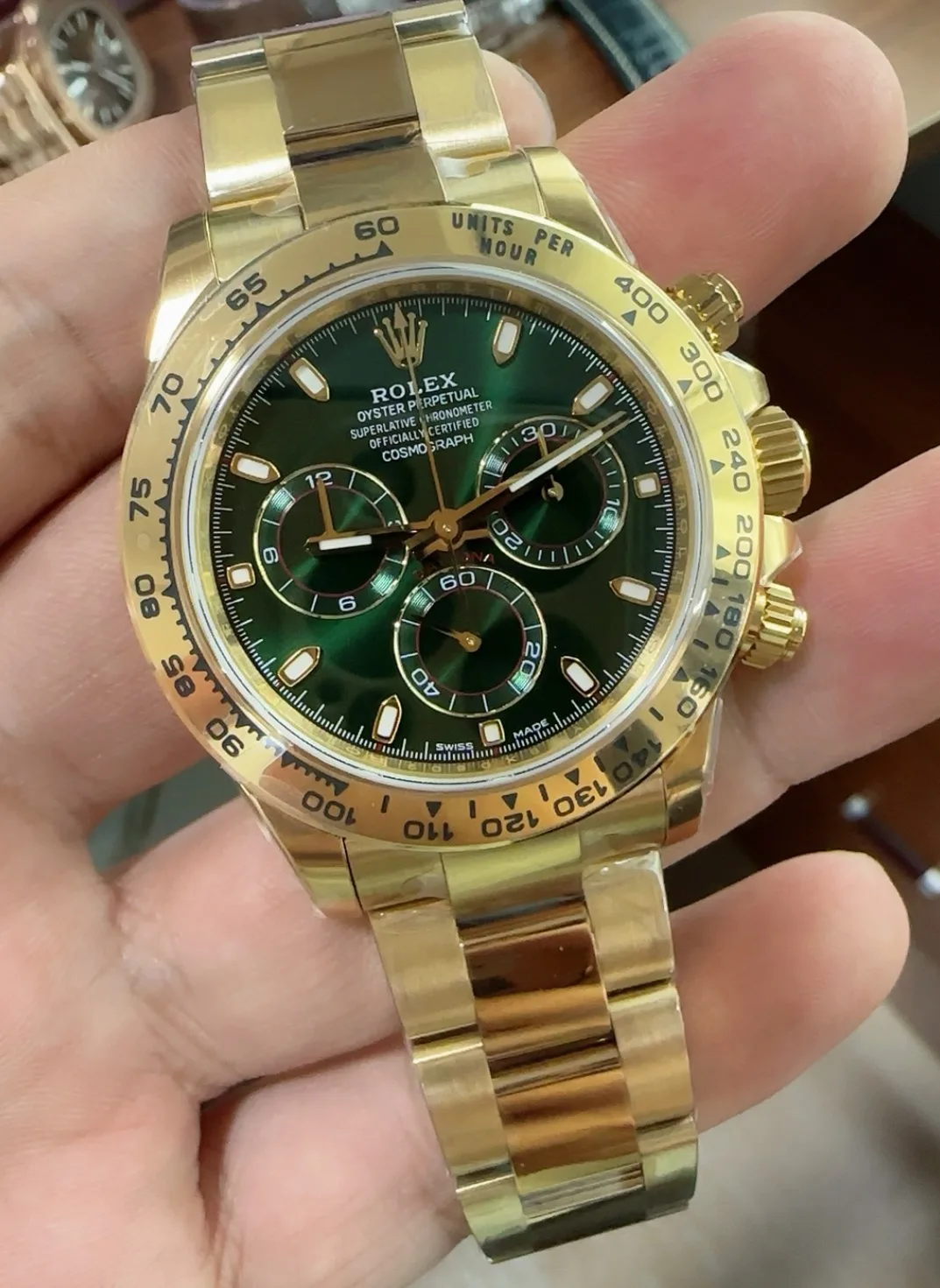
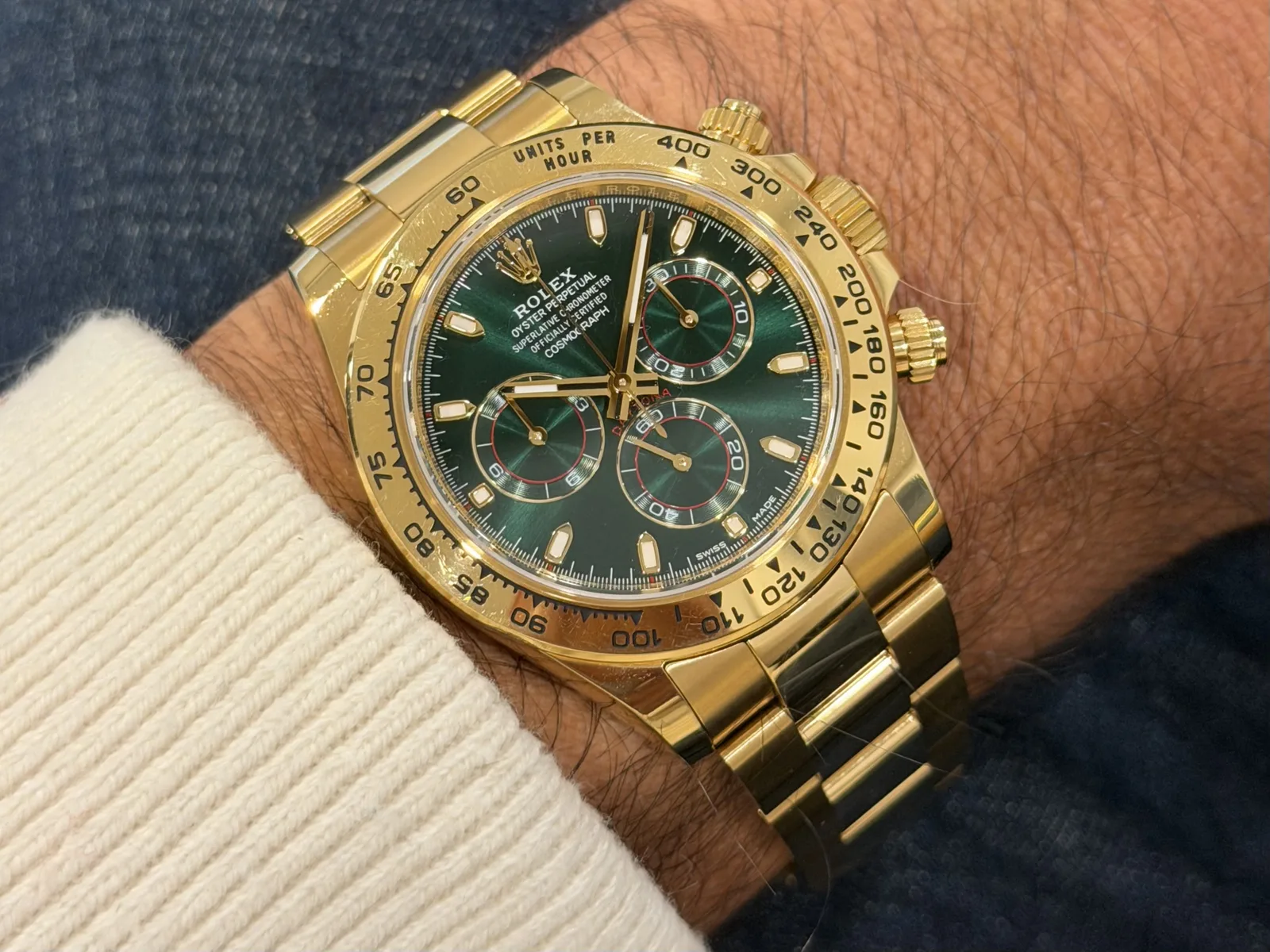
The yellow-gold Daytona with a green dial has a peculiar confidence. The case is bright. The bracelet is bright. The bezel adds another polished surface, apparently worried the first two were showing restraint. Then the green dial pulls everything together and gives all that gold somewhere to go.
That is the appeal of the 116508, and the challenge of copying it. Getting the lettering right is useful. Getting the relationship between the colours right is essential. VSF’s DD4130 version is a serious attempt at the whole package, and it deserves a more demanding look than a flattering photo and the word “perfect.”
Before the nickname became the watch
The green-dial 116508 arrived in 2016. It became collector shorthand after John Mayer’s public enthusiasm in 2019. “John Mayer” is a nickname, not an official edition. The sequence is wonderfully familiar: a watch sits in the catalog, someone with taste and an audience points at it, and everyone suddenly discovers they’ve always loved it.
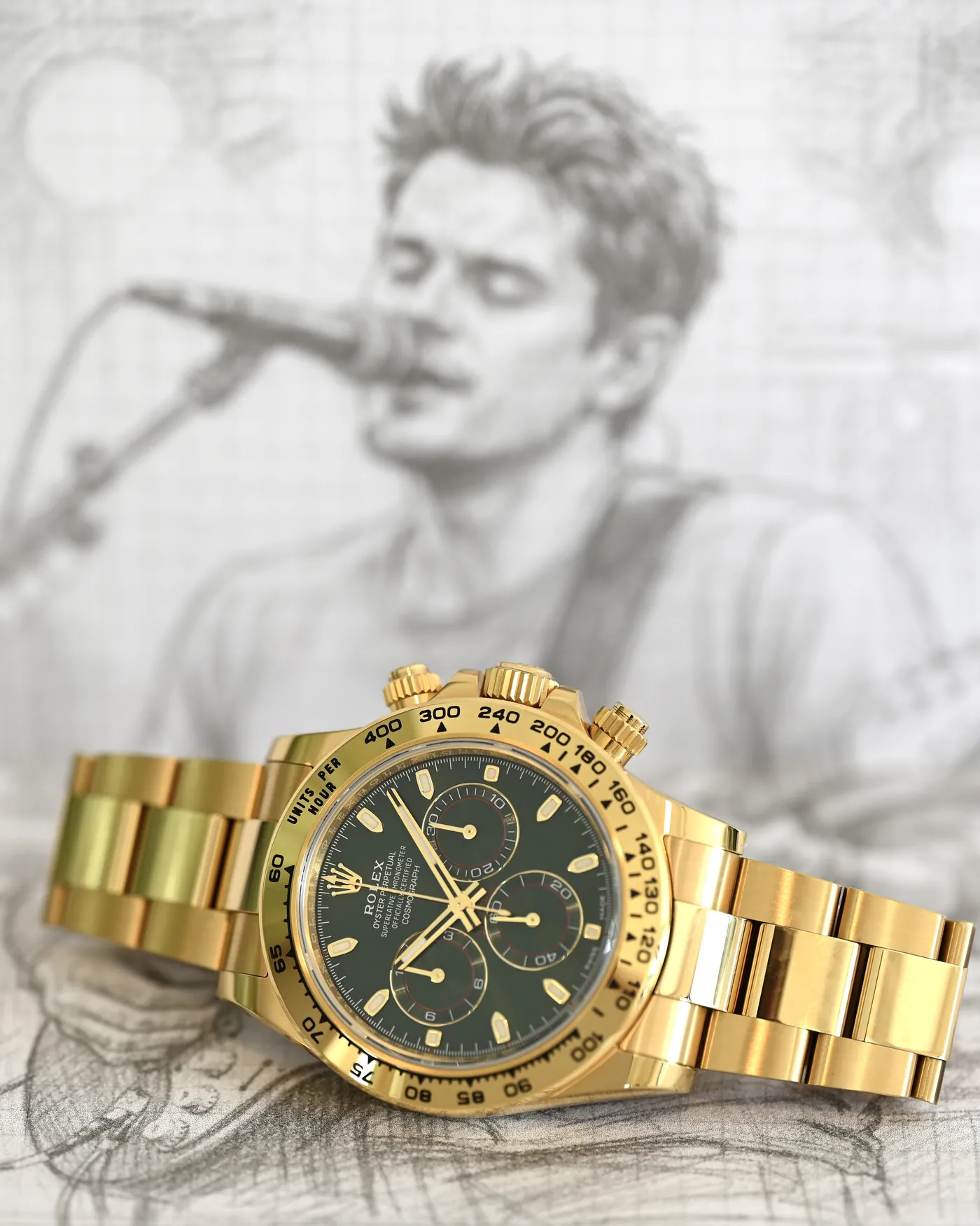
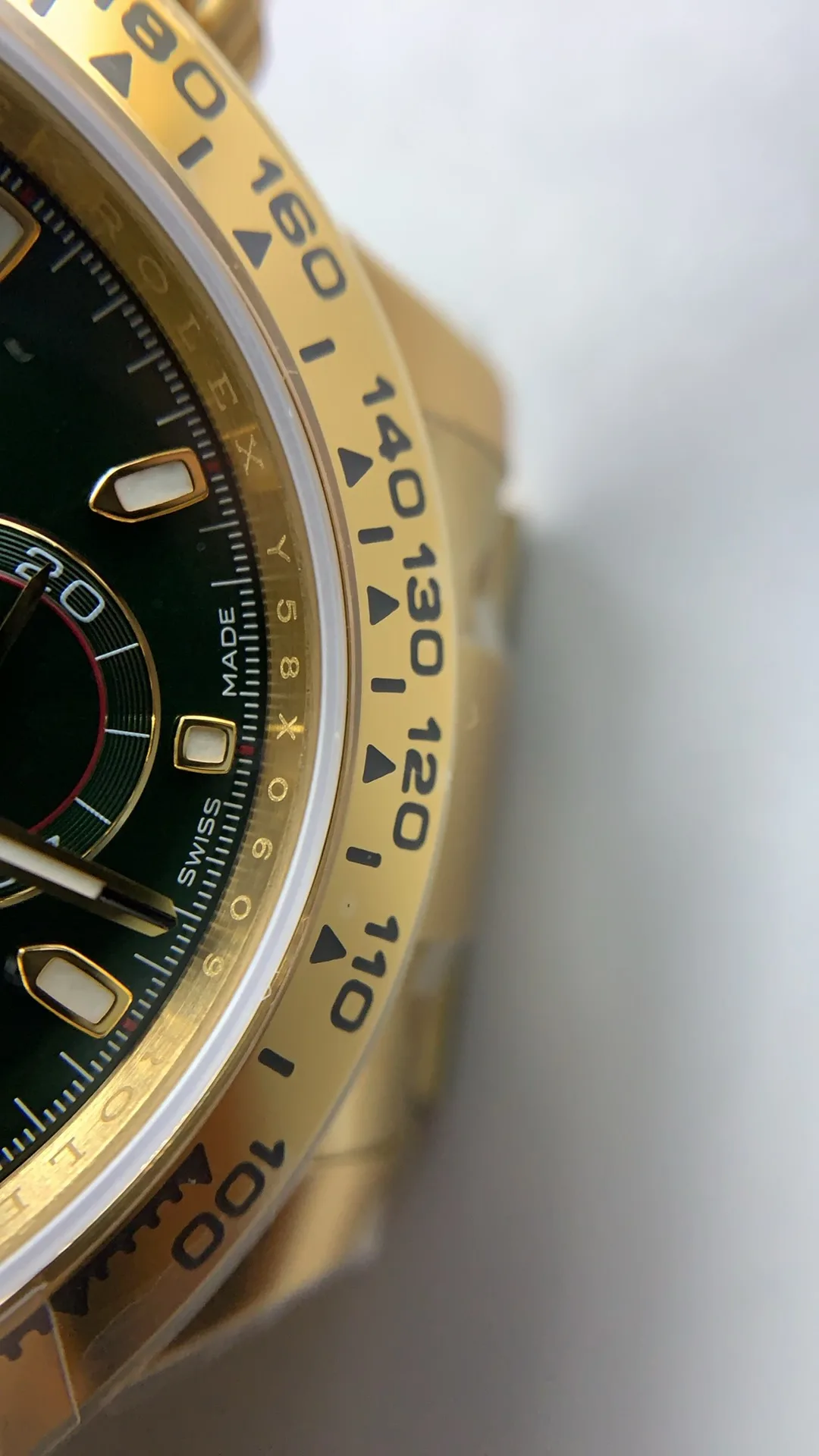
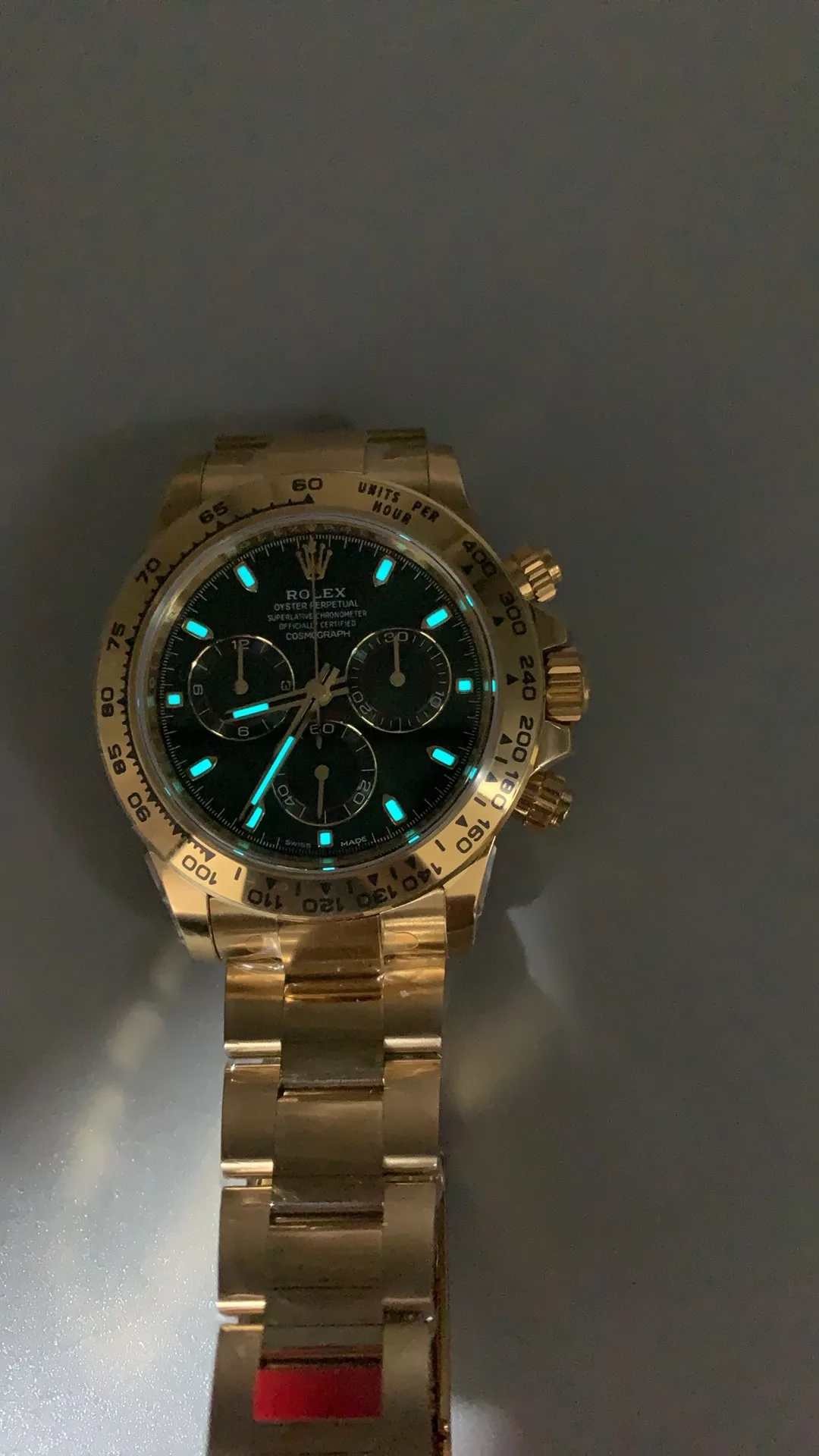
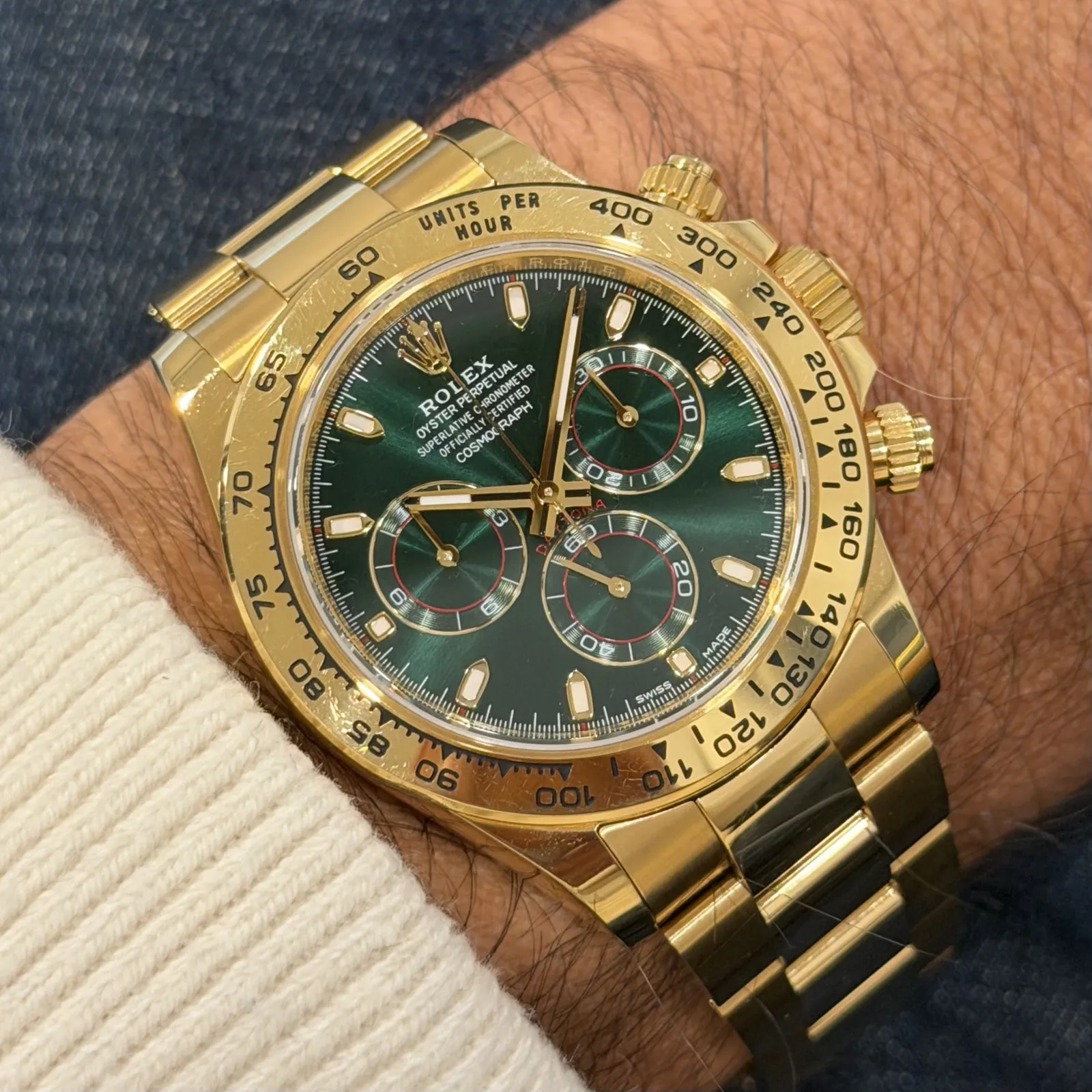
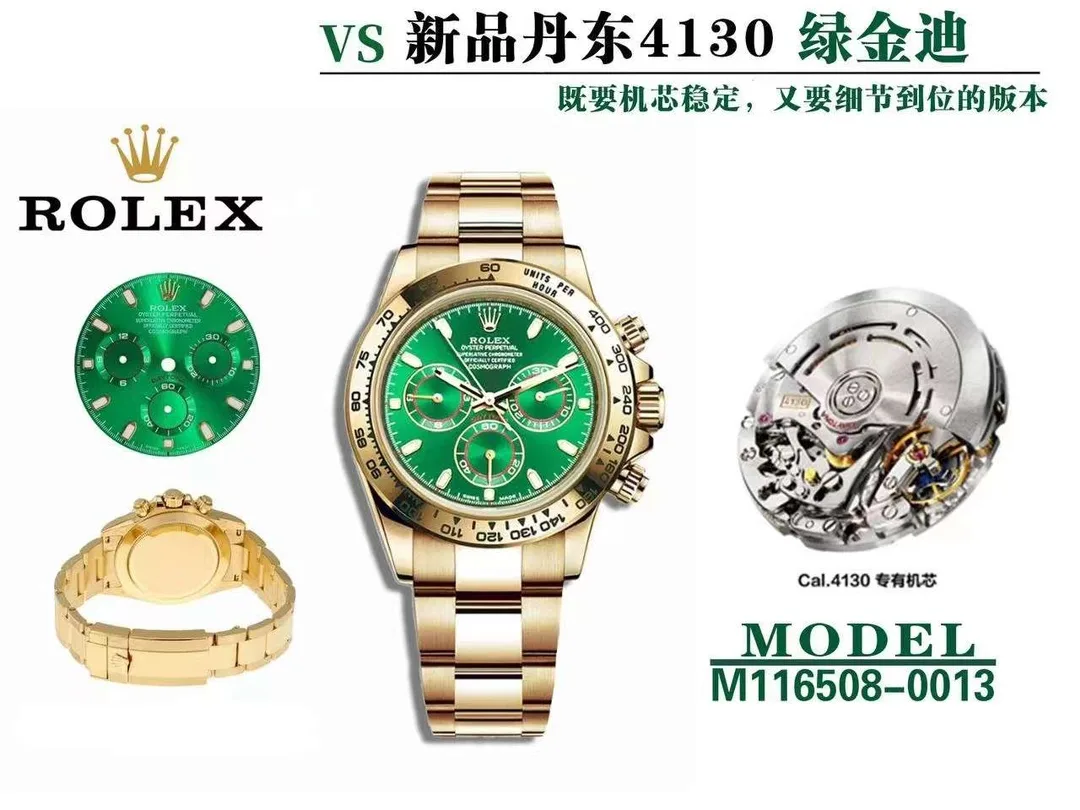
Still, the design earns the attention. The green runs across the main dial and the three registers, with gold subdial rings and small red accents interrupting it. The polished gold tachymeter bezel lets the gold flow from case to bracelet, so the watch feels like one continuous object with the green held inside it.
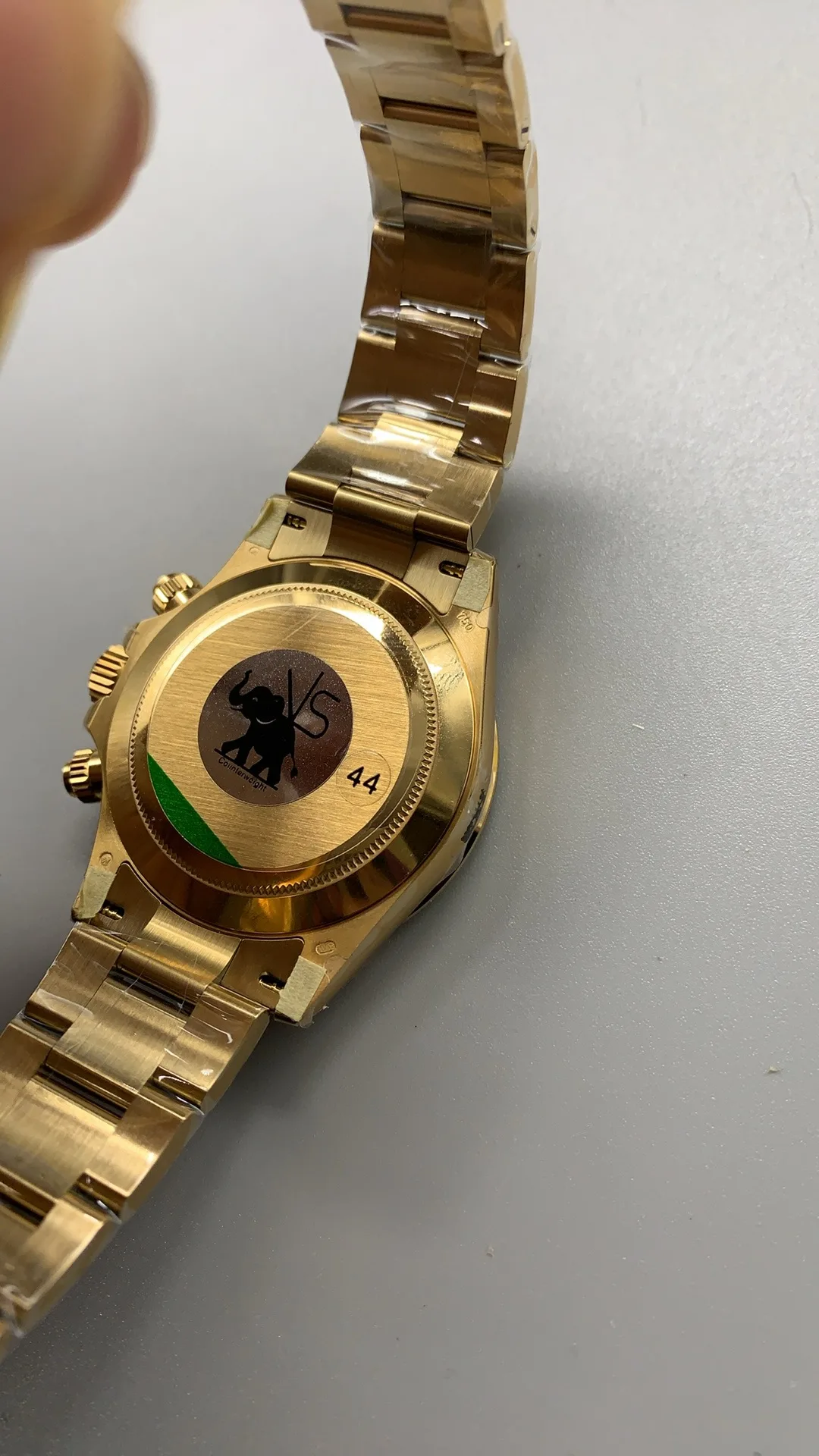
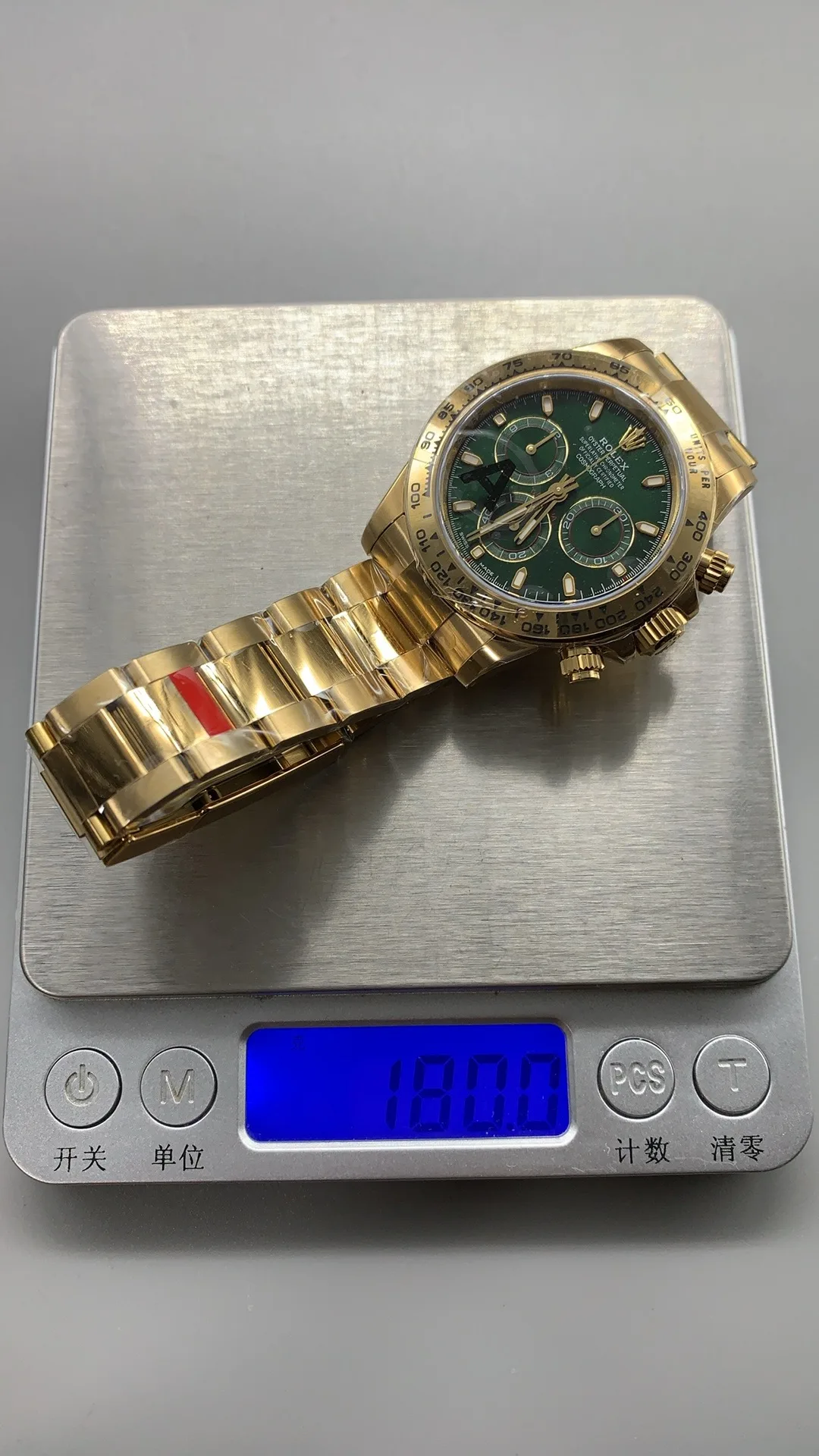
“VSF John Mayer” is also an incomplete description. Lightweight and heavier builds coexist, and version numbers are applied inconsistently. This review concerns the heavier, roughly 179–181 g build with the Dandong 4130 clone. Those are example weights, not a guarantee, and bracelet sizing changes the result. A version sticker can’t tell you which build you’re actually holding.
The dial: where it earns its personality
The challenge isn’t producing a green dial. It’s producing green with movement in it. A sunburst throws directional reflections, so the brightness shifts as the watch turns. VSF captures that behaviour, along with the substantial subdial rings that keep a busy face organised.
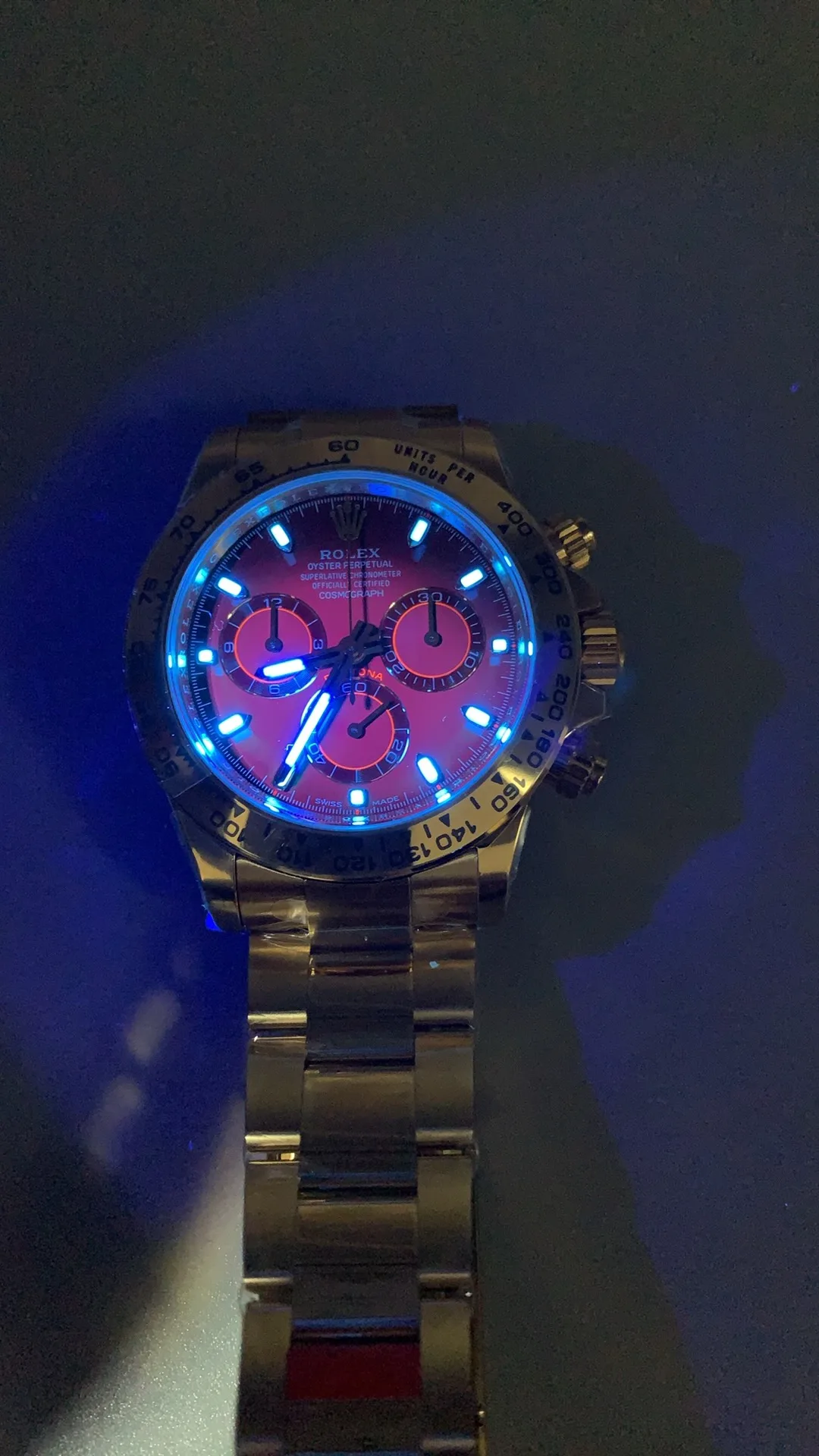
The exact shade is harder to judge. Brightness, saturation and the warmth of the surrounding gold all play a part, and automatic white balance adds an opinion nobody asked for. We wouldn’t call the colour exact on the evidence. We’d call it persuasive enough to examine closely.
The gold: improved, not settled
The genuine watch is 18K yellow gold. The VSF reproduces the look with a coating over other materials. Those are fundamentally different constructions, with different implications for weight, wear and repair.
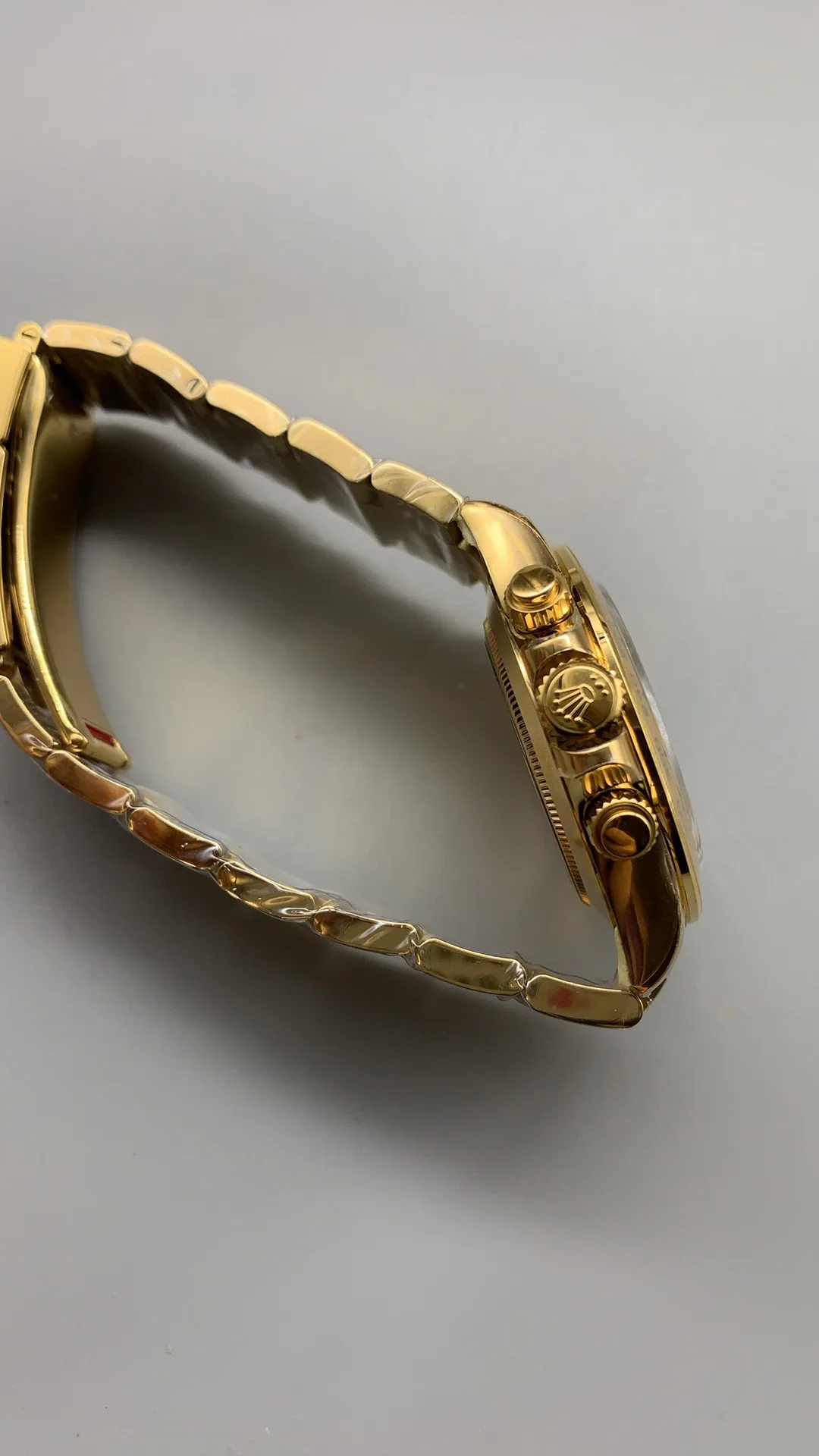
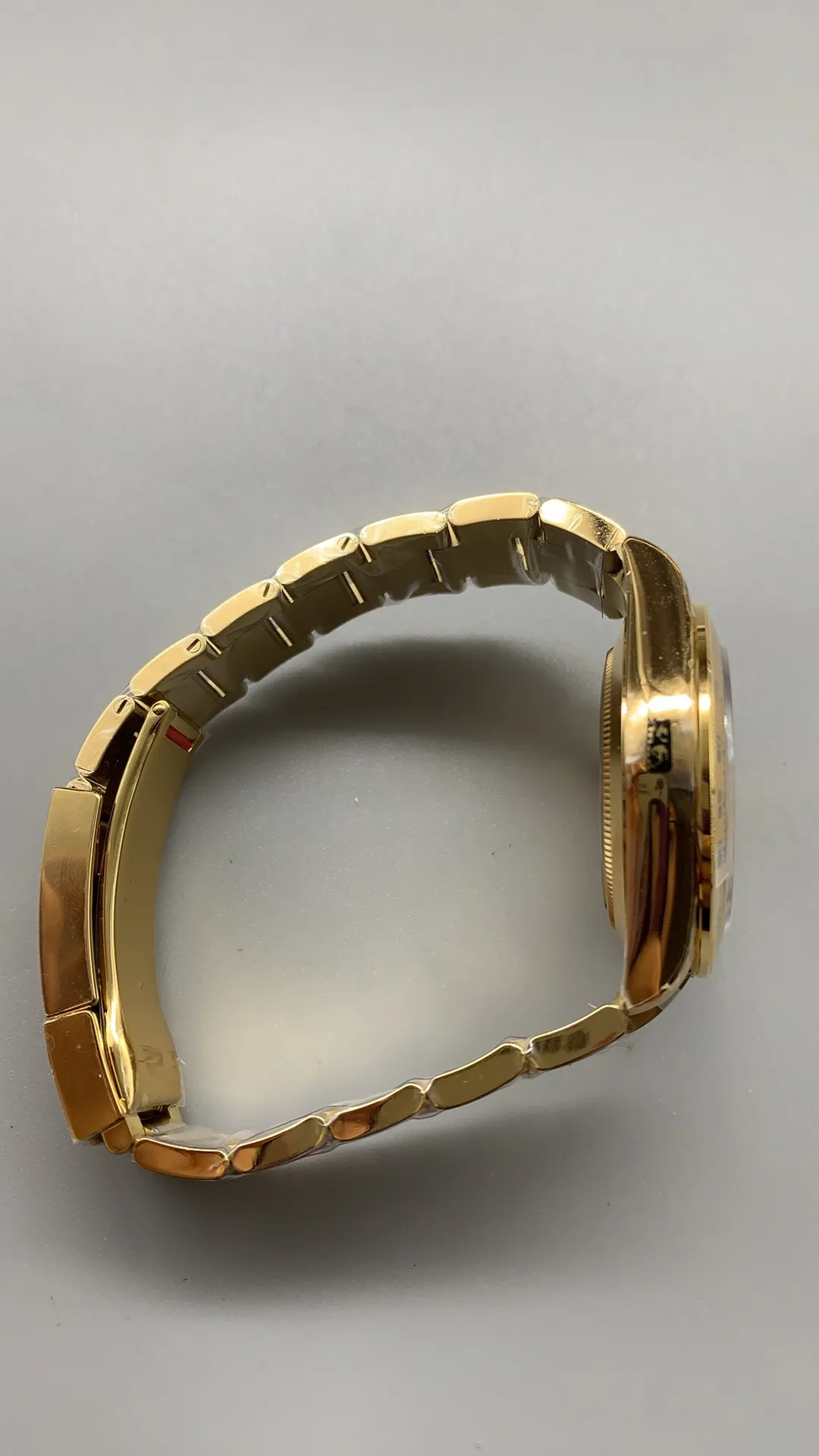
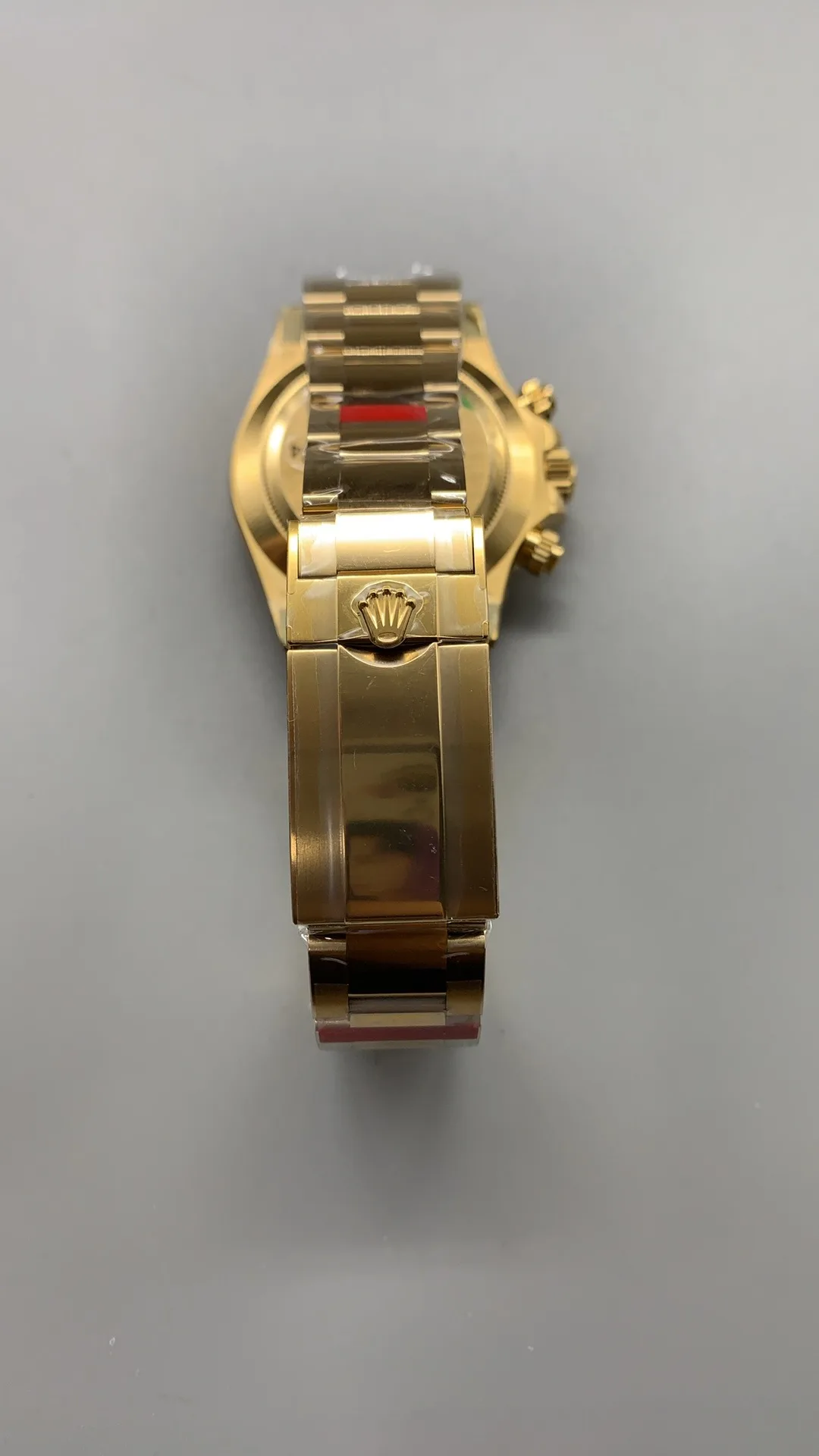
The heavier VSF generation has been praised for a less aggressive yellow than earlier builds, and criticised for still being too yellow. Both reactions exist, and photos won’t settle it. Our position is simple: the finish can look attractive without matching the genuine gold. What matters most is consistency between bezel, crown, case, links and clasp.
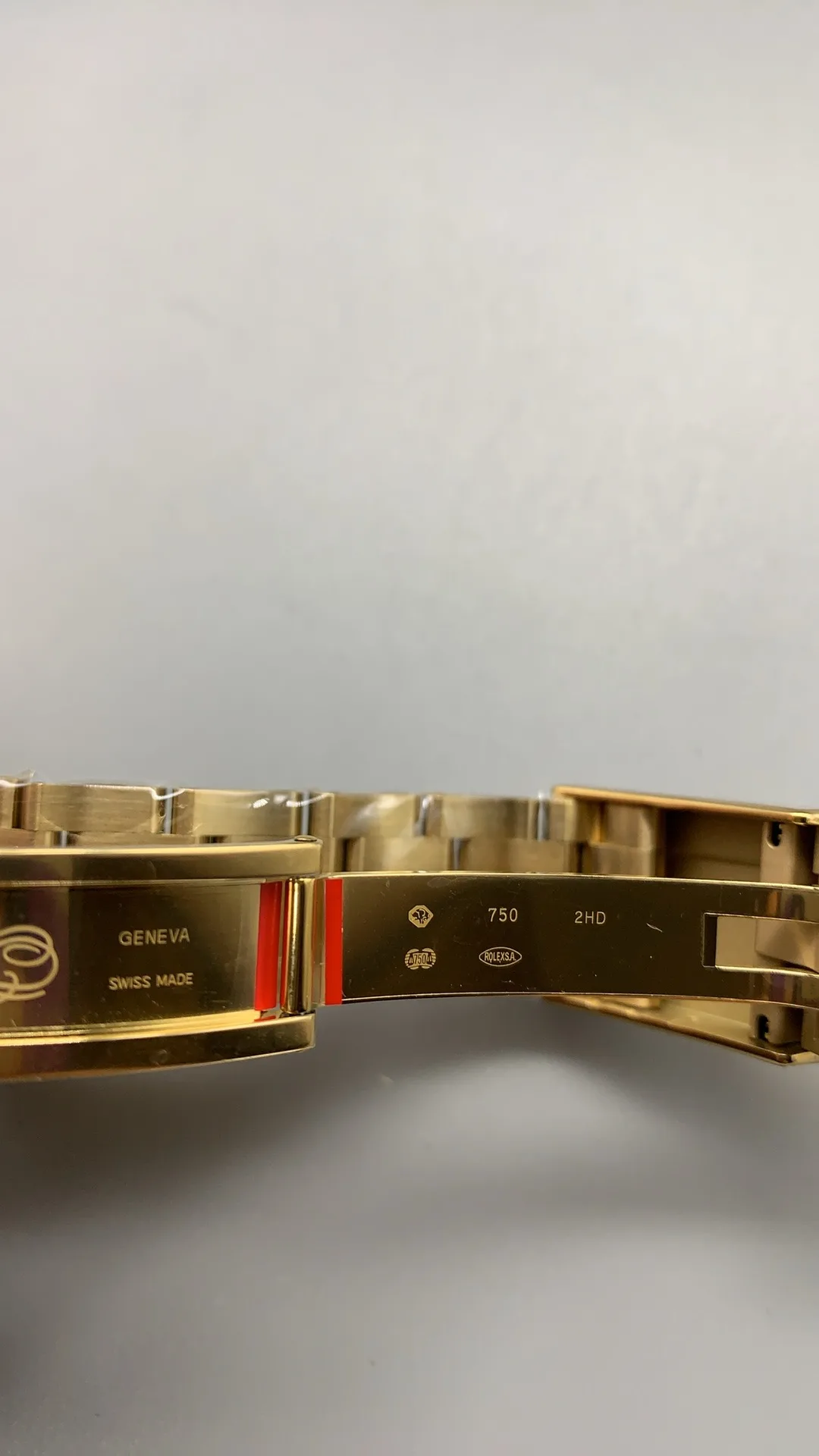
Claims about the coating’s chemistry, gold content or thickness need evidence beyond appearance. “PVD,” “18K plated” and “wrapped” aren’t interchangeable, and an 18K or 750 stamp doesn’t make a replica part solid gold. Durability is the other open question. Clasp edges and bracelet contact points take repeated friction, and a few clean weeks can’t predict several years. Polish aggressively and you can remove the finish you’re trying to keep. Sending a watch for replating before deciding whether you dislike its finish is an impressively efficient way to spend money twice.
Case, crystal and the urge to upgrade
The older Daytona’s compactness is part of its appeal, and the heavier VSF keeps the roughly 12 mm profile rather than swelling to add mass. That’s the right priority. Look along the case sides and lug tops, where reflections reveal soft transitions faster than a flat photo. Check that the bezel’s engraved scale is crisp and properly filled.
Crystal clarity matters too, but that doesn’t make an aftermarket crystal compulsory. Compare the watch in daylight and indoor light before deciding. The same goes for the engraved rehaut. There’s a difference between enjoying a watch and holding a disciplinary hearing for an engraving.
DD4130: a real reason to choose this build
The DD4130 reproduces the genuine 4130’s integrated column-wheel chronograph with a vertical clutch. That makes the Daytona’s layout and slim profile possible, and it makes this far more satisfying than a watch whose subdials are decoration.
It’s still a clone. The standard DD4130 uses a regulated balance rather than the genuine free-sprung one, and a similar layout doesn’t guarantee the same alloys, tolerances or lubrication. The genuine 4130’s roughly 72-hour reserve is a reference point, not a promise for every DD4130. Measure your own, ideally with the chronograph stopped and started. A good timegrapher reading in one position is encouraging, not proof.
Operate the chronograph deliberately: start, stop, reset, including after the minute counter has advanced. This isn’t a flyback. Hands that creep or reset unevenly deserve attention, and “they all do that” isn’t a diagnosis. Screw-down pushers don’t certify water resistance either, so have it pressure-tested and find a watchmaker who’ll work on the movement before you need one.
Bracelet and the limits of the scale
Approximately 180 g gives the heavier VSF more substance than lighter builds, but it doesn’t reproduce solid gold. The often-quoted genuine figure is roughly 200–205 g, and bracelet length must match before the difference means anything. We’d keep the case shape and bracelet articulation over the last few grams. The scale is one instrument. It shouldn’t be the editor.
Older Clean and original ARF builds keep collector interest for their dials or gold tone, and heavier ZF builds chase mass. Without equivalent current examples side by side, a universal factory ranking is guesswork.
What people overlook
The usual argument is about grams and shades of yellow. The quieter question is ownership. A coated gold watch asks for gentler habits than steel: softer polishing, more care with clasps and desk edges, and a realistic view of how it will look in three years. None of that is a reason to skip it. It’s a reason to buy it knowingly.
The other overlooked point is the dial-to-gold relationship. Owners fixate on each in isolation, but the 116508 works because the two flatter each other. A slightly off green next to a slightly off yellow can look worse than either fault alone, so judge them together.
What we’d check before accepting one
- Identity: confirm 116508, DD4130 and the heavier build, with a scale photo and the link count stated.
- Colour: neutral daylight photos and a short video, judging dial and gold together.
- Dial assembly: marker alignment, printing, hand clearance and dust under the crystal.
- Chronograph: a full start, stop and reset, including after the minute counter has moved.
- Exterior: bezel engraving, crown and pusher threads, bracelet movement and clasp security.
The Repinkee verdict
This VSF works because it keeps the reasons to want a 116508: the continuous gold exterior, the green dial’s shifting light and the compact proportions of a proper automatic chronograph. The DD4130 gives it mechanical substance. Neither settles the coating’s accuracy or longevity, and neither turns a replica into solid gold.
Choose a clean example, verify the movement and live with the stock finish before changing anything. Prioritise comfortable proportions over a heroic scale reading. For the collector who wants the green-and-gold design and understands what a coated watch asks of its owner, there’s plenty here to enjoy. Preferably near a window.
Daytona 116508, green dial
Factory lineup
Hands-on
Green dial