September 2026
August, allegedly the quiet month: new watches, a jewellery-box jackpot, a lakeside week of appointments and two brands changing owners. We watched it all from the cheap seats.
August is supposed to be the quiet month in watches. The factories in the Jura close for a few weeks, the executives go somewhere with a boat, and the rest of us are meant to sit still. It never quite works out that way. This year the month brought a new small Speedmaster, a fistful of serious independents warming up for Geneva, a steel Patek that walked out of a jewellery box, an event that had to change continents, and two old names finding new owners. Here’s what came out, what sold, who moved and who bought whom, with a little of the story behind each one.
New releases
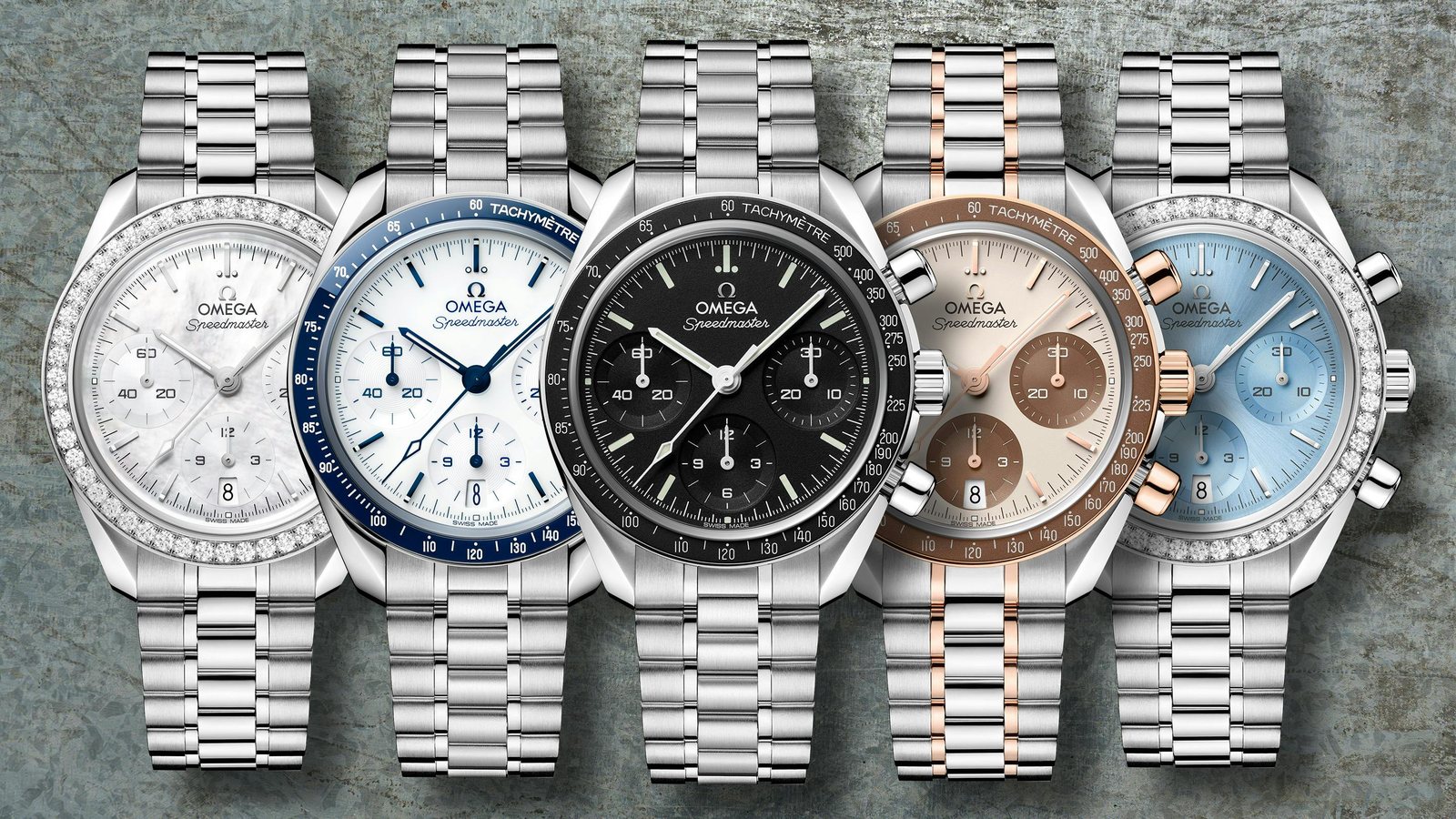
Omega Speedmaster 38, second generation
The Speedmaster is the rare watch that doesn’t need an introduction, which is exactly why the smaller ones always start an argument. Omega has made reduced Speedmasters for decades, and every time it does, someone says it isn’t the real thing and someone else says it fits. Both of them are usually right.
This second-generation Speedmaster 38 comes in seven versions, and the biggest change is the one you see first: the oval subdials of the last generation are gone, replaced by round registers that look like they belong on a Speedmaster. There’s a dot-over-90 bezel for the people who check that sort of thing, and inside sits the automatic calibre 3330, or the 3332 with no date on the black dial, with a 52-hour reserve. That black no-date version is the one that quietly calls back to the old Speedmaster Reduced, a watch a lot of people bought as their first good watch and never sold.
The case is 38mm across, 44.96mm lug to lug, and 14.75mm thick. That last number is the honest catch. Collectors hoped for something thinner, and an automatic chronograph module only gets so slim. The bracelet helps: it’s a shrunken five-link Moonwatch bracelet with 2.3mm of comfort adjustment, the kind of detail you only appreciate on a hot afternoon. Steel starts at $6,500 in black, $6,700 in silver and $7,100 with a white or blue ceramic bezel. Bi-metal is $11,700, and the diamond versions run $12,300 and $13,100.
What it means is simple. Omega knows not every wrist wants 42mm, and it’s finally treating the smaller Speedmaster like a real member of the family instead of a cousin who visits at Christmas.
Longines Master Collection Monopusher Chronograph and Chronograph Moonphase
There’s a quiet kind of confidence in a brand that can reach back more than a century and find the thing it’s about to sell you. Longines turns 195 next year, and long before most of today’s chronograph makers existed, it was building them. In 1911 it made one of the early wrist-worn monopushers. In 1913 came calibre 13.33Z, a name that still makes certain collectors sit up straight.
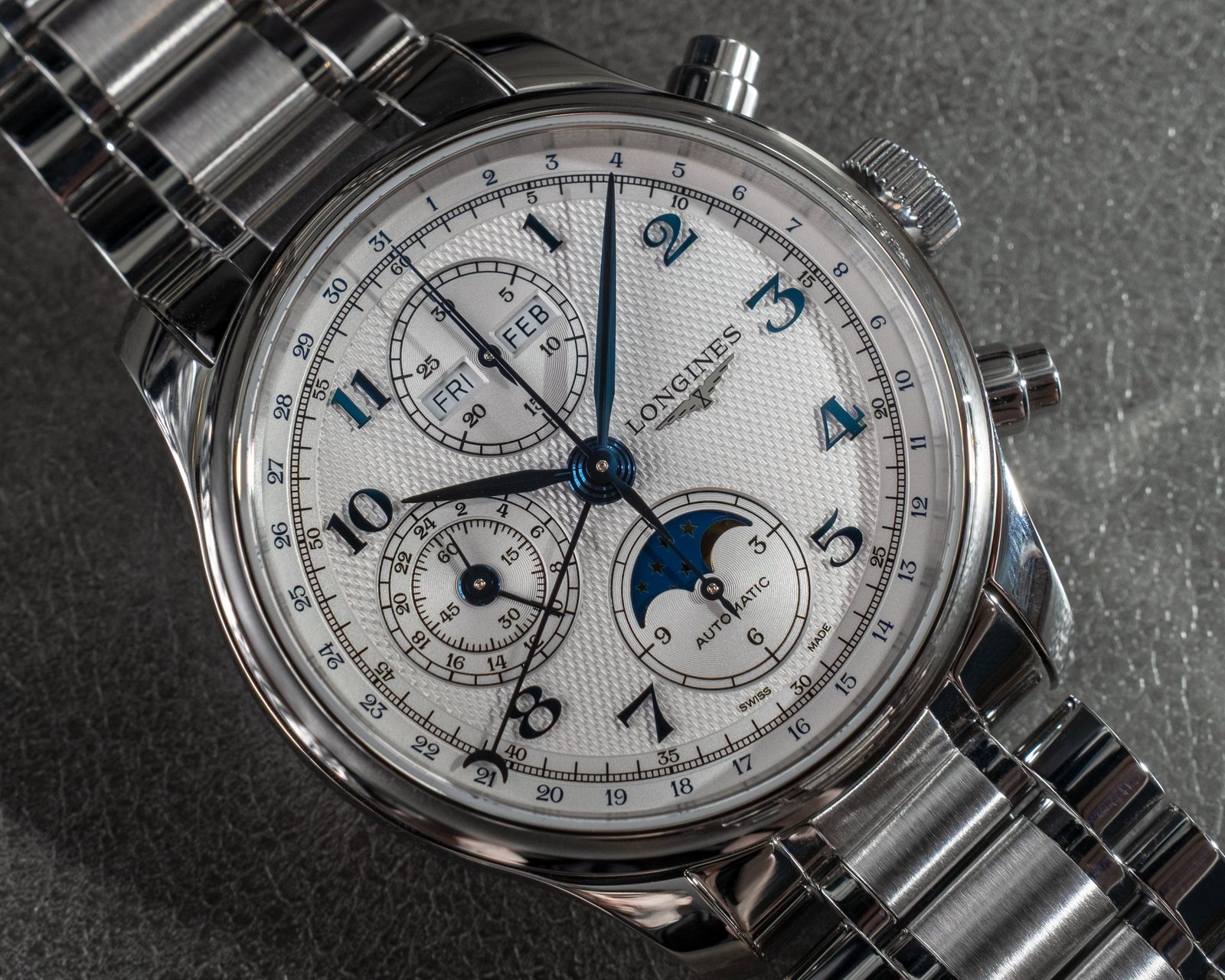
So the new Master Collection Monopusher is less a novelty than a homecoming. It’s the first single-button chronograph in a collection that dates back to 2005, and that one button does everything: start, stop, reset, in that order, every time. It’s an old way of doing things, and it asks a little more of the watchmaker, because the column wheel has to manage all three jobs on its own. Inside is the hand-wound L799.5 with a silicon balance spring and 68 hours of reserve, and on the dial there’s a pulsometer scale, the kind once used by doctors taking a pulse. It costs $3,900.
Its sibling, the Chronograph Moonphase, swaps the hand winding for the automatic L687.5, with 66 hours and a moon at the bottom of the dial, for $4,250. Both are 41mm, and both wear a barleycorn guilloché dial that rewards a slow look.
Here’s why it matters. A column-wheel monopusher has traditionally lived much higher up the price ladder. Bringing one under $4,000, from a brand with the history to back it up, is the kind of move that teaches a new collector what good looks like.
Parmigiani Fleurier Tonda PF Skeleton, Milano Blue in rose gold
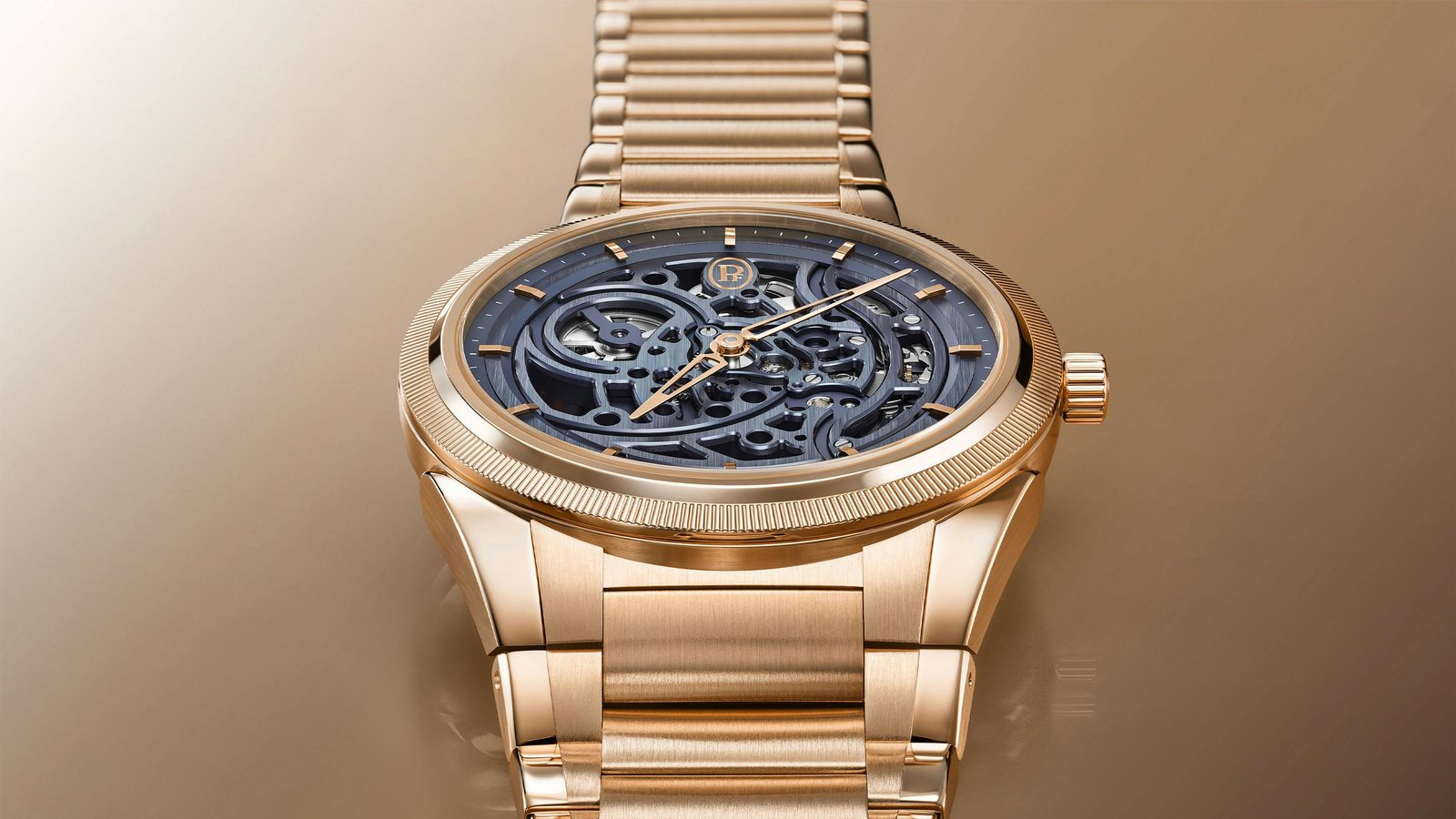
Some brands grow up loudly. Parmigiani Fleurier has done it slowly, the way a good tree does. It began as one restorer’s name, Michel Parmigiani, a man trusted with some of the most important clocks and watches in Switzerland, and over the past few years it has turned into a serious high-end house with a clear, calm design language. The Tonda PF is the centre of that story.
The Skeleton takes that calm and opens it up. Released just ahead of Geneva Watch Days, it’s 40mm across and only 8.5mm thick, with the in-house PF777 calibre inside. The important part is that the movement was designed from the start to be skeletonised. That sounds like a small distinction. It isn’t. Plenty of skeleton watches are ordinary movements with the metal cut away afterwards, and you can tell. When the openwork is part of the plan from day one, the bridges look like they belong where they are. It runs for 60 hours and is water resistant to 100m, which is more than most watches this delicate will admit to.
The news this time is colour. The Milano Blue finish was previously offered only in platinum, and now it comes in rose gold, limited to 30 pieces at $117,100.
That’s a lot of money, and nobody pretends otherwise. But it’s also a sign of where independent-minded watchmaking has gone: patient, detail-first, and willing to wait for the people who understand.
IWC Big Pilot’s Watch Perpetual Calendar ProSet
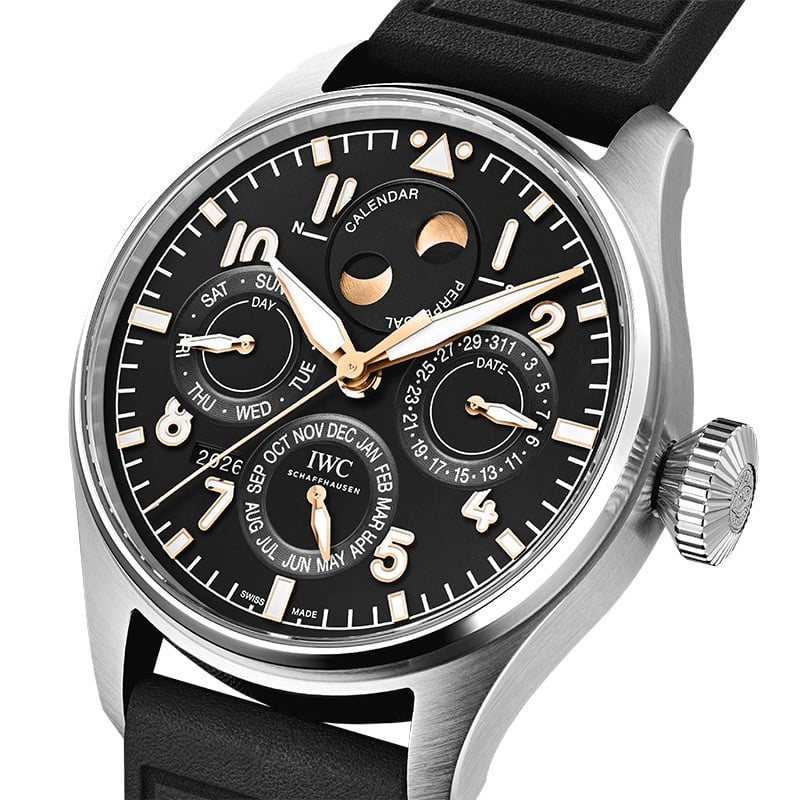
In 1985, a watchmaker named Kurt Klaus built a perpetual calendar for IWC that could be set entirely from the crown. The Da Vinci Ref. 3750 changed what people thought a perpetual calendar had to be, a fragile thing you sent back to the factory if you let it stop. Forty years later IWC is still working on the same idea, and this year it took another step.
ProSet, introduced at Watches and Wonders this spring, lets you move the calendar forward and backward from a single crown position. It’s protected by four patents and uses LIGA-made parts, which is a manufacturing process precise enough to make the old way look rough. In plain words: the most frightening part of owning a perpetual calendar, setting it, just got a lot less frightening.
This version wears it in a Big Pilot case for the Mercedes-AMG Petronas F1 team, a partnership that goes back to 2004 with the car company and 2013 with the team. Inside is calibre 82665 with Pellaton winding and 60 hours of reserve, and the double moonphase is accurate to one day in 1,040 years. The caseback carries a logo from the 1926 Daimler–Benz merger, a nice nod for anyone who flips the watch over. It’s 42mm, water resistant to 100m and limited to 140 pieces at €40,900, about $45,800.
What it says about the industry is worth a moment. Complications used to be about difficulty. Now the best ones are about ease. That’s a grown-up shift, and IWC has been quietly leading it for four decades.
Blancpain Fifty Fathoms Bathyscaphe, 70th anniversary
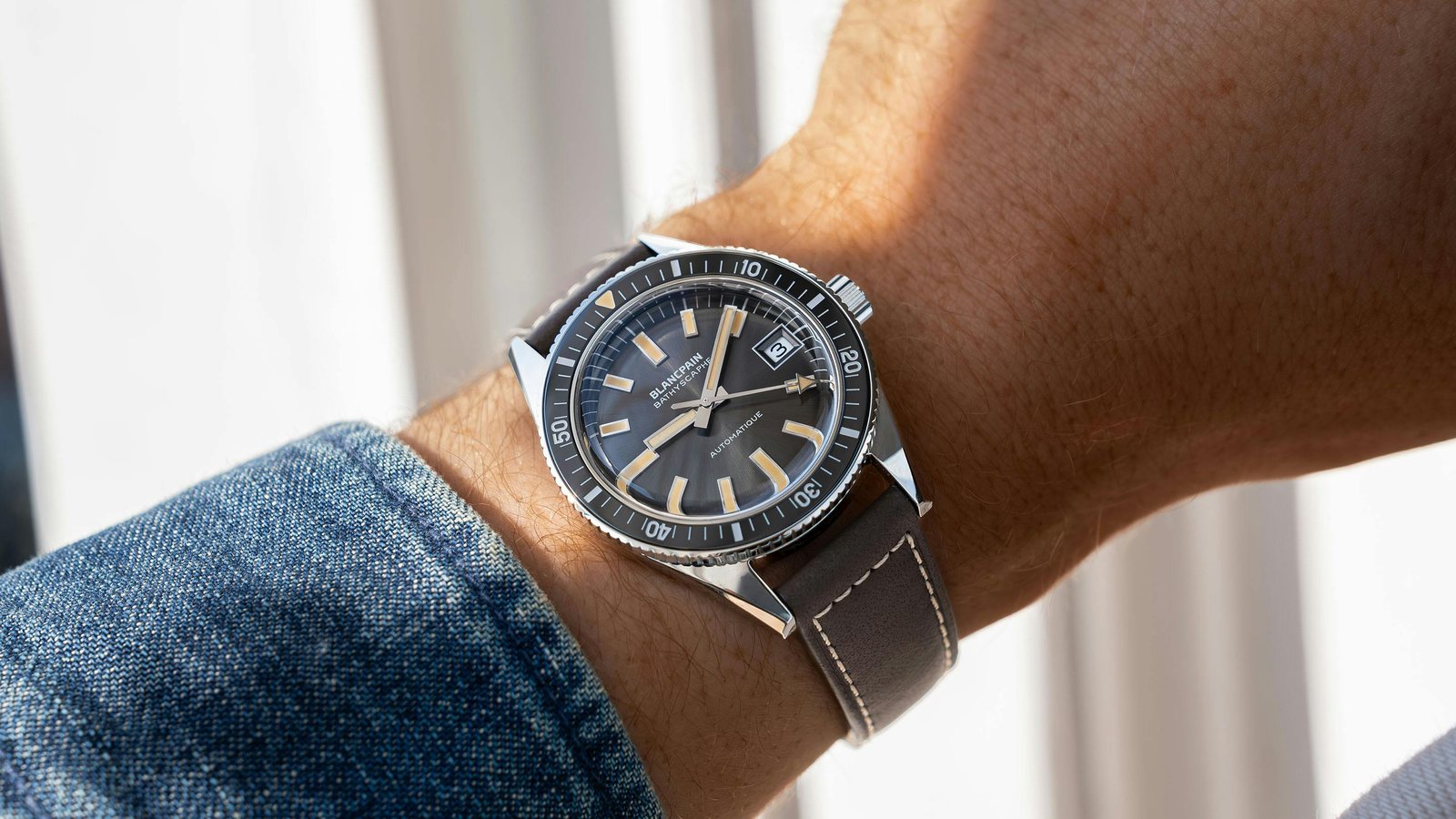
Every famous family has a sibling who gets less attention and turns out to be the interesting one. In 1953 Blancpain made the Fifty Fathoms, one of the first true modern dive watches, built for military divers. Three years later, in 1956, came the Bathyscaphe, a civilian counterpart for people who loved the idea of the sea but spent most days on land. Blancpain revived the name in 2013, and it has been finding its own feet ever since.
This 70th-anniversary edition draws on a 1968 reference. The original was 35mm. This one is 37.4mm and 12.3mm thick, which is a compromise most people will thank them for, big enough to feel modern and small enough to slide under a cuff. The dial is a meteor grey, the logo is the vintage one, and the open caseback shows calibre 1150 with 100 hours of reserve. Water resistance is 300m, so the civilian watch can still go diving if it’s asked nicely.
It’s limited to 300 pieces at $18,300.
The bigger point is about anniversaries. Brands have learned that the past sells, and you’ll see a lot of birthday watches this year. The good ones, like this, take a real reference, keep its proportions honest and use the occasion to remind you why the original mattered. The lazy ones just print a number on the dial. Learn to tell them apart, and you’ll save yourself a lot of money.
Glashütte Original Senator Chronograph and Navigator
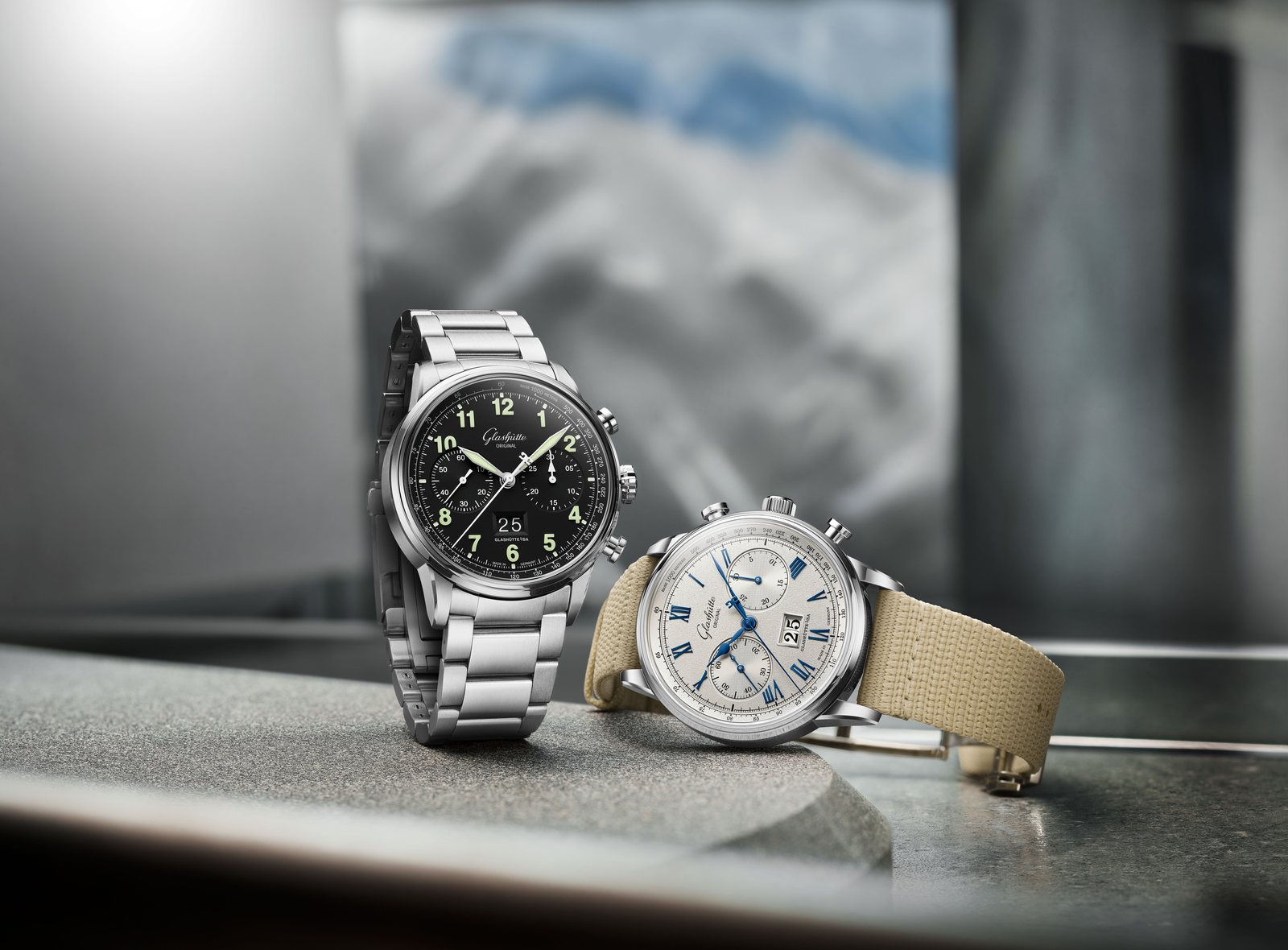
Glashütte is a small town in Saxony with a big story, and much of it is written in chronographs. In the early 1940s, the UROFA Calibre 59 became what’s often described as the first modern Glashütte wrist chronograph. The war, the division of Germany and decades of state ownership followed, and the town’s watchmaking came close to being forgotten. That it survived at all is a story worth knowing.
Glashütte Original’s new pair borrows from two different chapters. The Navigator dial comes from 1940s pilot watches, with the clarity you’d want in a cockpit. The Senator dial reaches further back, to 19th-century marine observation watches, the instruments navigators once trusted to find their way home. Same watch underneath, two ways of reading time.
Both are 41mm across, 12.9mm thick and 48.5mm lug to lug. Inside is the calibre 37-24 flyback chronograph with 70 hours of reserve, the brand’s Panorama Date and a 21-carat gold rotor. A flyback lets you reset and restart the chronograph with a single press, which mattered to pilots and still feels good under the thumb. Prices are $16,100 on leather or a strap and $17,100 on the bracelet, whichever dial you choose.
There’s a lesson here for anyone learning about watches. Heritage isn’t about a date on a press release. It’s about a town that kept its skills through very hard times, then went back to the drawer to see what it used to know. That’s worth more than any slogan.
Panerai Luminor Marina PAM01707 in Carbotech
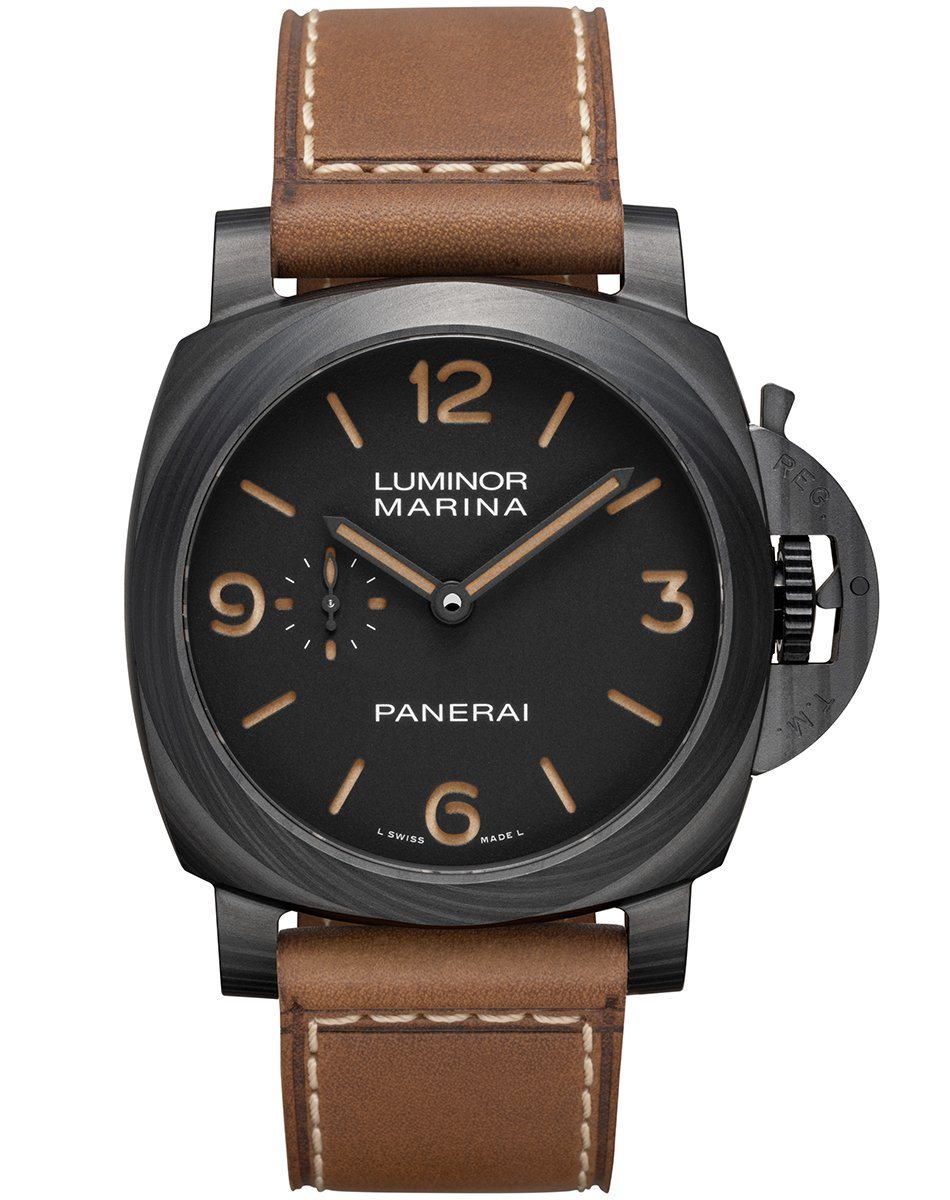
Panerai’s whole story starts underwater. The Florentine firm supplied instruments to the Italian Navy, and its big cushion-shaped watches were built for frogmen who needed to read the time in the dark. That’s why the cases are large, why the lume is generous and why the crown has that famous lever guard. None of it was meant for fashion. It became fashion anyway.
The PAM01707 keeps that silhouette and changes the material. Carbotech is a composite of carbon fibre bonded with PEEK, a high-performance polymer, and Panerai says it’s 64% lighter than titanium and 80% lighter than steel. Every piece has its own pattern of layers, so no two cases look quite alike. The watch measures 44mm by 14.5mm and weighs about 100 grams. It weighs about as much as a decent sandwich, which is a strange thing to say about a watch this size.
Inside is the in-house P.9010 with three days of reserve. There’s no date, a small seconds sub-dial and a stop-seconds function, both details with roots in military use, where synchronising watches mattered. Water resistance is 300m, and the price is $15,600.
What it shows is how a brand can honour its history without freezing it. The shape is the same one a navy diver might recognise. The material is something he couldn’t have imagined. That’s usually where the good ideas live, right between the two.
TAG Heuer Formula 1 Solargraph Zandvoort
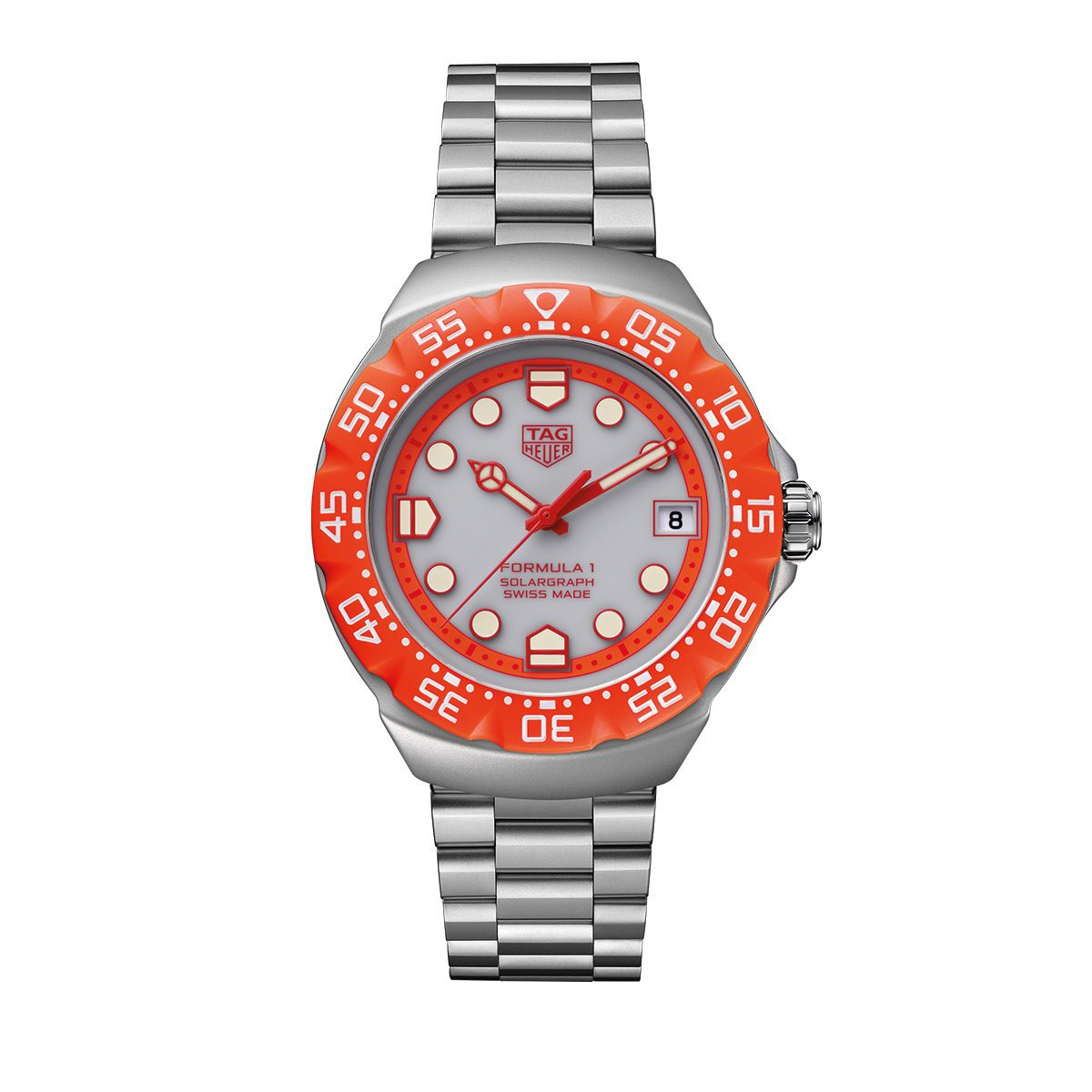
Some watches are made for a moment, and this one knows exactly which. The Dutch Grand Prix at Zandvoort, held August 21–23, was the last scheduled race at the seaside circuit, and TAG Heuer marked it with a Solargraph that wears the occasion on its sleeve.
The Formula 1 line began in 1986 as an affordable, colourful racing watch that a lot of people still remember as their first proper wristwatch. This edition goes back to that spirit with a 38mm case, a size that echoes those early models and fits more wrists than today’s usual sports watch.
The real story is inside. The TH50-00 solar movement is clever in a very practical way. One minute of sunlight gives roughly a day of running. A full charge lasts 10 months in the dark. If it does stop, ten seconds of light starts it again, and the accumulator is designed to last up to 15 years. It’s a watch you can leave in a drawer for most of a year and still find running.
There are two versions, limited to 1,500 and 1,000 pieces, at $2,150 and $2,250, both water resistant to 100m.
It would be easy to dismiss a solar quartz race watch. It’s worth not doing that. Watches like this are where most people meet the hobby, and a good entry point, honestly made and fairly priced, does more for watchmaking than another six-figure tourbillon. Someone’s first watch matters. It’s usually the one that decides whether there’s a second.
H. Moser & Cie. Endeavour Minute Repeater Cylindrical Tourbillon Skeleton “Cosmic Rain”
A minute repeater is the oldest kind of magic in watchmaking. You press a slide, and the watch tells you the time in sound: hours, quarters, minutes, struck on tiny gongs. It was invented for a world without electric light, and it has survived because nothing else in a watch feels quite so alive.
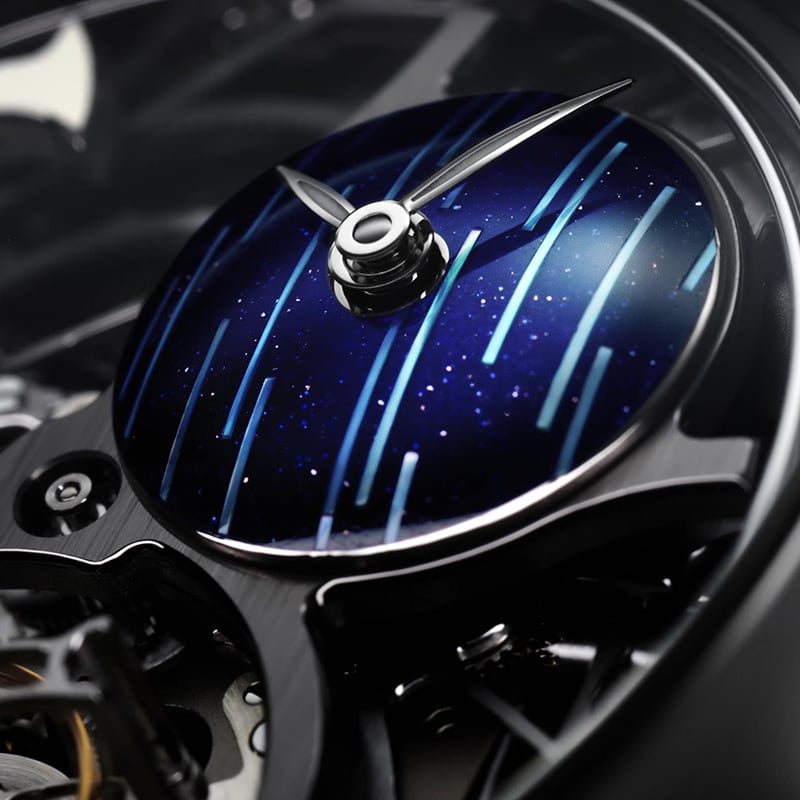
H. Moser & Cie.’s Endeavour Minute Repeater Cylindrical Tourbillon Skeleton “Cosmic Rain” puts its own spin on it. The gongs sit on a single plane, and the hollow titanium case works as a resonance chamber, shaping the sound like the body of a guitar. The HMC 909 movement has 415 parts, beats at 21,600 vibrations per hour and runs for 90 hours.
Then there’s the tourbillon. It’s a flying one, with a cylindrical hairspring, an idea borrowed from 18th-century marine chronometers, where accuracy at sea could mean the difference between a safe harbour and the rocks. It’s made by Precision Engineering AG, Moser’s sister company, which is one reason a small brand can build things like this. The dial area combines aventurine with a mother-of-pearl inlay, which is where the cosmic rain comes from. The case is 40mm across and 14.4mm thick, and there are 20 pieces.
The meaning is bigger than the watch. Moser has spent years being known for minimal fumé dials and a sense of humour. Pieces like this show the depth underneath. A brand earns the right to be playful by being very, very good at the hard stuff.
Seiko Prospex 1965 Heritage Diver HBC011
There are watches that start collections, and the 62MAS is one of them. Seiko’s first diver arrived in 1965, a tough, simple, honest thing built for a Japan that was just beginning to look outward. Sixty years later, its descendants are still how a great many people walk into this hobby, usually without meaning to.
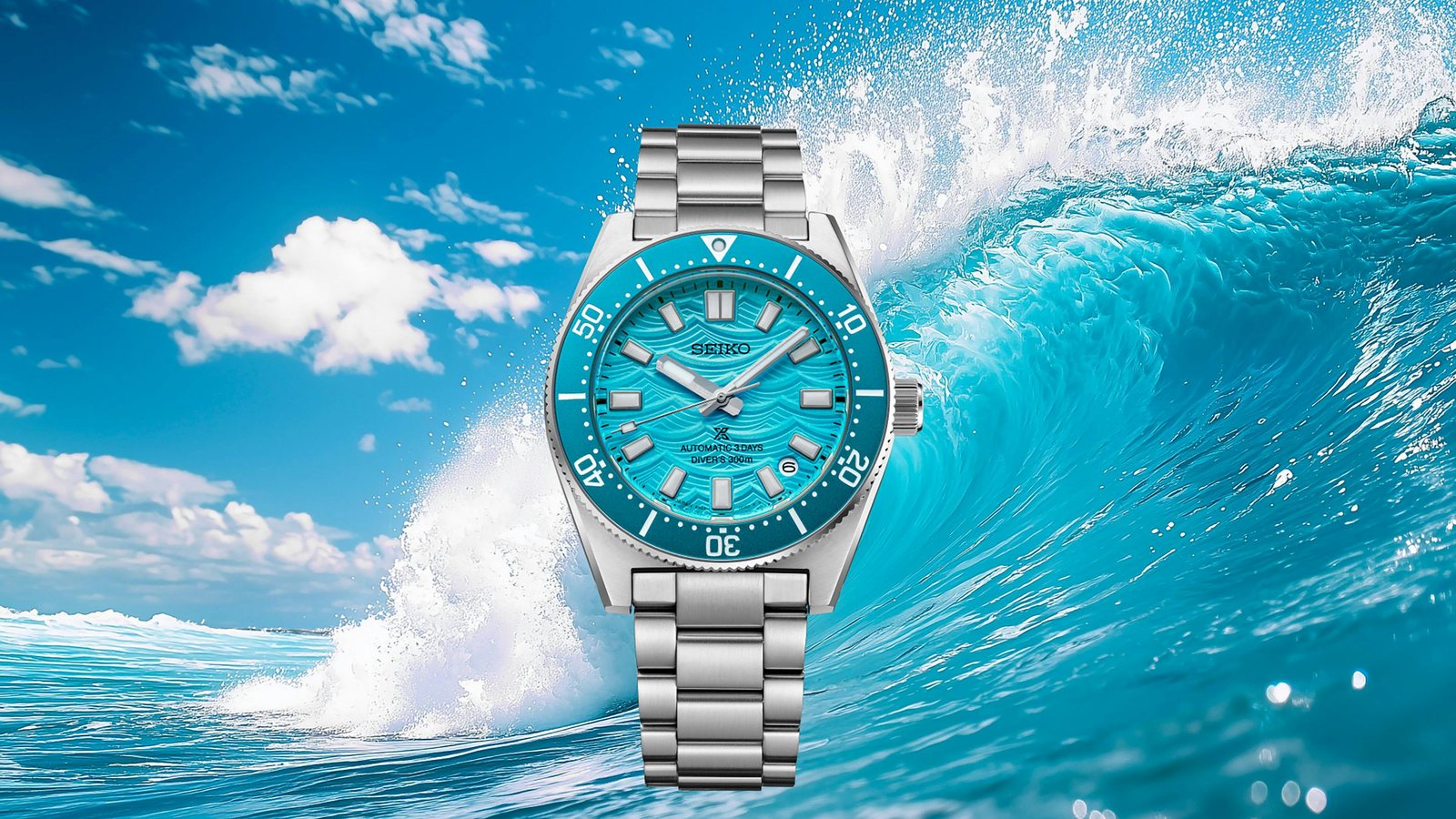
For the anniversary, Seiko did something unusual. It let fans vote on the dial, and the winner was a colour called “Daytime Blue”, a bright turquoise that looks like water at noon. It’s a small thing, but it’s a nice one. Brands spend a lot of time deciding what people want. Asking them is rarer.
The HBC011 is 40mm across and 13mm thick, close to the proportions of the original. Inside is calibre 6R55 with 72 hours of reserve, and the date sits at 4:30, a classic Seiko placement. It’s limited to 4,500 pieces at $1,400 and arrives in October.
Here’s what matters about it. An affordable heritage diver, made in real numbers, with a design chosen by the people who’ll actually wear it, is how a hobby stays healthy. Not every important watch costs a fortune. Some of the most important ones are the ones that get worn every day, scratched, taken swimming and passed down. The 62MAS has been doing that quietly for sixty years. This one seems ready to keep going.
Czapek Promenade Transparencies “Aqua Blue”
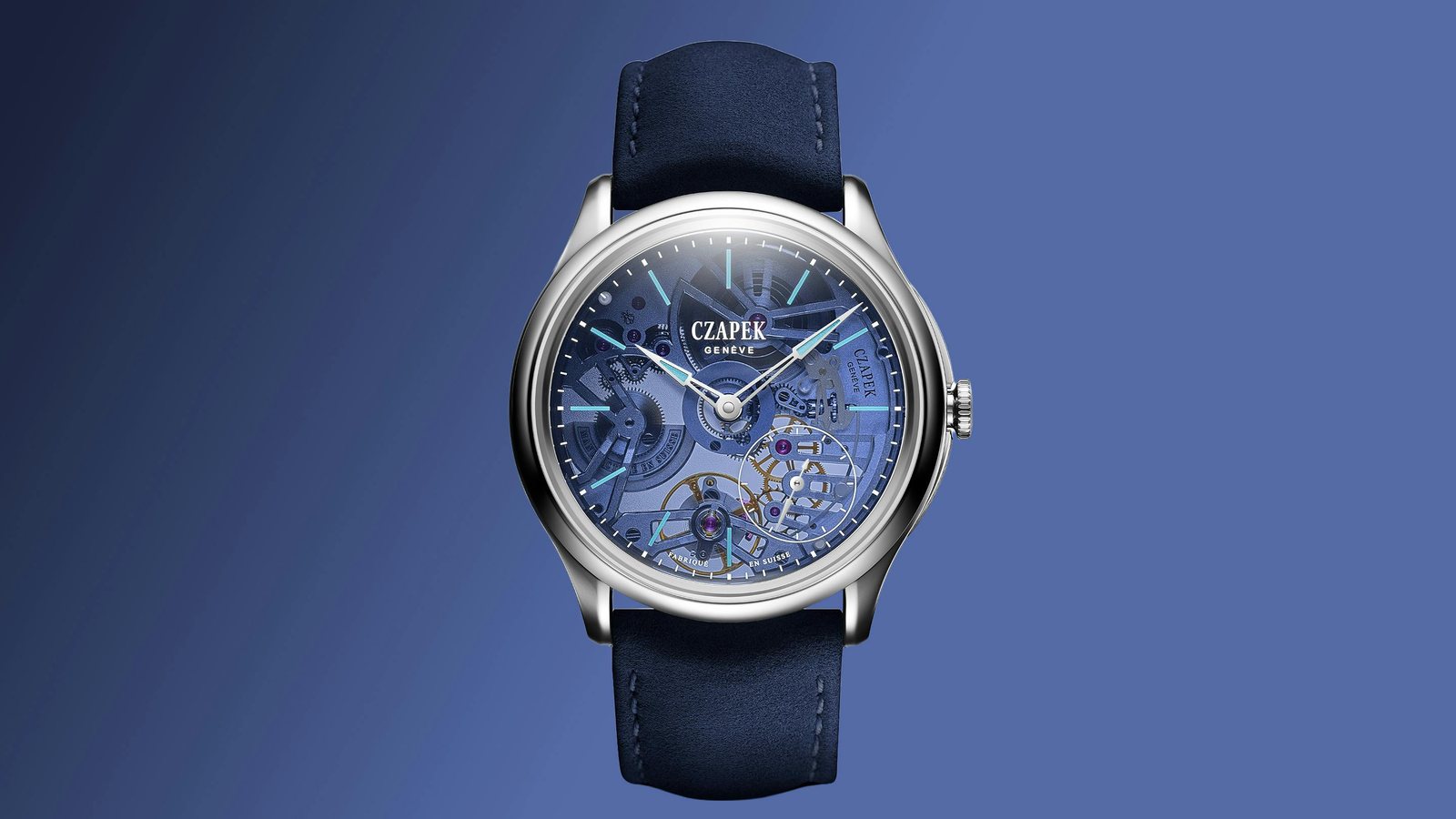
Czapek is an old name with a young company behind it. François Czapek was a 19th-century watchmaker in Geneva, once a partner of Antoine Norbert de Patek, and his name sat quietly for a long time before a group of collectors and watchmakers brought it back. Today the brand is best known for the Antarctique, its integrated-bracelet sports watch, and that success has left its dressier models in the shade.
The Promenade is one of them, and it deserves more light. This “Aqua Blue” version follows a green edition in the same Transparencies series. The dial is sapphire, metallised with tiny 8-micron dots, so it shifts from coloured to see-through depending on how the light hits it. Look straight at it and you see colour. Tilt it and you see the movement.
That movement is the SXH7, a skeletonised version of the SXH5 micro-rotor Czapek introduced in 2020, here with a rotor in recycled platinum. A micro-rotor sits within the movement rather than over it, which keeps the watch thin. The case is 38mm across and 10.8mm thick, with 60 hours of reserve. It’s limited to 38 pieces at $40,300.
The point worth carrying away is that small brands don’t survive on one hit. They survive by showing they can do more than the thing everyone knows them for. The Promenade, quietly, is Czapek making that argument, and making it well.
Ulysse Nardin Blast Moonstruck
Between 1985 and 1992, a watchmaker and scholar named Ludwig Oechslin built three astronomical watches for Ulysse Nardin: the Astrolabium, the Planetarium and the Tellurium. Collectors call them the Trilogy of Time, and they turned a sleepy old marine-chronometer maker into a brand known for big ideas. Everything clever the company has done since has a little of that DNA in it.
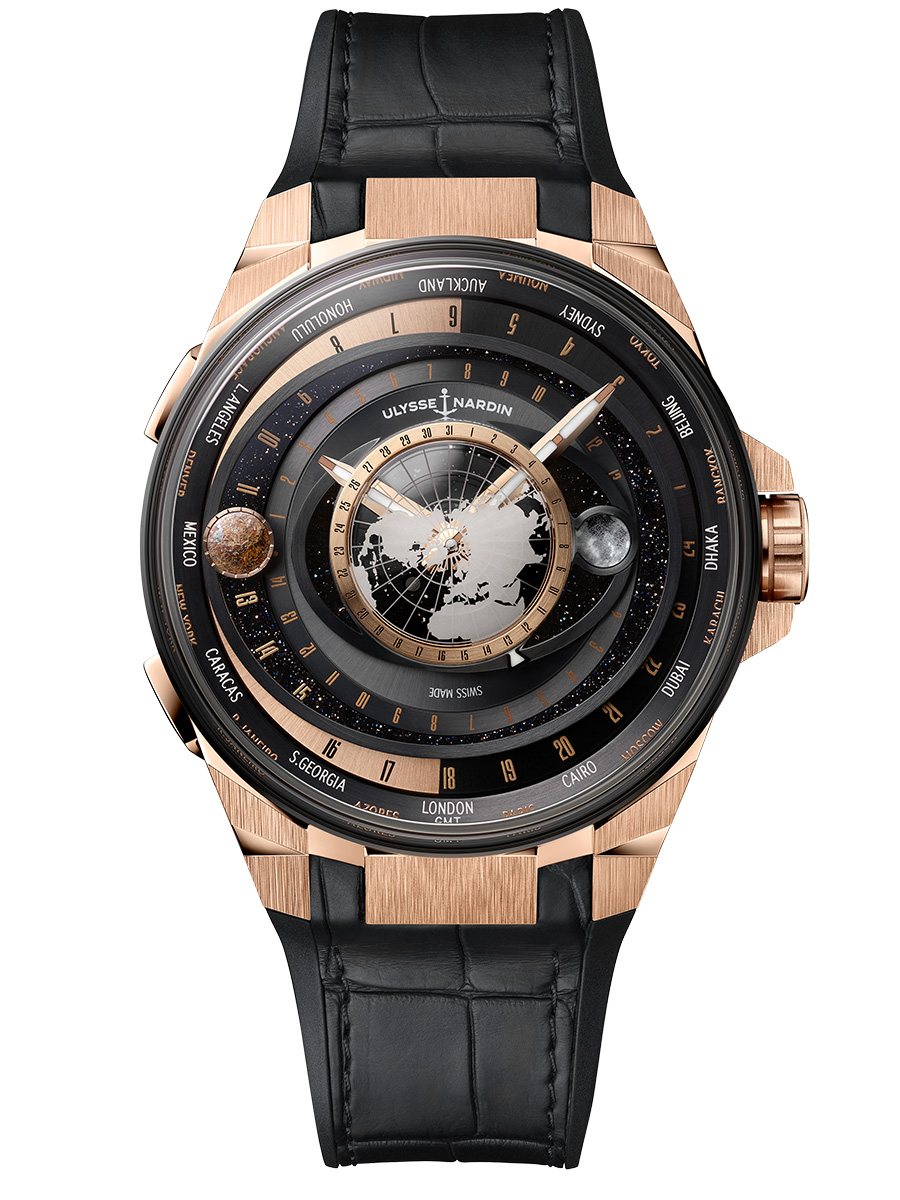
The Moonstruck, first introduced in 2009, is a direct descendant. It shows the movement of the moon and sun around the earth, and the moonphase is so precise it needs correcting only one day every 40.3 years. Most of us won’t be around for many of those corrections.
This new version puts it into the Blast, the brand’s angular, modern case, in 45mm rose gold and DLC titanium. Inside is the UN-106 with 338 parts and 50 hours of reserve, along with a silicon escapement. Ulysse Nardin was a pioneer of silicon in watchmaking with the Freak in 2001, at a time when most of the industry thought it was a strange experiment. Now silicon is everywhere. It’s limited to 20 pieces at $116,000.
Here’s the thing worth knowing. A lot of what’s normal in watches today started as one brand’s odd idea. Silicon was one. Astronomical displays you can actually read were another. When a company has a habit of being early, it’s worth paying attention to what it’s playing with now.
Armin Strom Mirrored Force Resonance Red
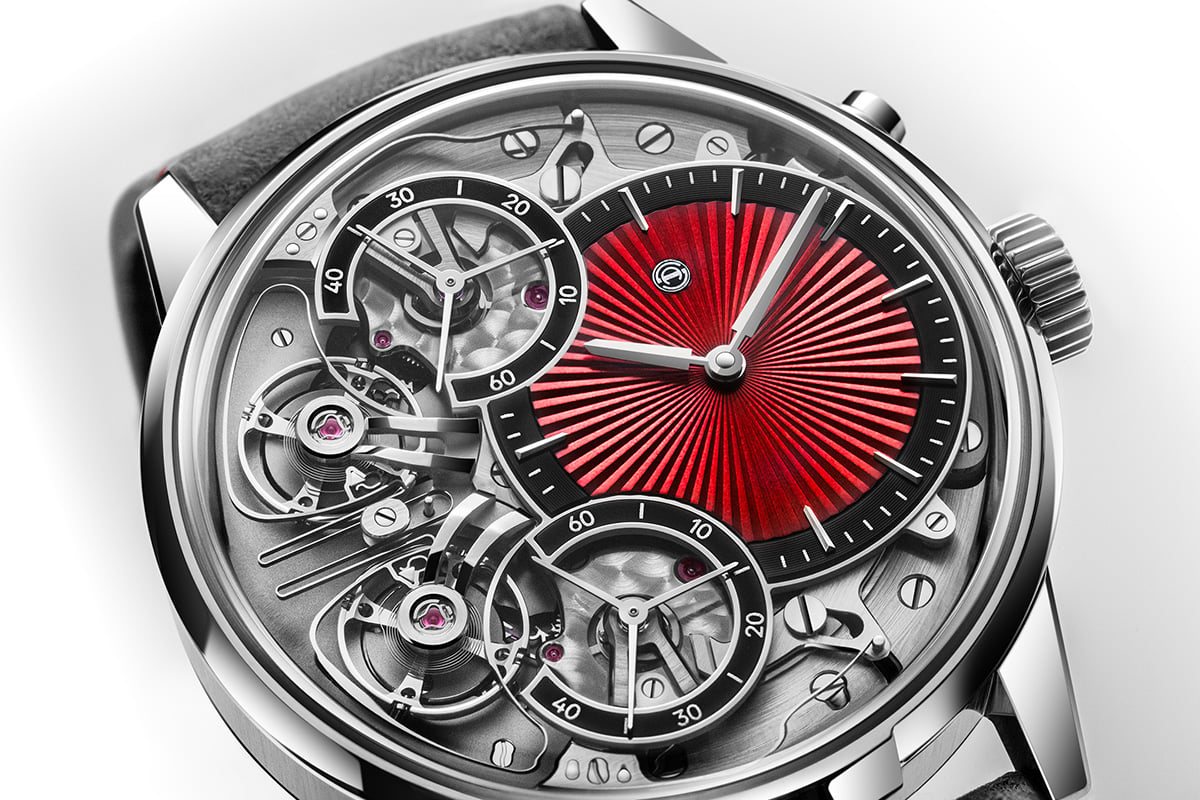
Resonance is one of those ideas that sounds like a magic trick and turns out to be physics. Put two balance wheels close enough together, and they begin to beat in step, each one steadying the other. The 17th-century scientist Christiaan Huygens noticed it with pendulum clocks. A few watchmakers have chased it in wristwatches since, and Armin Strom has made it a speciality since 2016.
The Mirrored Force Resonance Red shows how far they’ve taken it. Inside is the ARF21, which contains two complete movements joined by a patented clutch spring that lets the two balances find their rhythm together. It beats at 25,200 vibrations per hour and has 48 hours of reserve. The case is 43mm across and 11.55mm thick, and the red rose-engine guilloché dial is what makes this version stand out, the kind of hand-turned surface that catches light in waves.
It’s limited to 15 pieces at CHF 78,000, about $94,600.
Why it matters is a bit subtle. Big brands mostly improve accuracy with materials and regulation. Small independents can afford to explore stranger paths, and resonance is one of the strangest. Not every experiment becomes the future. But an industry where small makers can spend a decade on one idea, and get it to work, is a healthy one. Armin Strom is proof that you can build a whole identity around a piece of old physics if you’re stubborn enough.
Ressence Type 7, Black and Cactus
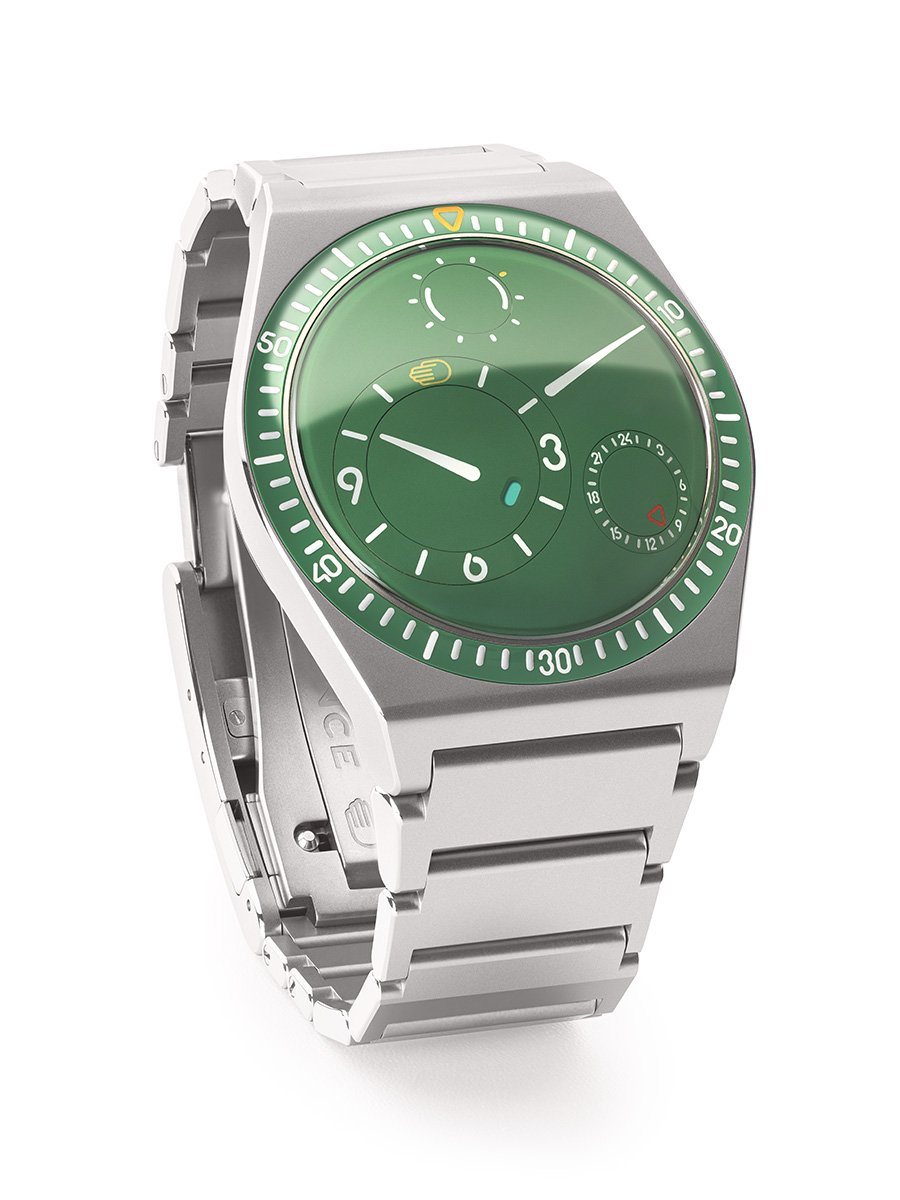
Ressence, from Antwerp, has spent its life asking a question most watchmakers never bother with: what if a watch didn’t have hands at all? Its answer is a dial of rotating discs that move together, so the time drifts past rather than ticking. It feels less like reading a watch and more like reading a small, moving painting.
The Type 7 first arrived in 2025, for the brand’s 15th anniversary, with a GMT. This year’s Black and Cactus versions carry the ROCS 7 display and, of all things, an oil-temperature indicator. The upper part of the dial sits in oil, which is why the discs look printed right under the crystal, and the indicator shows how warm that oil is. It’s a detail no other watch needs, which is exactly why it’s charming.
There’s no crown. You set and wind the watch through the caseback, a Ressence signature that keeps the case smooth and uninterrupted. The base movement is an ETA with 36 hours of reserve, rebuilt around the brand’s own module. The case is 41mm in Grade 5 titanium, water resistant to 50m, and the price is CHF 36,000, about $43,650.
What Ressence means to the industry is bigger than its size. It’s a reminder that a watch doesn’t have to look like any watch you’ve seen before. Most brands look backward for ideas. Ressence keeps looking sideways, and every so often it shows the rest of the field a door nobody else noticed.
Auctions & records
Phillips corrects an F.P. Journe resonance
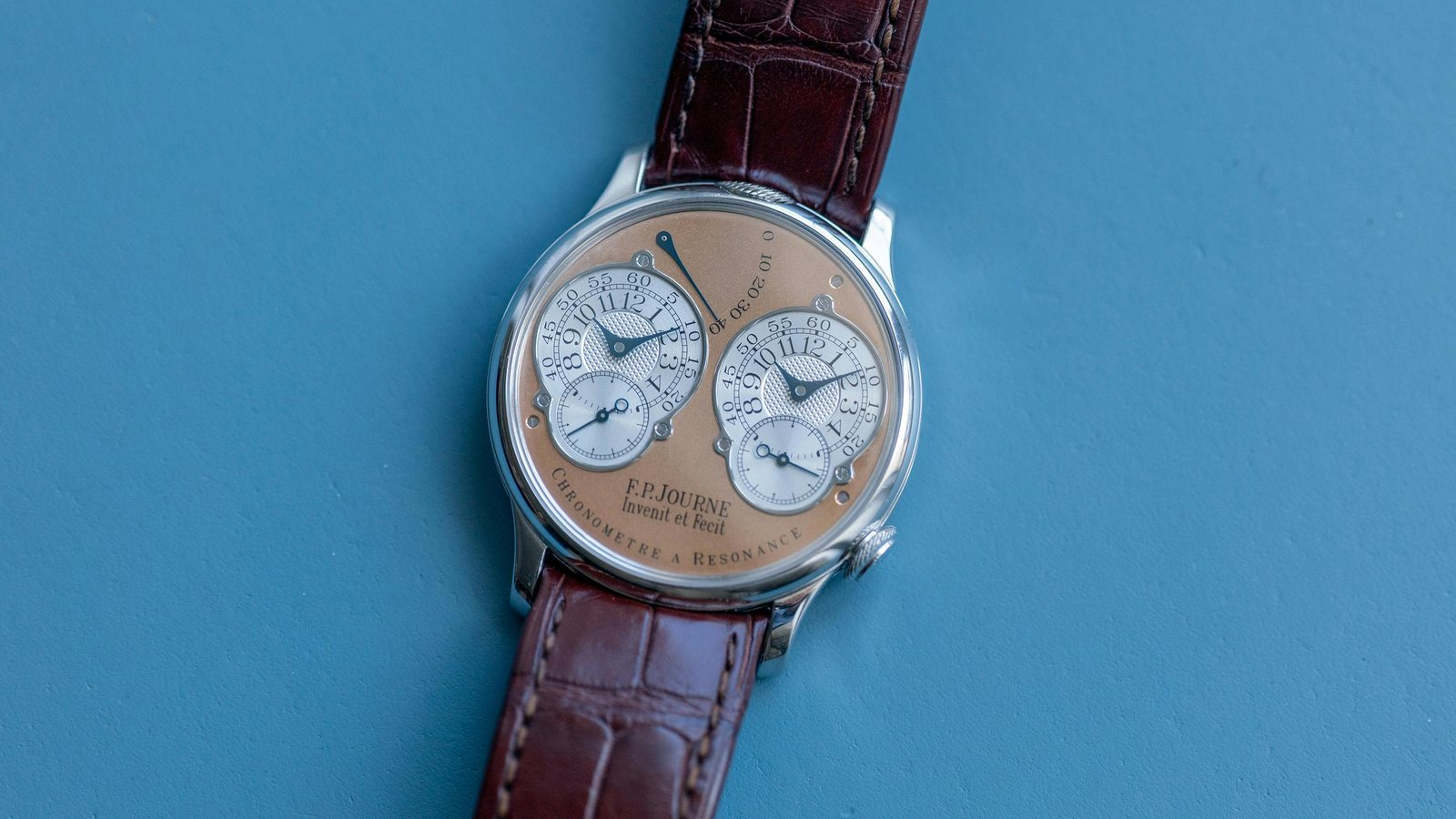
In watch collecting, a serial number can be worth more than the gold around it. Collectors pay heavily for the earliest examples of a great watch, and the very first one delivered can carry a premium all of its own. So when Phillips catalogued a pre-production F.P. Journe Chronomètre à Résonance, serial 022/99, as delivered in 1999 and possibly one of the first ever sold, people listened.
So did François-Paul Journe. He published a letter titled “Correction”. The first Résonance was delivered on March 10, 2000, he wrote, and 022/99 went out on June 8, 2000, three months later. Phillips replied that it “stands corrected”, while pointing out the watch is still the lowest commercially available number from that period and one of a handful of pre-production pieces with case numbers ending in /99.
The Résonance matters because it’s the watch that made Journe’s name: two balances beating in sympathy, an old scientific idea turned into a modern wristwatch. Another early example, number 007, sold for a record $13.9 million at Phillips in New York in June. This one is estimated at CHF 500,000 to 1 million, about $606,000 to $1.2 million, and sells in Geneva on November 7–8.
The lesson is plain and worth keeping. As prices climb, the story behind a watch becomes part of its value, and stories can be wrong. Journe said he wrote the letter to protect buyers. Whatever you collect, at whatever price, check the facts before you fall in love with them.
Patek Philippe Calatrava 448, from a Cornish jewellery box
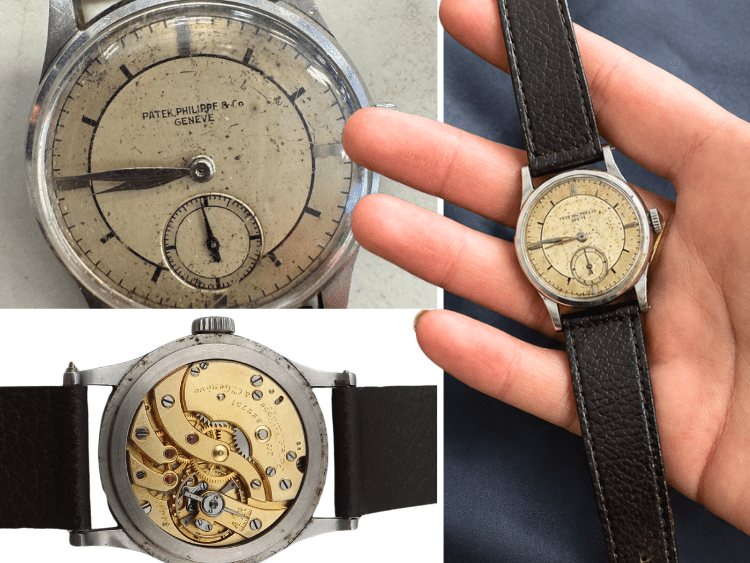
Every so often, a story comes along that makes the whole hobby feel like a treasure hunt. A steel Patek Philippe Calatrava 448 from the 1930s turned up in a family jewellery box in Cornwall, the kind of box that sits in a cupboard for decades holding odd cufflinks and someone’s old wedding ring.
The Calatrava matters because it’s where Patek’s modern identity begins. The line launched in 1932, and it defined what a dress watch should be: round, clean, quietly proportioned, nothing extra. Patek made very few steel watches in that period, and rarity is where collectors lean in hardest.
It went to Hansons’ Cornwall saleroom in Penzance on August 25 as lot 15, estimated at £5,000 to £10,000, about $6,700 to $13,400. Then the bidding started, and it didn’t stop until a telephone bidder in Hong Kong paid £59,000 hammer, about $78,900. That’s almost six times the high estimate.
What it tells you is that the market for genuinely old, honest, original watches is very much alive, and that the people who know will find them wherever they surface, even in a provincial saleroom. Somewhere out there are more watches like this, sitting quietly next to the spare keys. Check your drawers. Then check your parents’ drawers.
Events
Geneva Watch Days: September 2–6
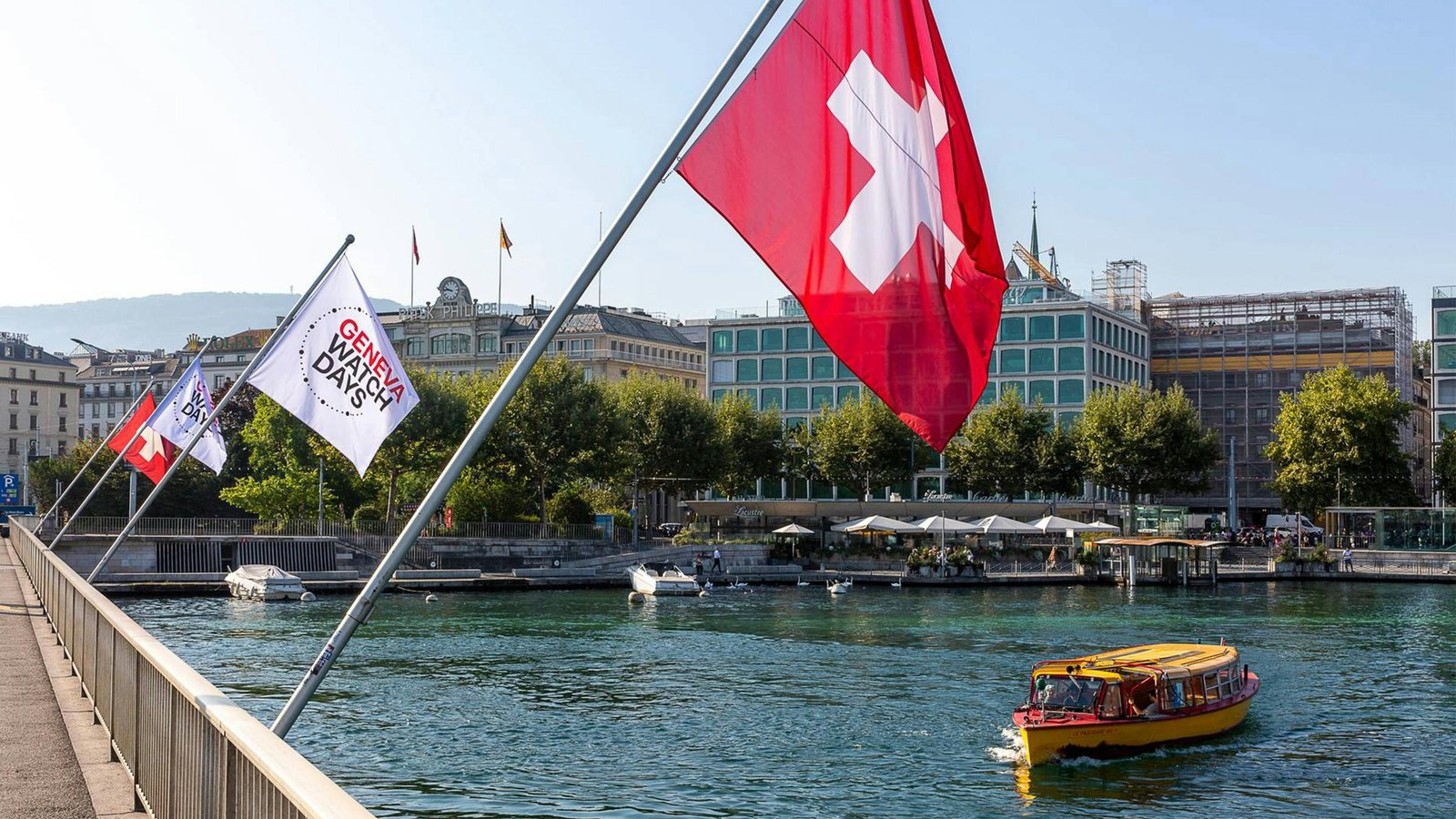
Geneva Watch Days began in 2020, the year the big fairs went quiet. Fewer than 20 brands got together and decided that if the world wouldn’t come to one hall, they’d spread out across the city instead. It was meant as a stopgap. It turned into a habit, and then a fixture.
This year’s seventh edition runs September 2–6 with 68 watchmakers, a remarkable number for an event that started as a workaround. Unlike Watches and Wonders, it has no single venue. Brands present in their own showrooms and hotel suites around town, and the centre of gravity is the Rotonde du Mont-Blanc, by the lake, where the Main Pavilion hosts talks on the industry and the Blue Box shows a curated exhibition of watches from different houses.
Five of the eight founding brands are back: Breitling, Bulgari, De Bethune, Girard-Perregaux and MB&F. They’re joined by big names like Zenith and independents such as Greubel Forsey, Ming and Laurent Ferrier. On the Thursday, Phillips and Bacs & Russo hold a charity auction, with the profits funding scholarships for students at the École d’Horlogerie de Genève, the oldest watchmaking school in Switzerland.
That last part deserves a moment. The industry spends a great deal of energy on the watches and not nearly enough on the people who’ll make them in thirty years. An auction that pays for young watchmakers to learn the trade is the kind of thing that matters long after this year’s releases are forgotten.
The Escapement moves to Las Vegas

The Escapement was supposed to be a new kind of watch event: a big, collector-focused gathering built around independent brands, held in Abu Dhabi in November, in the off-year of Dubai Watch Week. The guest list was ambitious, with names like Armin Strom, Biver, Czapek, Greubel Forsey, Romain Gauthier, Simon Brette and Ming, plus talk of appearances by Rexhep Rexhepi and LVMH’s Jean Arnault.
Then the world got in the way. With the ongoing conflict in the Middle East, corporate travel restrictions meant some brands and executives simply couldn’t go. Rather than run a smaller first edition, the organisers cancelled Abu Dhabi and moved the show to the T-Mobile Arena in Las Vegas, February 5–7, 2027. Ticket holders get automatic refunds. From the desert to a slightly different desert, with more neon.
The numbers have been scaled back too. Abu Dhabi aimed for up to 1,000 VIP tickets and 8,000 to 10,000 general admission passes. Las Vegas now expects 500 to 750 VIP and 4,000 to 5,000 general admission, with prices possibly 10% to 15% higher. Rexhepi and Arnault have yet to confirm, though most of the other brands are expected to follow.
Here’s the bigger picture. Watch events have multiplied in the past few years, and every one depends on brands being able to travel, spend and show up. When the world shifts, the calendar shifts with it. It’s a reminder that this industry, for all its talk of timelessness, is still very much tied to what happens outside the showroom window.
Watch Week Aspen, third edition
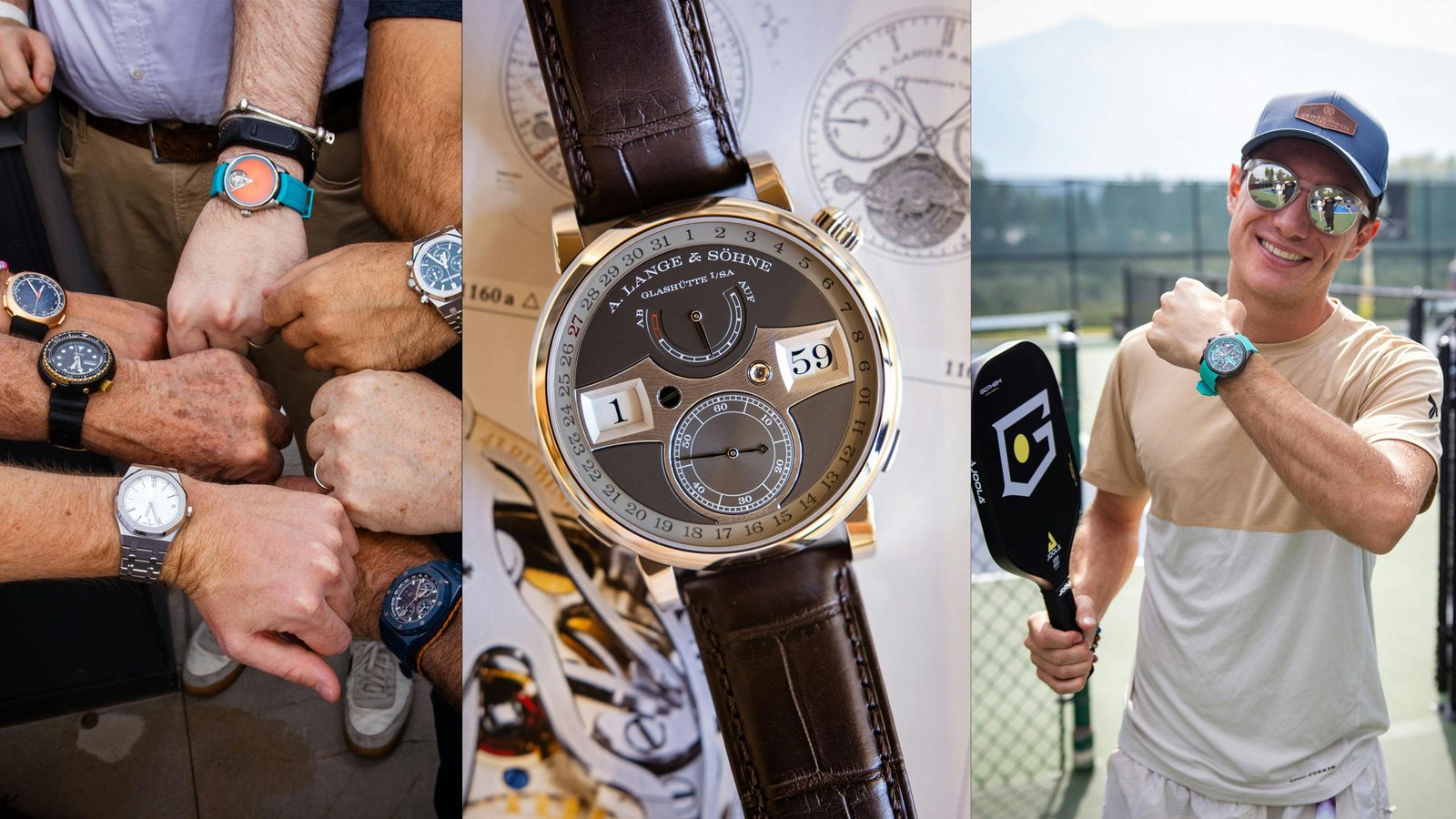
Not every watch event needs a lake in Geneva or a desert arena. Watch Week Aspen, now in its third year, ran August 13–16 in the Colorado mountains, and it has found its own easy rhythm: a long weekend of talks, presentations and collecting, free and open to the public. That last part matters more than it sounds. Most watch events quietly sort people by invitation. This one opens the door.
It was founded by Oliver Smith Jeweler, and the programme moved around town over four days. Thursday opened with a look at Gérald Genta’s legacy, a preview from Glashütte Original and a panel on the pre-owned market. New this year was a 3K run on Friday morning through downtown Aspen, followed by sessions on Hermès’ Le Temps Suspendu, the Omega Speedmaster’s history and A. Lange & Söhne. Saturday brought VintageFest, where collectors showed their own watches and competed for prizes in three categories, alongside talks from IWC, Omega, A. Lange & Söhne and Moritz Grossmann. Sunday closed with Arnold & Son and a curated selection from Patek Philippe, Cartier, Tiffany and Ulysse Nardin.
What’s worth noticing is the shape of it. Regional events like this are where the hobby actually grows: a place where a curious person can walk in off the street, ask a question and leave knowing more than when they arrived. Three years in, Aspen looks like it’s becoming a fixture, and that’s good news for anyone who thinks watches should be shared, not just shown.
Raffles & sign-ups
MB&F M.A.D.3, a tribute to Vincent Calabrese
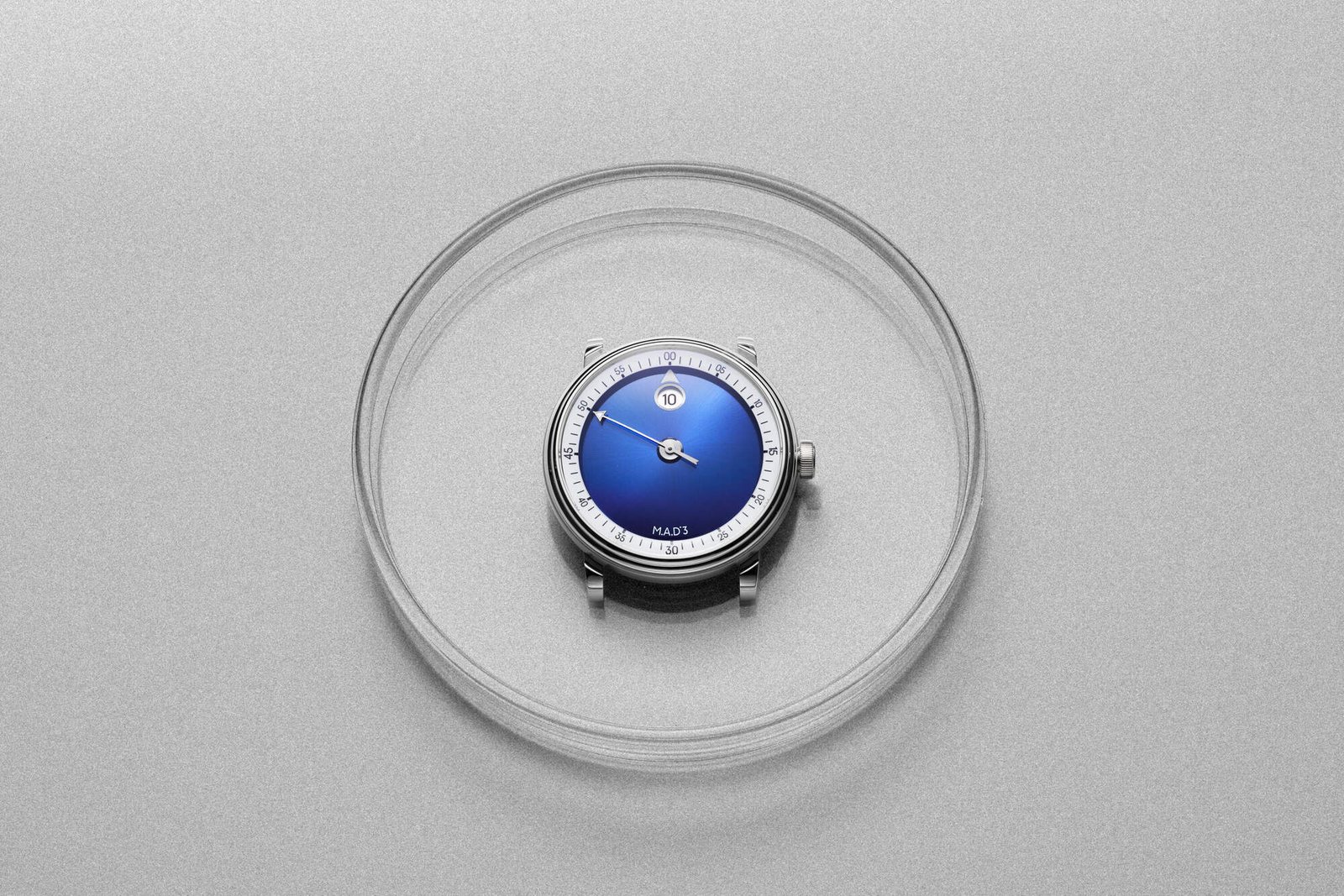
MB&F makes some of the most unusual watches in the world, the Horological Machines and Legacy Machines that look more like sculpture than timekeeping. Those cost what you’d expect. The M.A.D.Editions are the other side of the house, a more accessible line sold by raffle, so that people who love what Maximilian Büsser does can actually own a piece of it. The first edition, in 2021, caused a stir, and raffles became the fairest way in.
The third edition honours Vincent Calabrese, an Italian-born watchmaker in Switzerland, mostly self-taught, and one of the founders of the AHCI, the academy of independent watchmakers set up in 1985. That group gave independent makers a place to stand together at a time when the big houses owned the conversation. Without people like Calabrese, a brand like MB&F would have had a much harder road.
The raffle opened September 1 at 2:00 PM CEST, about 5:00 AM PT, and ran for one week, with the watch on show in Geneva from the same day.
The meaning is worth sitting with. Watchmaking has a long memory for brands and a short one for people. A tribute edition that puts an independent watchmaker’s name back in front of collectors is a small act of gratitude, and gratitude is rarer in this business than it should be. If you missed the draw, the history is still free to learn.
People
Maurice Lacroix gets a new managing director

Leadership changes rarely make headlines, but they often decide what a brand looks like five years later. Maurice Lacroix, the Swiss brand owned by the distributor DKSH, has named Joel Chabanne managing director.
He takes over from Stéphane Waser, who spent 18 years with the company and had been managing director since 2014. That’s a long run in any industry, and Waser’s era shaped the brand most people know today, especially the Aikon, the integrated-bracelet sports watch that gave Maurice Lacroix a strong foothold among buyers who wanted that look at a price within reach. A tenure like that leaves big shoes, and a lot of goodwill.
Chabanne brings more than 35 years in the watch business, including time at Cartier, and for the past three years he has worked for DKSH in various roles across Asia-Pacific. That last part is the tell. He knows the owner from the inside, and he knows the markets where much of the industry’s growth has come from.
Here’s why it matters to anyone who follows watches. Brands in the accessible-luxury space live and die by distribution, pricing and knowing where the next customers are. A managing director with deep Asia-Pacific experience suggests where Maurice Lacroix intends to look. It won’t change the watches overnight. But the next few years of releases will carry his fingerprints, and it’s worth watching what he does with a brand that has already found its voice.
Mergers & acquisitions
Movado sells Ebel to F.P. Journe and Chanel, villa included
Ebel has one of the better origin stories in Swiss watchmaking. It was founded in La Chaux-de-Fonds in 1911 by Eugène Blum and Alice Lévy, and the name comes from their initials: Eugène Blum Et Lévy. For much of the 1980s and 1990s it was one of the most fashionable watches you could wear, with its wavy bracelets and polished gold. Then came quieter years, changes of ownership and, since 2004, life inside Movado Group.
Now Movado has a binding agreement to sell 95% of Ebel for $66.5 million to a group led by Montres Journe, with Chanel alongside, and Pierre Jacques as CEO. Movado keeps 5%, and the deal is expected to close in the next few months. François-Paul Journe summed up his plan in three words, repeated: “the product, the product, the product.”
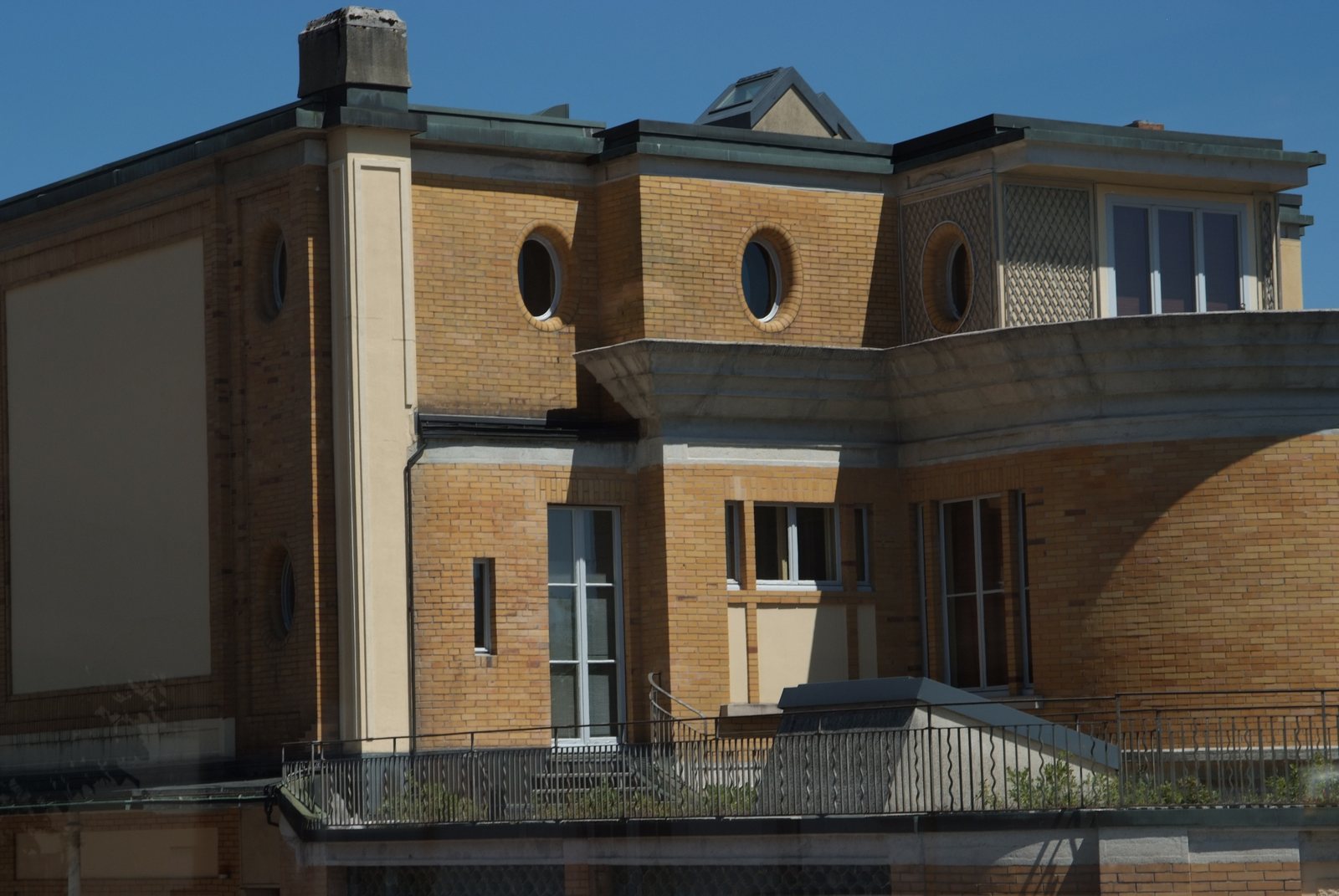
The deal also includes the Villa Turque, the house Le Corbusier designed early in his career in La Chaux-de-Fonds, his hometown, completed in 1917. Most watches come with a box. This one comes with a house.
What it means is significant. An independent watchmaker, backed by a fashion house that has been building its own serious watchmaking, is taking on a brand with a real name and a faded reputation. It’s a bet that history plus craft can bring an old name back. It’s happened before, and when it works, the whole industry is better for it.
Christophe Claret finds a backer
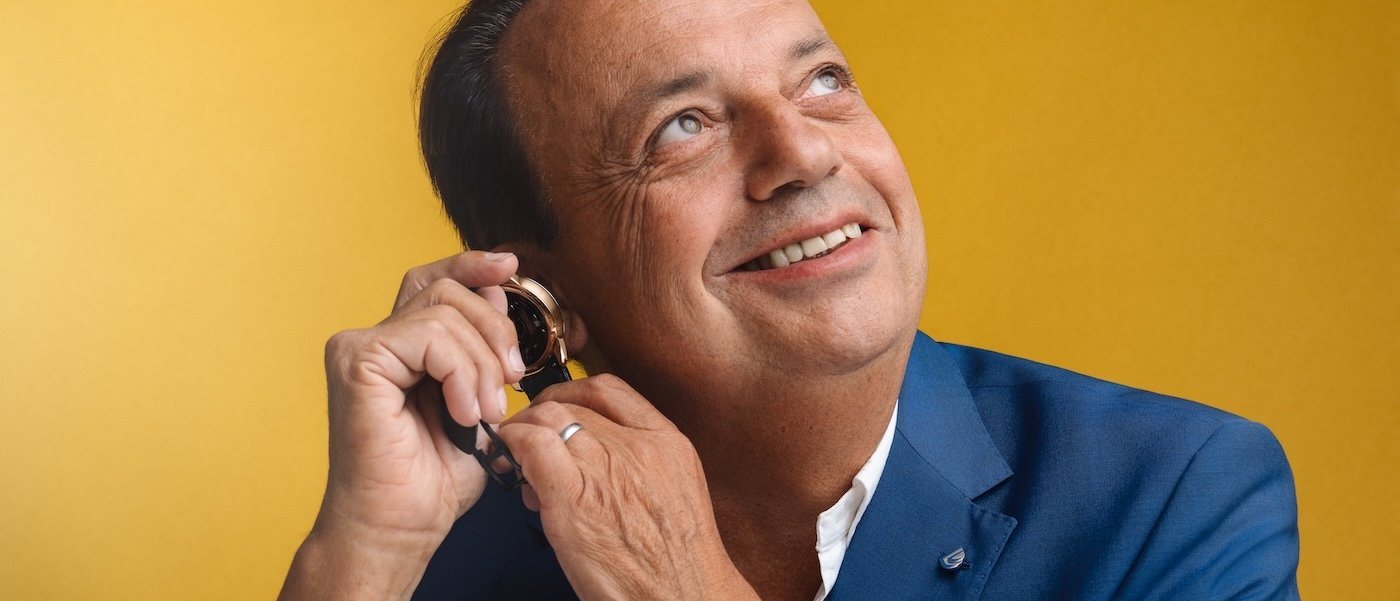
Christophe Claret is a watchmaker other watchmakers call when something is too hard. For decades his company built complex movements, minute repeaters, chiming mechanisms and strange games of chance, for brands that put their own names on the dial, and later under his own name too. Manufacture Claret SA was founded in 1989 in Le Locle.
The last few years have been rough. The company was declared bankrupt on November 29, 2023, and for a while it wasn’t clear whether the name would carry on at all. Now it has a backer. Lotus Two AG, a Neuchâtel company within Lotus Singapore Group, has taken on the name, assets and intellectual property, with a six-person board, and Christophe Claret stays on as creative lead. The first new watches are expected in late 2027 or early 2028.
There’s something worth noticing in how this happened. The old debts stay with the old company, and the skills, designs and name move to a new one. It’s not glamorous, but it’s often how craft survives in this industry: not through one triumphant moment, but through someone deciding the knowledge is worth keeping.
For collectors, the lesson is patience. A rescued brand needs time to rebuild suppliers, staff and trust. Judge it by the watches when they arrive, not by the announcement. If the new owners let Claret do what he does best, the wait will be worth it. And if they don’t, you’ll know soon enough.