October 2026
September brought a Rolex with a calendar, four Daytonas sold for charity, a Cartier record in Hong Kong and an old name back on the shelves. None of it was for us, which has never stopped anyone from looking.
September is when the watch world comes back from holiday and remembers it has things to sell. It started by the lake, at a Geneva Watch Days that was bigger than ever, and it ended in a London saleroom, where four Rolex Daytonas raised more money for charity than any watch consignment before them. In between we got a Rolex with a calendar, a Lange with three split seconds, a Bulgari that let someone else drive, an old Breitling family name back on the shelves, and a Cartier that rewrote its own record in Hong Kong. Here’s what came out, what sold, what’s coming and who’s teaming up with whom, with a little of the story behind each one.
New releases
Rolex Perpetual Padellone
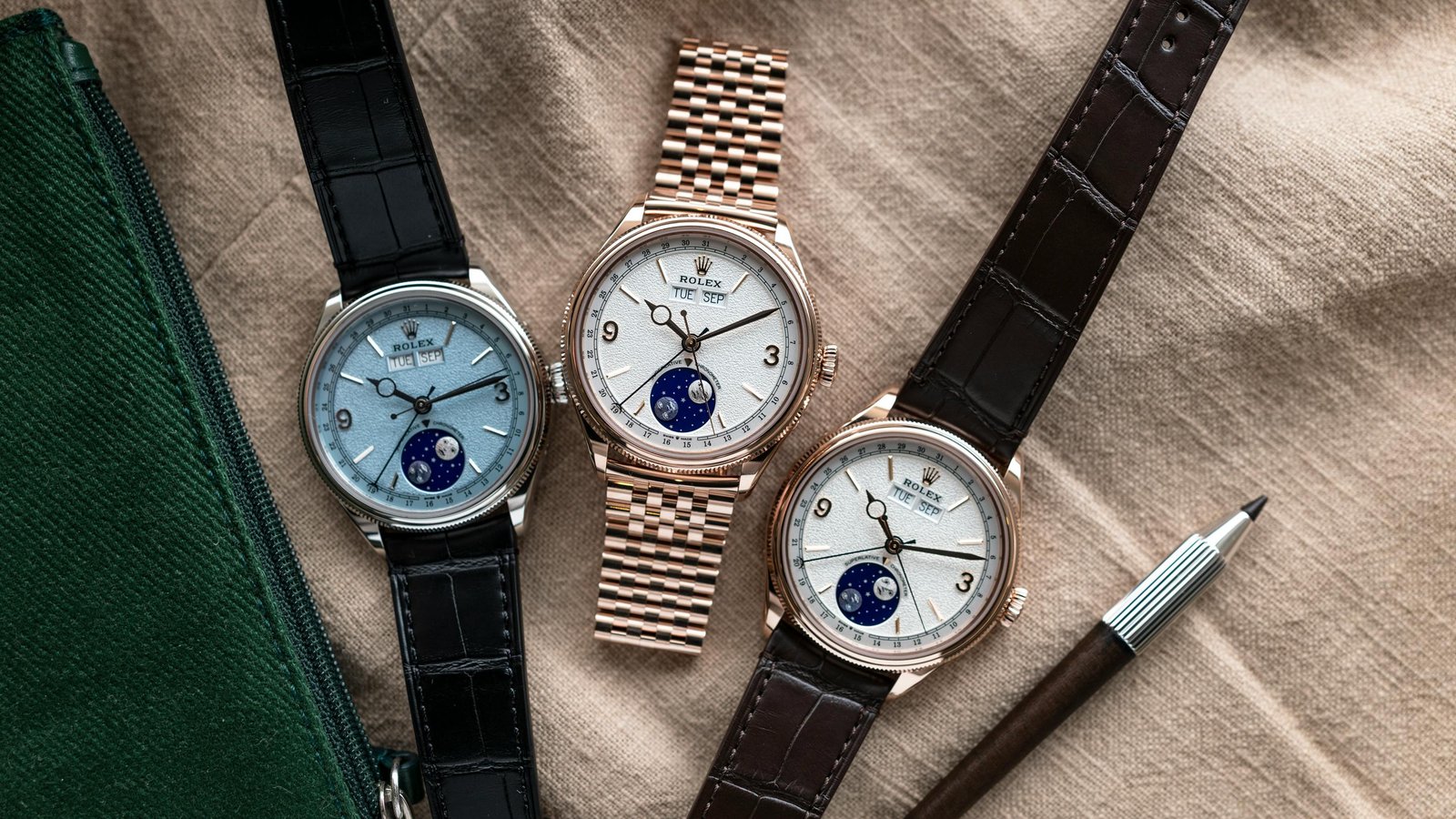
Some watches are launched. This one was waited for. In the early 1950s Rolex made a triple-calendar moonphase, reference 8171, in a flat 38mm case that was big for its day. Italian collectors nicknamed it the Padellone, the large frying pan, which is the only time anyone has managed to make a Rolex sound like kitchenware. For seventy years it lived in auction catalogues and in the daydreams of people who wanted Rolex to make something a little gentler again.
Now it has. The Perpetual Padellone is an instantaneous annual calendar with a moonphase, unveiled in Milan, which feels like the right city for a watch with an Italian nickname. It shows the day, date and month, needs correcting once a year at the end of February, and keeps its moon on a blue enamel disc at 6 o’clock, with the full and new moons cut from meteorite. The case is 39mm by 12.2mm, only a millimetre wider than the original and slightly thinner, with the same four correctors on the side. Inside is calibre 7190, built on the architecture Rolex introduced with the Land-Dweller last year, with about 66 hours of reserve.
It comes in Everose gold or platinum. On strap the gold is $59,000 and the platinum, with an ice-blue dial, is $66,200; the Everose on the new seven-link Settimo bracelet is $72,800. That’s a lot of money for a dress watch. It’s also, in a year when the Oyster turns 100, a reminder that the brand best known for tool watches has always had a quieter, more classical side, and it was never really gone. It was just waiting to be asked.
A. Lange & Söhne Triple Split in platinum
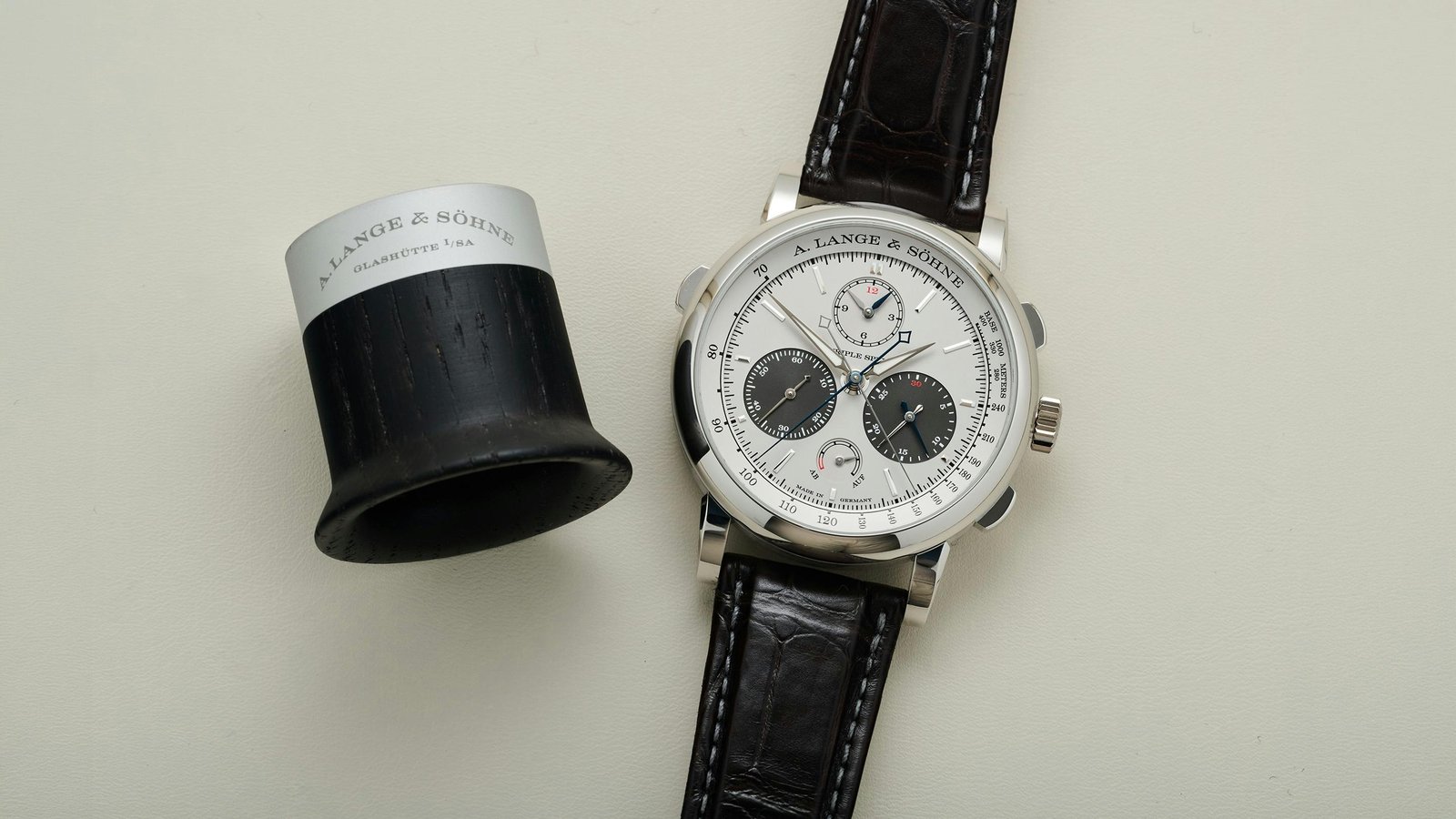
Ask a watchmaker which complication is the hardest, and you’ll get a long pause and then an answer that depends on who’s asking. Lange’s chief executive has said that its most skilled watchmakers would rather build a tourbillon or a perpetual calendar than the Triple Split. That tells you most of what you need to know.
A normal split-seconds chronograph times two events that start together and end apart. Lange’s Double Split extended that to the minutes. The Triple Split, first released in white gold in 2018 and then in pink gold in 2021, goes all the way to the hours, so you can compare two intervals of up to twelve hours. It does this with 567 parts, 46 jewels and five screwed gold chatons, a manually wound movement with 55 hours of reserve, and a flyback on top. The crown-side pushers run the chronograph and the third runs the split.
This is the first time it has been made in platinum, and the first new Triple Split in five years. The case is 43.2mm by 15.6mm, which is compact for what’s inside, and the dial is solid silver in two greys with luminous hands. It’s limited to 100 pieces at about $235,000. Most people who buy it will turn it over more often than they start the chronograph, and that’s fine. The back is where the work lives, and the work is the point. Some things are worth doing because they’re hard.
Vacheron Constantin Overseas Perpetual Calendar Ultra-Thin, 30th anniversary
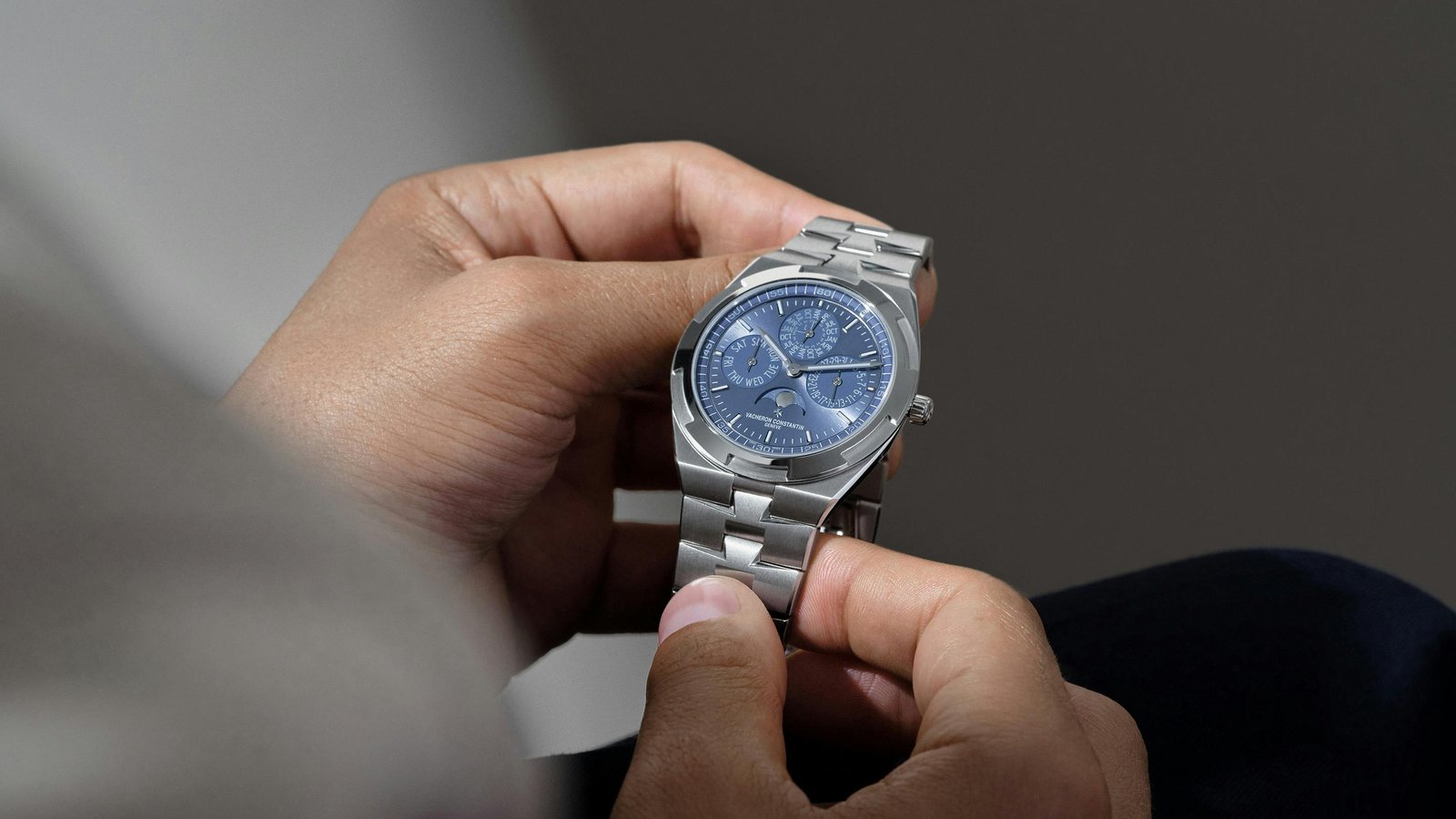
The Overseas turns thirty this year, which is old enough to have a past and young enough to still be the hottest thing Vacheron sells. Its family tree goes back further: the 222 of 1977, and before that the Chronomètre Royal of the 1970s. The first Overseas arrived in 1996, and the collection is now in its third generation.
To mark the birthday, Vacheron has taken one of its best watches, the Overseas Perpetual Calendar Ultra-Thin, and given it a softer azure blue sunburst and lacquer dial that nods to the first generation, with white and pale blue printing and luminous applied markers. The 41.5mm white gold case is just 8.1mm thick, and the automatic calibre 1120 QP/1 inside measures only 4.05mm. It’s a movement with roots going back decades, and it still uses pushers in the caseband for corrections rather than the crown. It runs at a gentle 2.75Hz with about 40 hours of reserve, which is the trade you make for that profile.
It’s limited to 200 numbered pieces at $132,000, in full white gold, and about a millimetre and a half thinner than its obvious rival in steel. There’s something to be said for a brand that answers a milestone not with something louder, but with something calmer. Thirty years in, the Overseas doesn’t need to shout. It just needs to sit flat on the wrist and look like it always belonged there.
Grönefeld 1941 Quadrivium
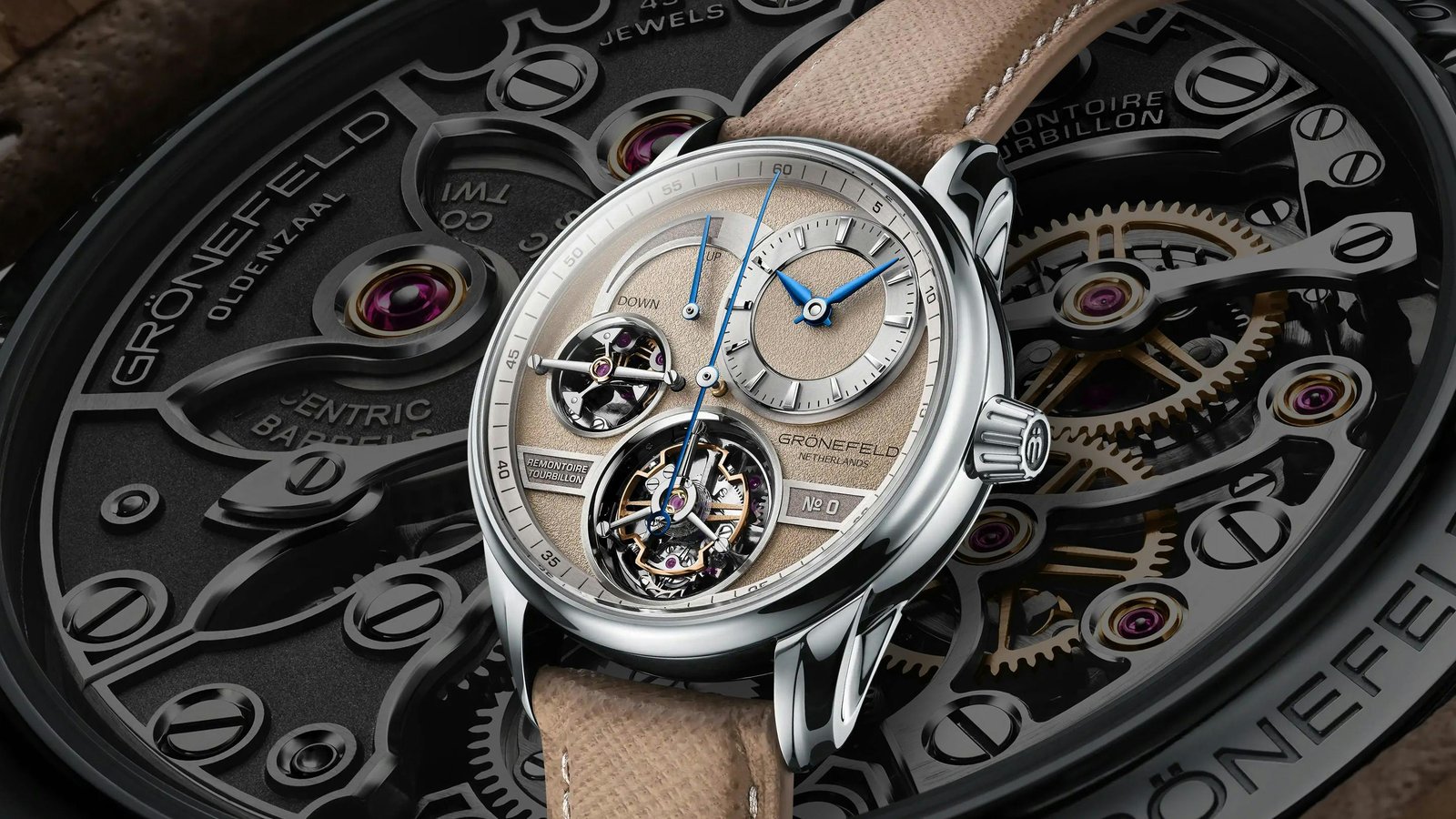
Bart and Tim Grönefeld are brothers from Oldenzaal in the Netherlands, and their watches have a habit of being discontinued just as people realise they wanted one. Their customers kept asking about three in particular: the One Hertz of 2010, with its jumping seconds; the Parallax Tourbillon of 2014, which won a prize in Geneva; and the Remontoire of 2016. So the brothers did the generous thing. They put all three into one watch.
The Quadrivium has a 7.5-second remontoire, which feeds the escapement steady little bursts of energy so the timekeeping doesn’t drift as the mainspring runs down, with its governor on show. It has a one-minute flying tourbillon, a central jumping seconds hand that ticks once a second like a quartz watch but isn’t one, and a power-reserve indicator for its 50 hours. All of that sits in a 40mm by 11.3mm case with the polished domed bezel and stepped lugs of the brothers’ 1941 collection, under a frosted dial with hand-bevelled steel parts.
There are two series of 28 pieces each: tantalum at about $314,000 and platinum at about $347,000, with tantalum deliveries scheduled for 2027. Tantalum is a dense, dark, stubborn metal that most brands avoid because it’s so hard to work, which feels about right. Looking back at what people loved isn’t standing still. Sometimes it’s the clearest way to see where to go next.
Girard-Perregaux Laureato Fifty Tourbillon Micro-Rotor 39
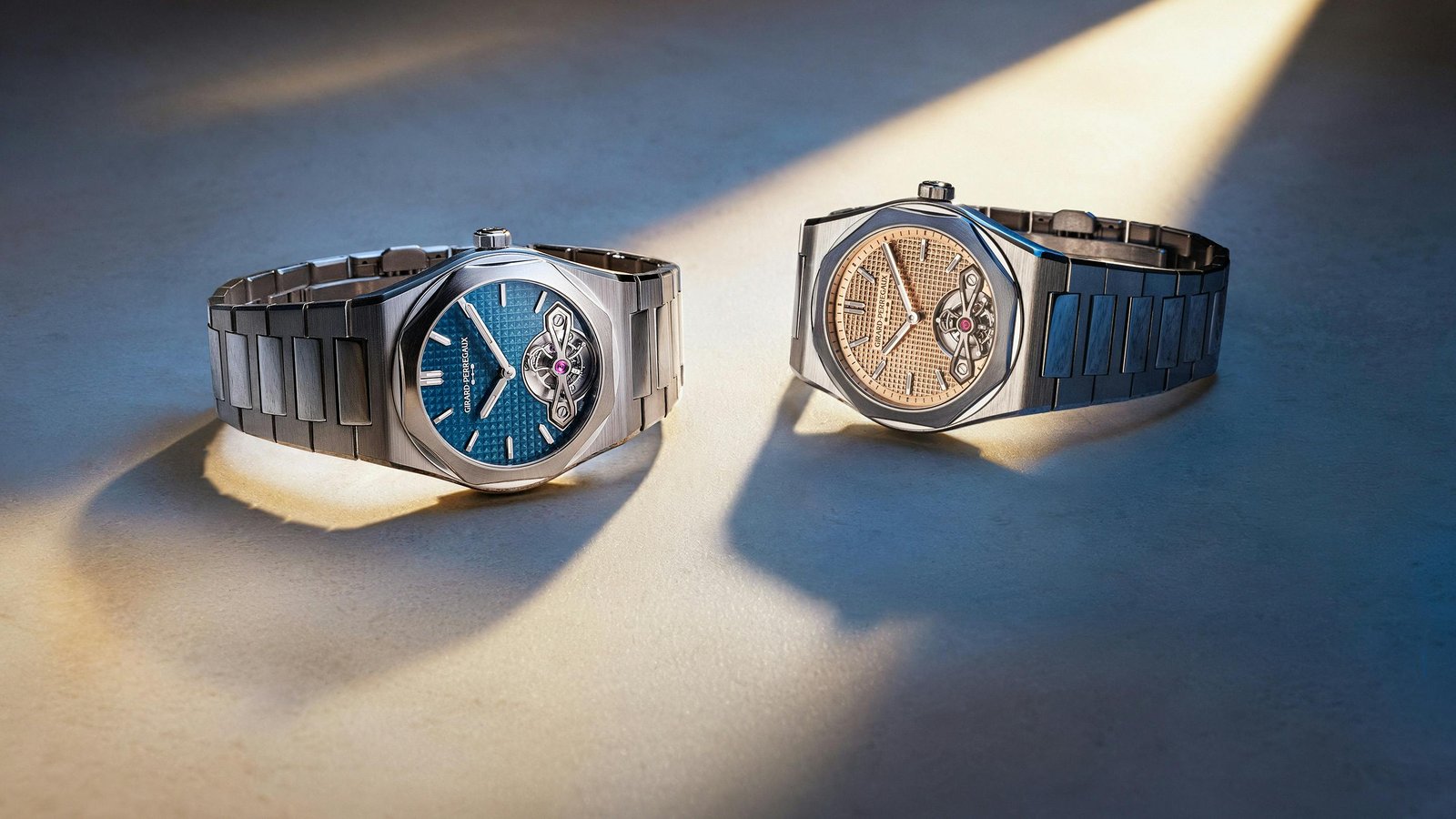
Girard-Perregaux has had a busy year, with four new calibres in twelve months. The Laureato, its integrated-bracelet sports watch, turned fifty last year, and the Laureato Fifty has since become a permanent line in 39mm and 36mm. Now it gets a tourbillon, in the size people actually wear, from a house that has been making watches for 235 years.
The tourbillon sits at 6 o’clock, held by a white gold bridge shaped like an arrow, the signature form that goes back to Constant Girard’s three-bridge movement of 1867. Look closely and the cage itself is lyre-shaped, another old house motif. It’s wound by a micro-rotor in platinum and pink gold, which keeps the movement slim: 30.4mm across, 6.1mm high, about 207 parts. The steel case is 39mm by 10mm, with a matching bracelet that has 4mm of fine adjustment at the clasp.
There are two dials. One is rose gold at $95,600. The other is blue Grand Feu enamel at $100,000, fired in a kiln and impossible to rush. It’s a lot of watch for steel, and a lot of steel for the price, but that’s been the whole conversation around sports watches for years now. What GP has done well is make the tourbillon feel like part of the Laureato’s story rather than a costume. Fifty years in, the design is still finding new things to say.
Bulgari Octo Finissimo Dual Time x Vianney Halter
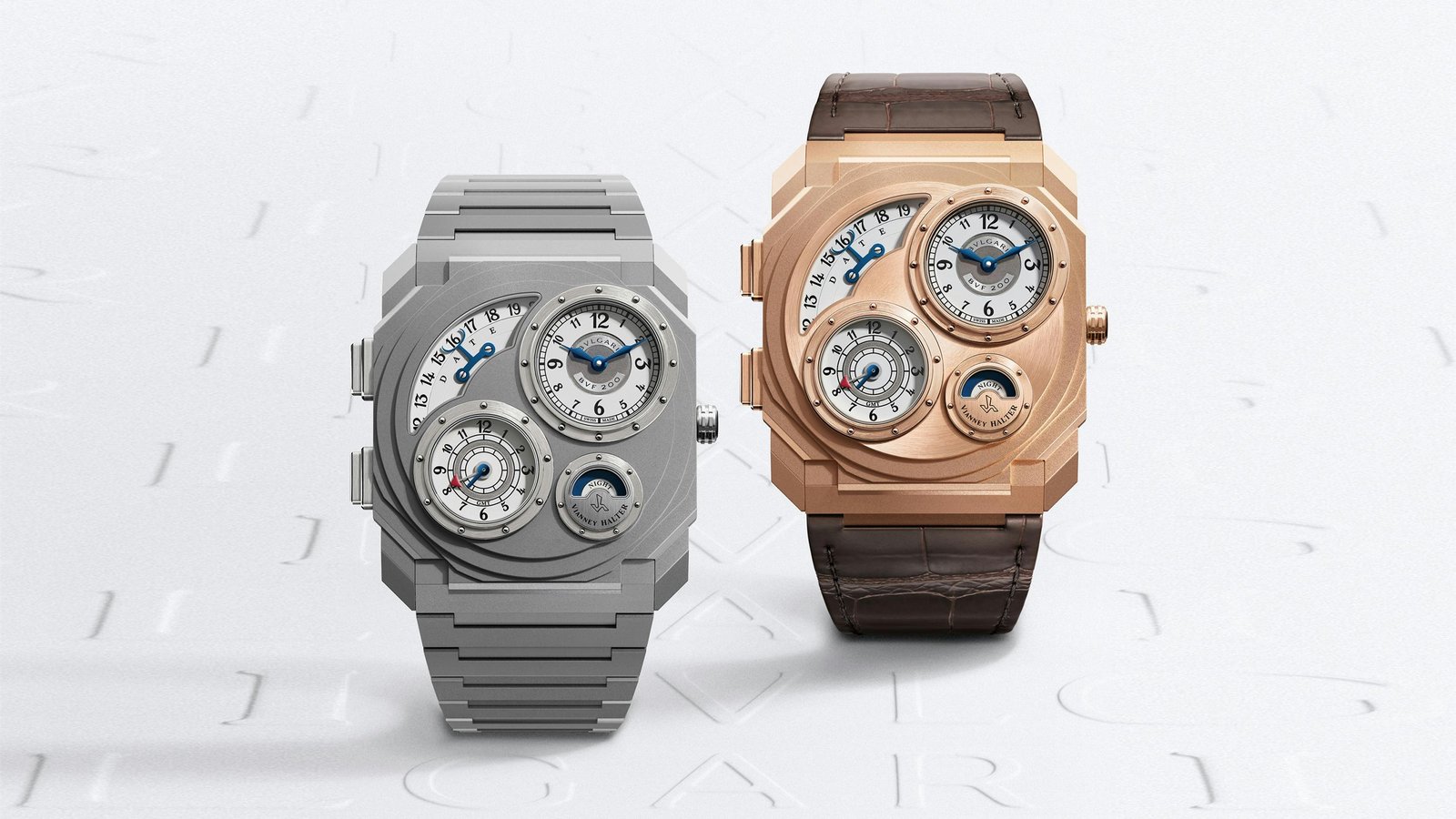
Bulgari has spent more than a decade turning the Octo Finissimo into a lesson in restraint: thin, flat, sandblasted and quiet. So it says something that, for the first time ever, it has handed the keys to an independent watchmaker, and that the watchmaker is Vianney Halter, whose work looks as if it was pulled from a Jules Verne novel.
The result keeps the Octo’s shape and almost nothing else about its manners. Halter worked with Bulgari on modules for a new automatic micro-rotor calibre, the BVF 200, built on the BVL 138, adding a second time zone, a day and night indicator and a large rotating date. Each display sits behind its own riveted porthole, like those on Halter’s Antiqua, and the second zone is adjusted with pushers on the left. It runs at 3Hz with 60 hours of reserve. The case is 40.5mm by 9.7mm, or 7.7mm without the portholes, which by Octo standards counts as chunky and by anyone else’s still counts as thin.
The sandblasted titanium version on a titanium bracelet is 30 pieces at $80,000, and the rose gold on alligator is 15 pieces at $123,000. Bulgari also showed the Octo Finissimo Dazzle, 80 pieces in titanium with a laser-engraved geometric pattern, at $18,300. The Halter piece won’t be for everyone, and it isn’t trying to be. The best collaborations aren’t polite. Both sides walk away a little changed.
Breguet Marine 5517 and Marine Chronograph 5527
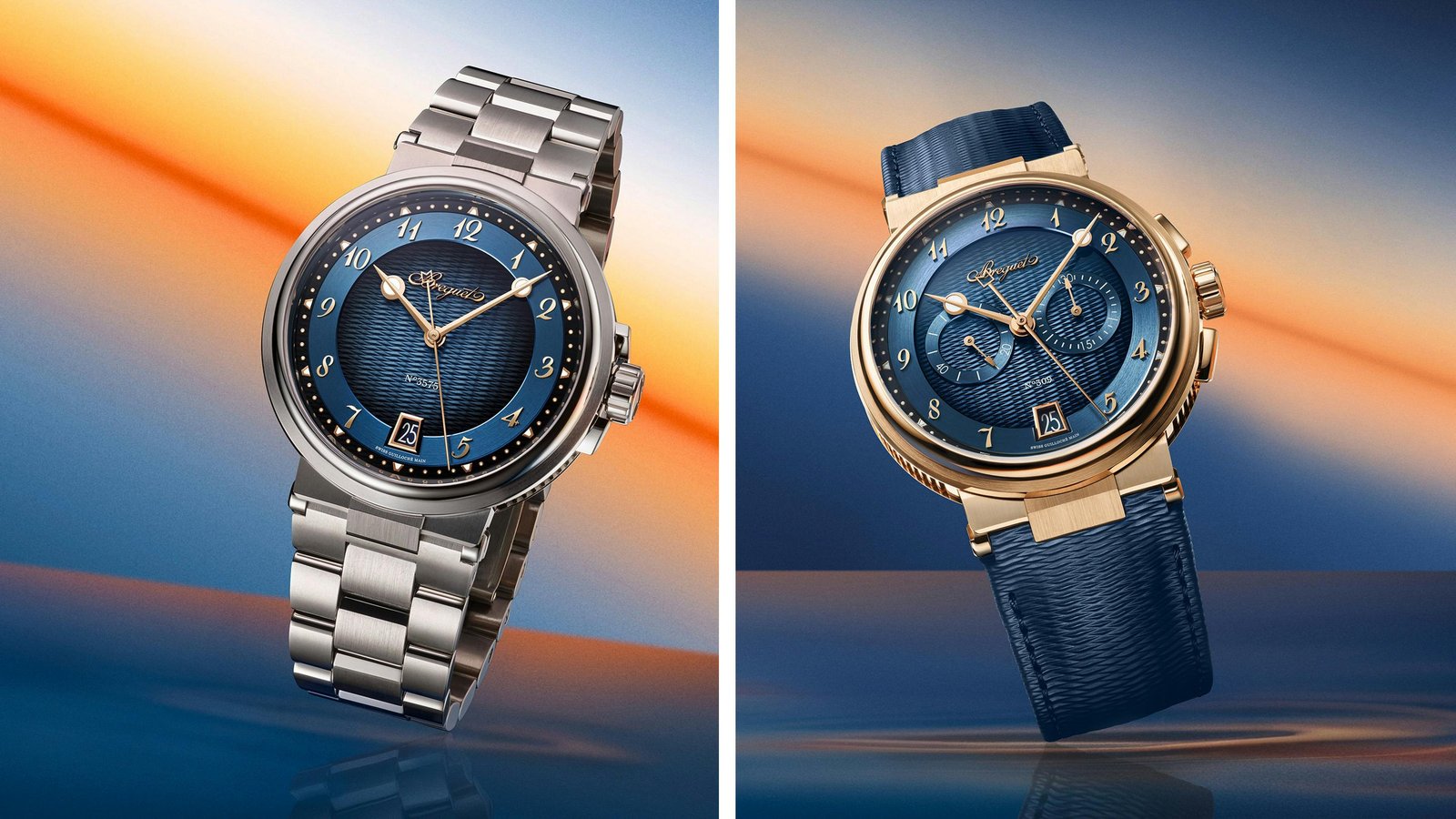
Abraham-Louis Breguet was appointed watchmaker to the French navy in 1815, and the modern Marine has always borrowed that seafaring story. After a year of celebrating its 250th anniversary and refreshing almost everything else in the catalogue, Breguet has finally turned to the Marine.
The cases stay the same. The faces don’t. Breguet’s own open-tipped numerals replace the Roman ones, and the dials now carry the finer Quai de l’Horloge guilloché introduced for the anniversary, named after the Paris quay where the founder had his workshop, inside a brushed hour track. The script logo is back, and new rubber straps make the whole family more casual. The 5517 is 40mm by 11.5mm with calibre 777A. The 5527 chronograph is 42.3mm by 13.9mm with the 4Hz flyback calibre 582QA, which drops its 12-hour counter and keeps two registers, with 48 hours of reserve, a cleaner face for a watch that’s meant to be read quickly.
Prices run from $26,400 for the 5517 in titanium to $80,300 in gold on a gold bracelet, and the chronographs from $33,000 to $93,000. None of this is a revolution, and it doesn’t need to be. Most of the time, getting better isn’t about changing who you are. It’s about taking the things that were already right and cleaning the glass so people can see them.
Tudor Northflag
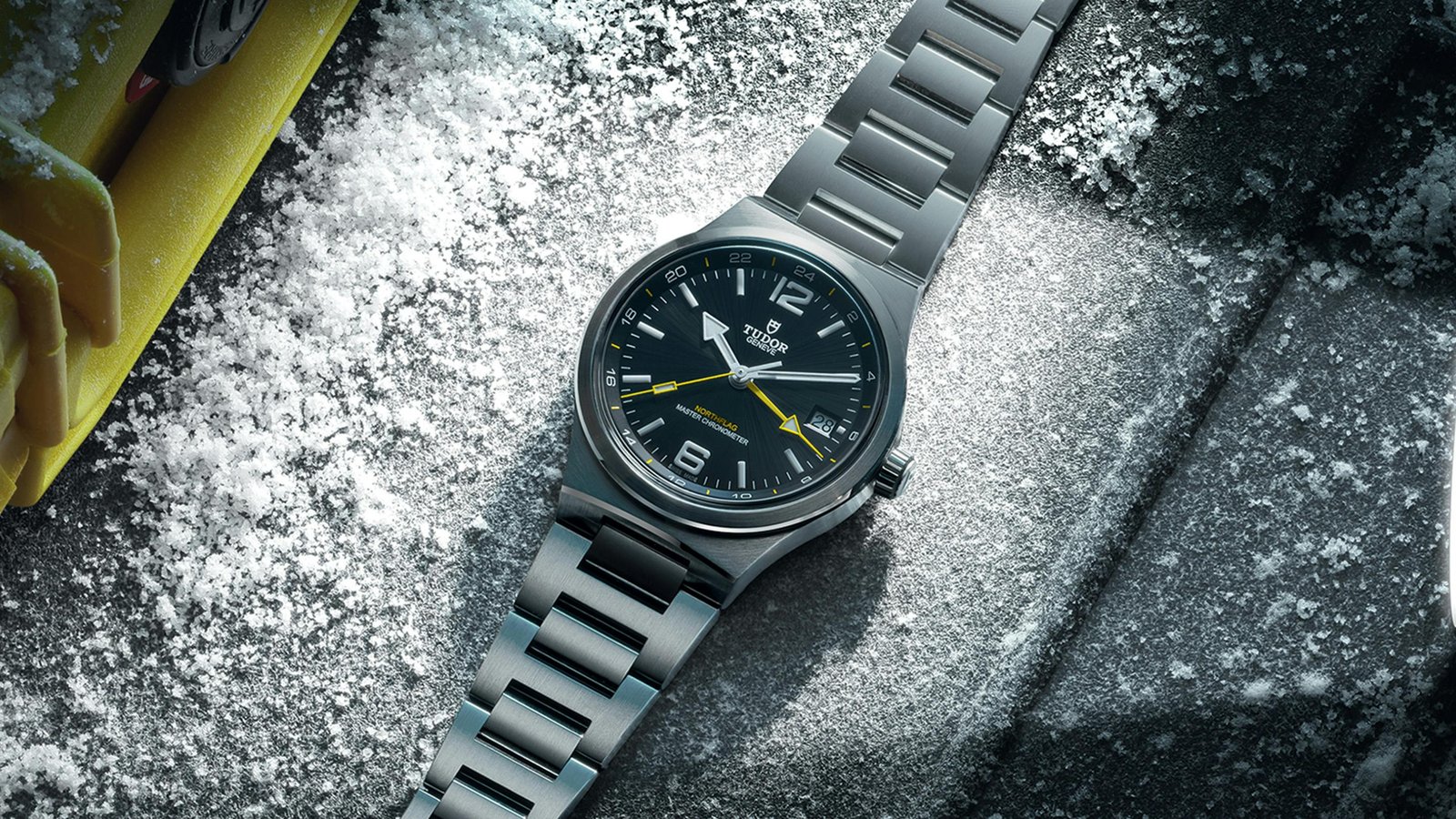
The North Flag was always Tudor’s outlier. Launched in 2015, it was the first Tudor with an in-house movement, an integrated-bracelet adventure watch that didn’t look like anything else in the catalogue and didn’t sell like it either. It was discontinued in 2021, and for a while that seemed to be the end of the story.
It’s back, now spelled as one word, with a second time zone. The Northflag, reference 9140G1A0U, has a 40mm steel case that’s 12.7mm thick and 48.8mm lug to lug, smaller in every direction than the 40 by 13.3 by 50mm original, which should help on smaller wrists. Inside is the MT5652-U, the same Master Chronometer GMT movement used in the Pelagos FXD GMT, certified to between zero and plus five seconds a day, with a jumping local hour hand for when you land somewhere new. Both the date and the second time zone are set from the crown, with no pushers to fiddle with. There’s a domed sapphire crystal, a display back and 100 metres of water resistance.
It’s $5,525, and at first it’s only at Tudor boutiques. That price buys a lot of certified movement. The North Flag was a little ahead of its time, an integrated-bracelet steel watch before everyone wanted one. Sometimes the right idea just needs to step away for a while and come back when the world is ready for it.
TAG Heuer Monza Flyback Chronograph
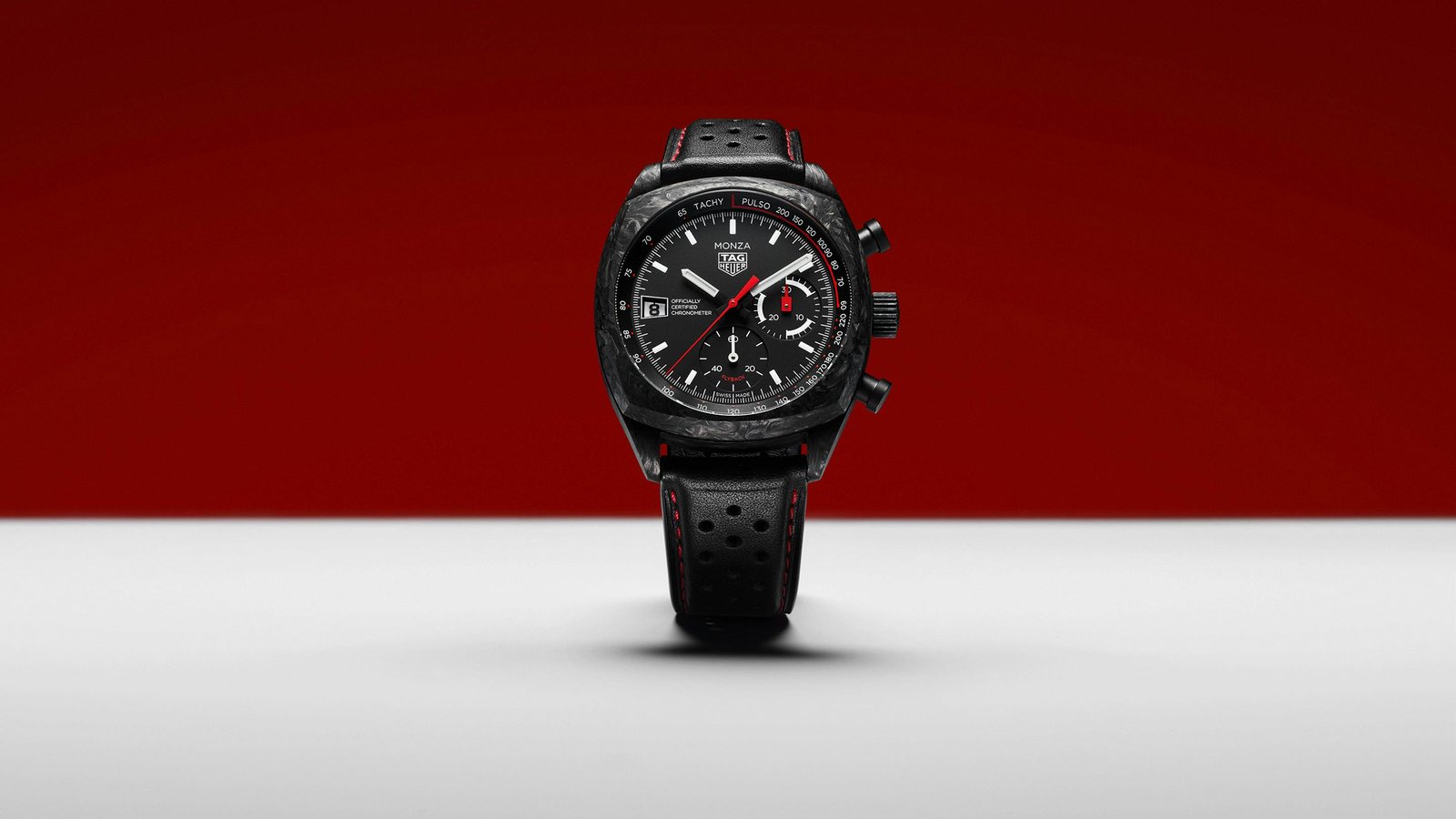
In 1976 Heuer released the Monza to celebrate Ferrari’s return to the top of Formula 1, in a black-coated case that set the tone for a lot of what came after. It has been tied to Niki Lauda ever since. Fifty years on, timed to the Italian Grand Prix at Monza, TAG Heuer has brought it back again.
The rule with the Monza is that it has to be black, and this one is: a 42mm by 15.22mm case in forged carbon, with a black titanium back and a carbon crown, now at 3 o’clock rather than the original’s 9. The red that used to fill the old dial has moved to the details: the chronograph and minute-counter hands, the pulsometer and tachymeter flange, the flyback mark at 6, and the column wheel and rotor text on the back. The date sits at 9 in an angled window. Inside is the COSC-certified automatic calibre TH20-12 with a flyback, running at 4Hz, and every caseback is individually numbered.
It’s limited to 500 numbered pieces at $13,400. That’s a lot to ask in a market that has grown wary of big numbers, and the original’s quirky layout has been traded for something more conventional. But the Monza was always about the feeling of a particular moment, a team getting back on top. It’s a decent thing for a watch to carry around.
Panerai Luminor 42mm
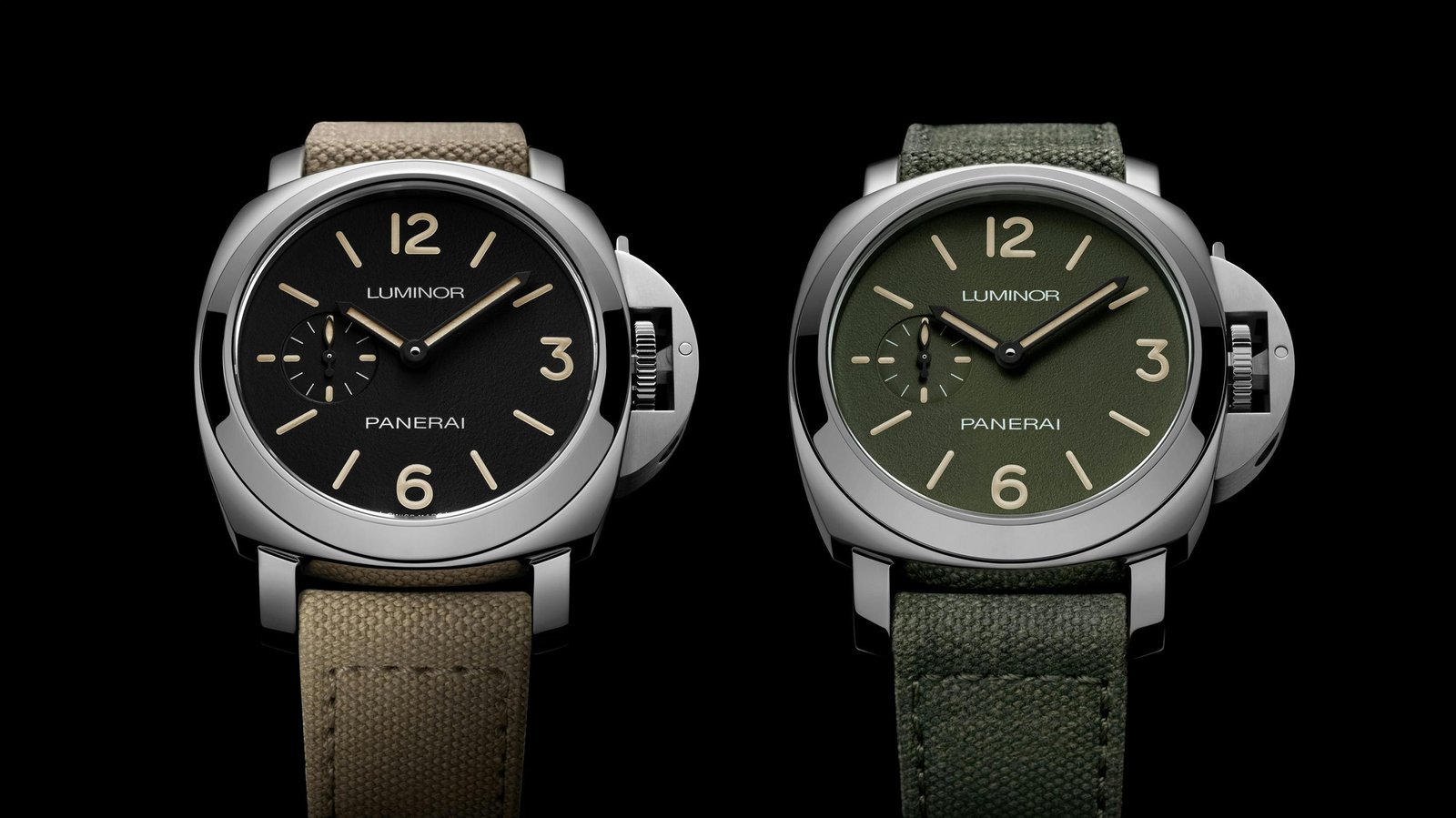
For years, people who loved Panerai said the same two things about it, usually quietly: the watches were too big, and they cost too much. A brand that helped start the big-watch boom in the early 2000s hadn’t adjusted as quickly as the market had. This month it did.
The new Luminor comes in a 42mm by 13.8mm case, down from 44mm. Its design traces back to 1993, when Panerai, before it was bought by Vendôme, revived the Luminor for civilians, at an event aboard the Italian destroyer Durand de la Penne, with the 5218-201/A and the Luminor Marina Militare 5218-202/A, now collectible in their own right. Inside is the automatic P.980, with hours, minutes, hacking seconds and 72 hours of reserve, slim enough to fit in the smaller case, and 1.8mm thinner than the P.9010 it replaces. There are matte black and green dials in brushed and polished steel, and a matte blue dial in black DLC, with beige lume, canvas straps and 500 metres of water resistance behind a solid back.
The steel versions are $6,700 and the DLC is $7,700, roughly $2,000 less than the 44mm Luminors. That’s the part that matters. It’s not glamorous to admit you’ve been getting something wrong. But the brands that last are usually the ones that listen, and then actually change.
Chopard Happy Diamonds Heritage and Happy Sport The First
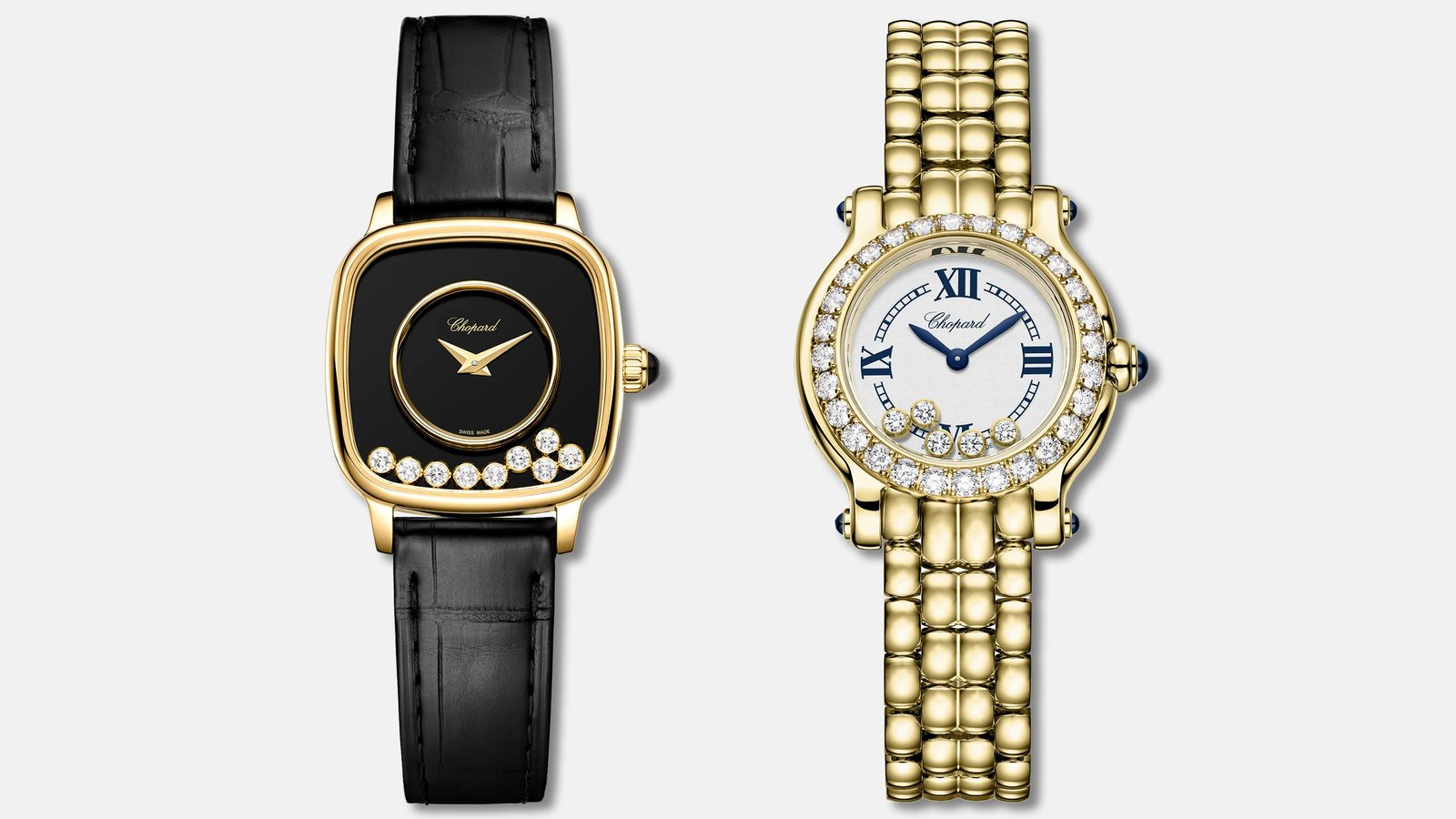
The story goes that in 1976, a Chopard designer watched sunlight dancing in the spray of a waterfall in the Black Forest and decided diamonds should move too. The result was Happy Diamonds: loose stones in tiny gold capsules, free to slide between two sapphire crystals and never land in the same place twice. Fifty years later it’s one of the most recognisable things Chopard makes.
For the anniversary, Chopard has re-edited the first models, with cushion-shaped yellow gold cases and polished black onyx dials, in the two original sizes. The 34mm has 21 moving diamonds and Chopard’s tiny hand-wound calibre 10.01-C, just 15.7mm wide, with 45 hours of reserve, and costs $48,400. The 24mm is quartz with nine diamonds. Both have onyx-set crowns, a lovely period touch. Alongside them comes Happy Sport The First, a reissue of the 1993 original by Caroline Scheufele, now co-president, in 26mm and 33mm sizes with five or seven moving diamonds, in steel, two-tone or solid yellow gold, all quartz.
Diamonds in a steel watch were a strange idea in 1993. Scheufele remembers her father asking how she could do such a thing, and her answer was simply, why can’t I? A lot of good ideas sound like that at the start. They look a little foolish, right up until they look obvious.
IWC Ingenieur 50th anniversary
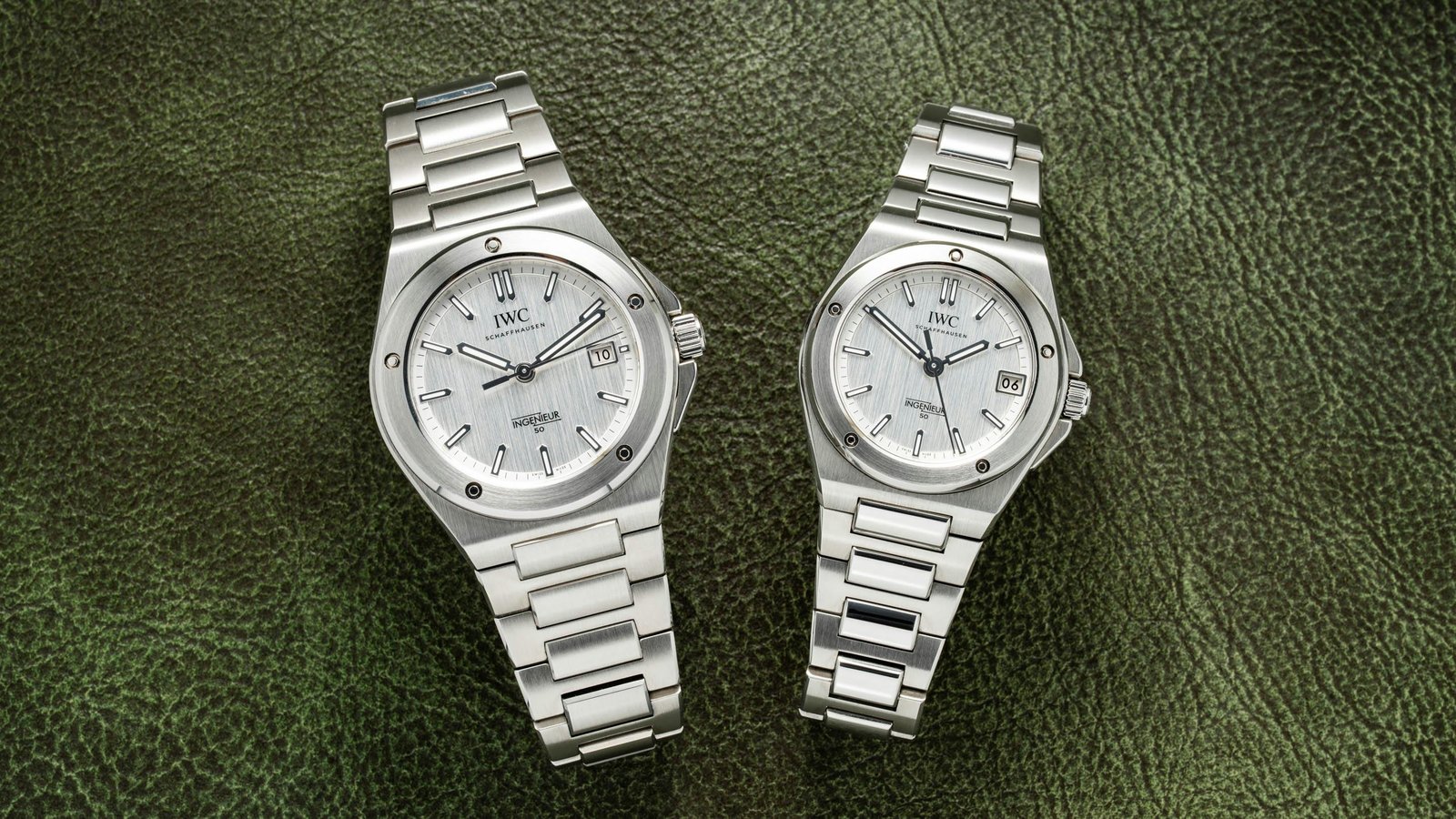
In 1976 Gérald Genta drew IWC a 40mm integrated-bracelet sports watch, the Ingenieur SL, reference 1832, and the market said no. IWC made only 598 of them between 1976 and 1983. It was too big, too strange, too early. Fifty years later, integrated steel bracelets by Genta are among the most wanted watches in the world, and the Ingenieur is back where it belongs.
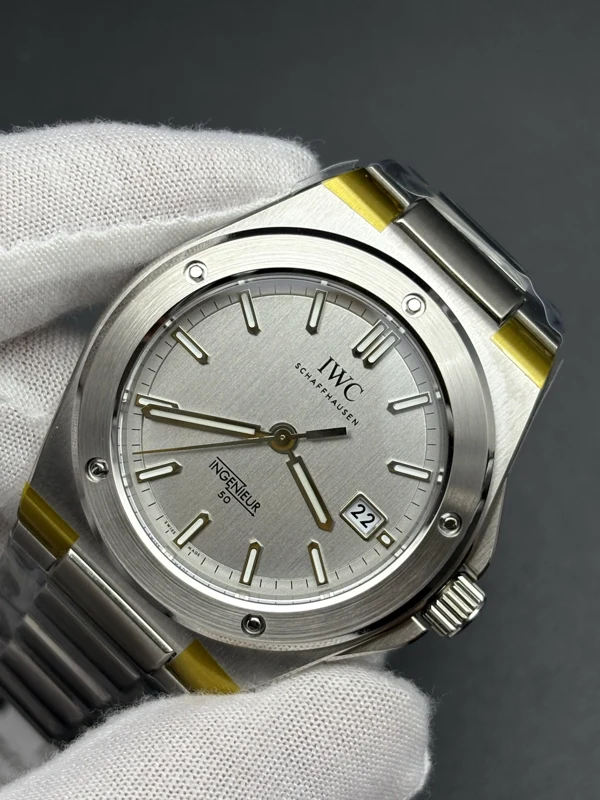
To mark the half-century, IWC has made two limited editions with a vertically brushed silver dial, borrowed from a rarer variant of the original rather than the familiar grid pattern, and a small “50” in place of the lightning bolt in the Ingenieur logo. The 40mm, IW328910, has the in-house automatic calibre 32111 with 120 hours of reserve, a closed back and a soft-iron inner case against magnetism. The 35mm, IW324909, runs the calibre 47110 behind a display back. The name itself goes back to 1955, when IWC built a watch for engineers and scientists who worked near magnetic fields. The 40mm’s soft-iron cage is that same idea, still at work.
Each is limited to 1,150 pieces, at $15,000 for the 40mm and $12,900 for the 35mm. There’s a lesson in that number, 598. A design can be right and still fail, simply because the world isn’t looking yet. You build it anyway, and you let time do the rest.
Zenith Chronomaster Solo Sport
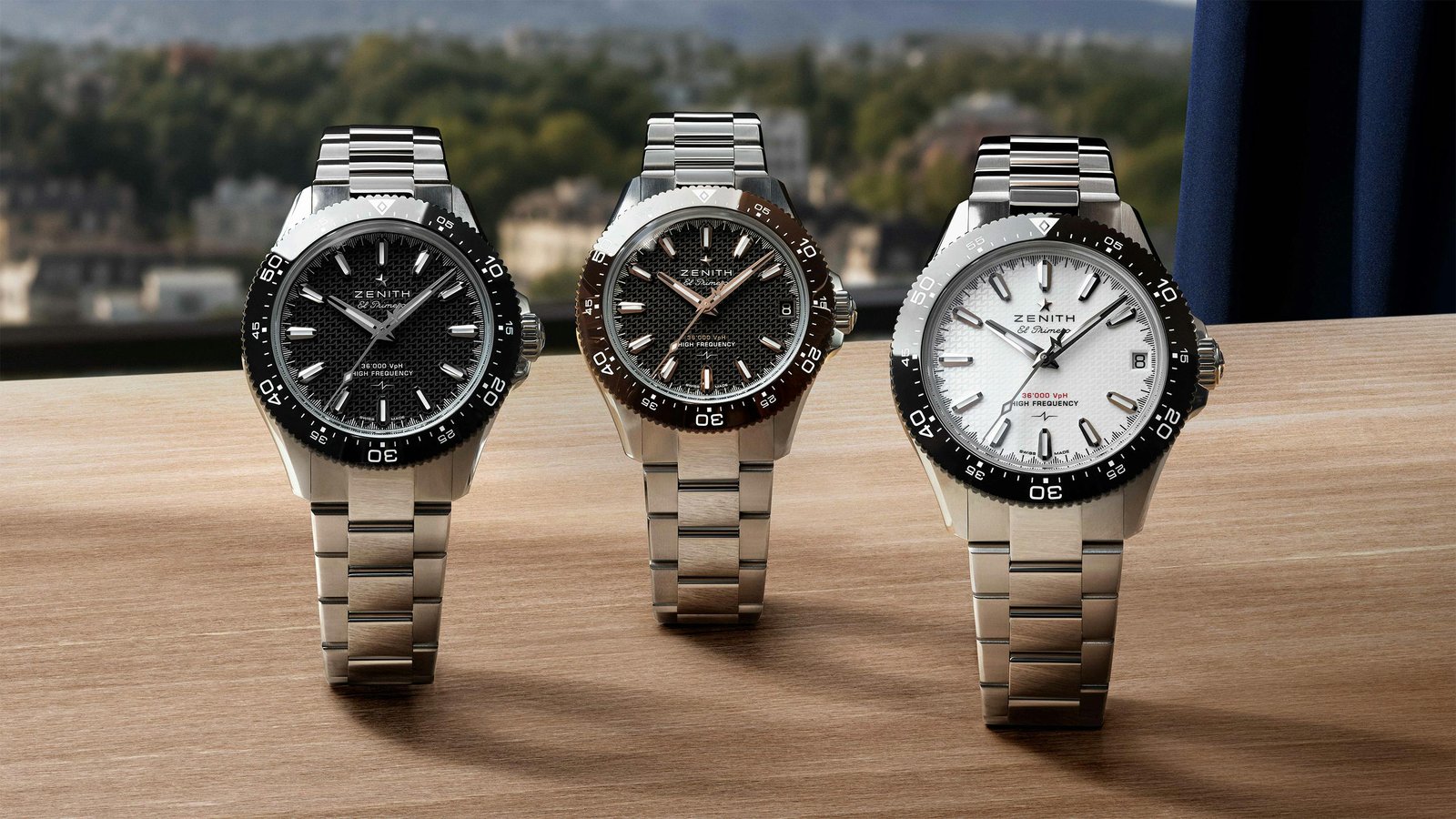
The El Primero is now in its sixth decade, and it’s still the reason most people know Zenith at all. It was one of the first automatic chronograph movements, and its 5Hz beat made it famous. So for Geneva Watch Days, Zenith did something unexpected with it: it took the chronograph away.
The Chronomaster Solo Sport keeps the look of the Chronomaster Sport, a 40mm steel case with a ceramic unidirectional bezel, and the high-frequency heart. The new El Primero 3620 is derived from the 3600 chronograph calibre and still runs at 36,000 vibrations an hour, with a silicon escapement, a stop-seconds and the star-shaped rotor. The ceramic dials carry a repeated 45-degree Z motif meant to suggest the rhythm underneath, sunray on the white version and polished on the black and brown, with a shark-tooth minute track that nods to vintage Zenith. Even the counterweight of the seconds hand carries the Z.
The three date versions are $10,900 and the black no-date is $9,800. Zenith had a hard year, and only weeks later it told staff it plans to shrink and move upmarket, so watches like this one may soon be part of a different chapter. For now, it’s a reminder that you don’t always need to show everything you can do. Sometimes it’s enough to keep the heartbeat.
Hublot Classic Fusion Balloon Dog by Jeff Koons
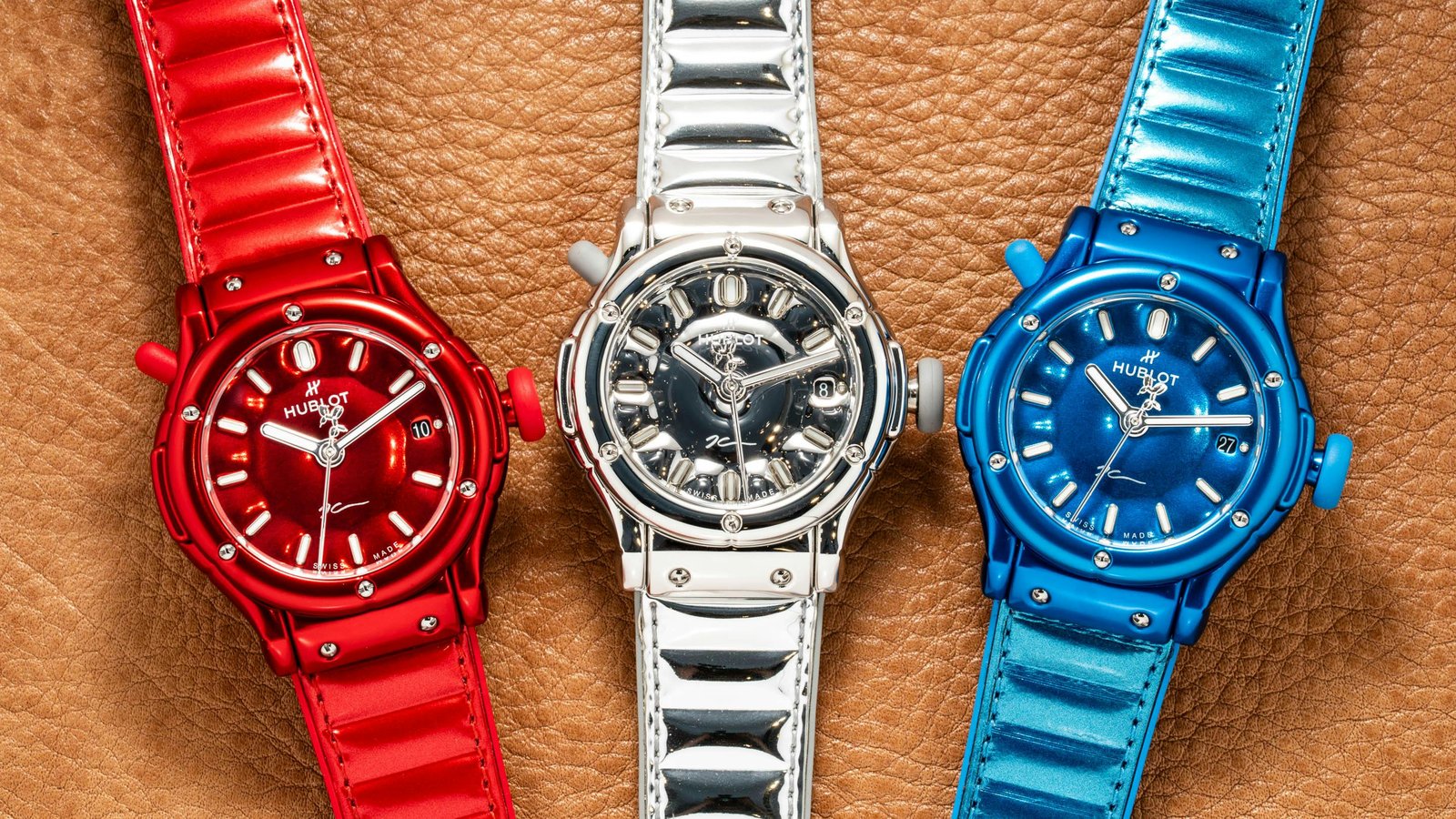
Jeff Koons is the most expensive living artist in the world, at least at auction. His Balloon Dog (Orange) sold for $58.4 million in 2013, and his Rabbit went for more than $91 million in 2019. He is also, depending on who you ask, either a genius or a punchline about art and money. Hublot and Jeff Koons in the same sentence is the kind of pairing that writes its own reviews, in both directions.
Hublot has a long habit of inviting artists in, with past collaborations including Takashi Murakami, Daniel Arsham and Samuel Ross, and this one is about as recognisable as it gets. Koons’s critics have long pointed to the commercialism and the factory-style production behind his work, which makes a limited-edition watch feel less like a departure than a continuation. The Classic Fusion Balloon Dog is a 42mm automatic in three versions, red, blue and polished steel, each shaped and finished to echo the shiny, inflated look of the sculptures, with the automatic calibre HUB1710 and 50 hours of reserve inside.
Each colour is limited to 200 pieces, 600 in all, at $25,100. Whatever you make of it, there’s something honest about a watch that knows exactly what it is. The balloon dogs were always about joy and spectacle and a little bit of nerve. You don’t have to like it. But it’s hard to look away, and that’s half the job.
Audemars Piguet Royal Oak Selfwinding Chronograph “Serena Williams”
Serena Williams turned professional in 1995 and won 23 Grand Slam singles titles. She also changed what a tennis player could wear, and who got to decide. From the black catsuit at the 2002 US Open to the dress printed with “Mother, Champion, Queen, Goddess” at the 2019 French Open, her clothes were never just clothes. Off the court she has been a Vogue cover star and a Met Gala co-chair, living in the space between sport and fashion long before everyone else moved in.
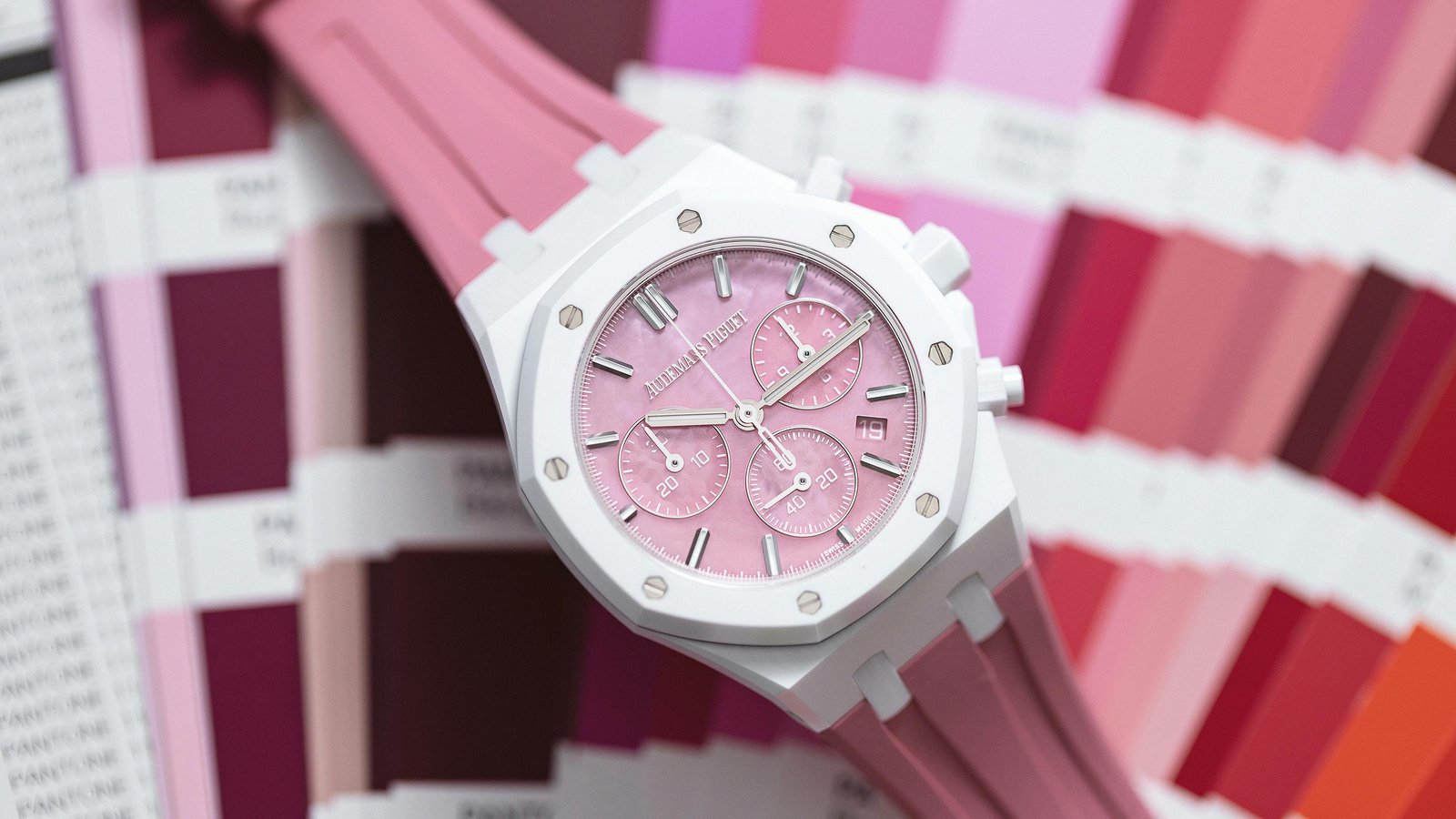
So it makes sense that her first watch collaboration doesn’t play it safe. Audemars Piguet’s Royal Oak Selfwinding Chronograph “Serena Williams” is a 38mm case, bezel, crown and integrated bracelet in white ceramic, with a pink-tinted mother-of-pearl dial, white gold hands and markers, a pink date window and a spare pink rubber strap. Inside is the automatic calibre 6401. Pink and white could easily have turned sugary. The ceramic gives it backbone. It’s water-resistant to 50 metres, and like every white ceramic Royal Oak, it should shrug off the scratches that steel collects.
It’s limited to 500 pieces at $95,900. Williams said the white ceramic felt strong and resilient, and that’s a fair way to describe the whole thing, and her. The best watches named after people don’t just carry a signature. They carry a point of view.
Auctions & records
Four Rolex Daytonas raise $49.4 million for charity
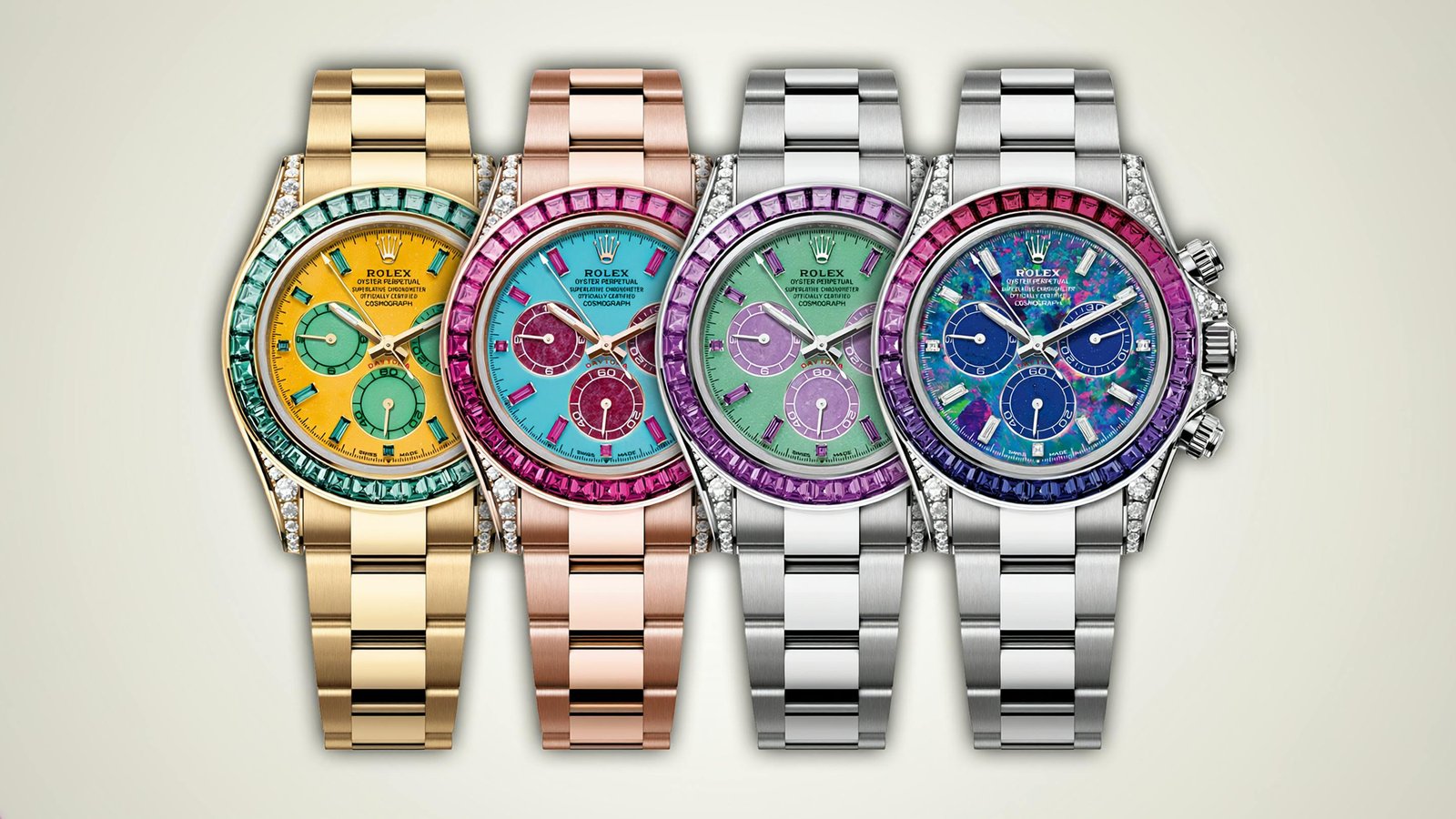
At Watches and Wonders in April there was a whisper that Rolex had made four Daytonas, one for each season, and only one of each. Nobody quite believed it. Rolex, a company that has spent a century declining to say how many of anything it makes, finally told us a number: one. The set was quietly offered for about CHF 4 million, roughly $4.9 million, and more than a thousand names were reportedly put forward. Rolex didn’t know how to choose. So it decided not to.
Instead, on September 28 in London, Phillips sold the four watches one by one, with Aurel Bacs on the rostrum, in what is, as far as anyone can remember, Rolex’s first charity auction. Each is cased in precious metal with a natural-stone dial and gem-set bezel. Winter, in platinum with a blue opal dial and lapis counters, made £10 million, about $13.3 million. Spring, in white gold with a chrysoprase dial, made £6.8 million, about $9 million. Summer, in Everose with a turquoise dial and ruby counters, led at £10.3 million, about $13.65 million. Autumn, in yellow gold with a mookaite dial, made £10.2 million, about $13.5 million.
The total was £37.3 million, about $49.4 million, with no buyer’s premium, all going to the Federer Foundation, which supports early learning for children in Southern Africa and Switzerland, and to Re:wild, the conservation group co-founded by Leonardo DiCaprio. Phillips called it the largest single consignment ever to a charity auction.
Charity prices don’t tell you what a watch is worth. They tell you what people will give. That’s a different number, and on a night like this, a better one.
Cartier Cheich sets a Cartier record in Hong Kong
In 1983 Cartier, an early sponsor of the Paris-Dakar Rally, promised a special watch to anyone who won the same category two years running. It was called the Cheich, after the blue headscarves worn by the Tuareg people of the Sahara. Only one man ever claimed it, the Belgian motorcyclist Gaston Rahier, after his wins in 1984 and 1985. The challenge ended in 1986, and the Cheich became one of the rarest designs Cartier ever made.
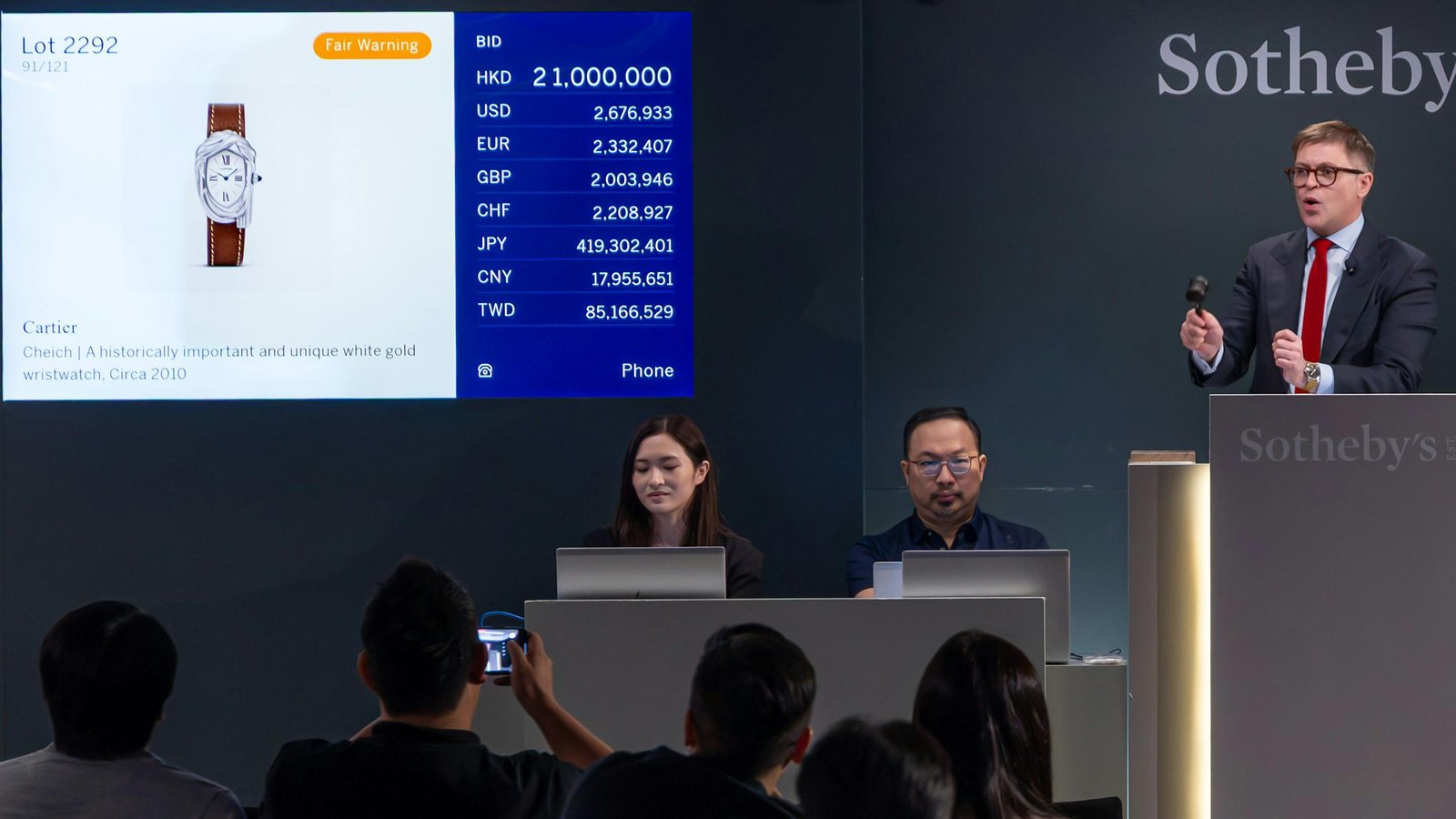
Four were made in yellow gold in the 1980s. Then, in 2010, Cartier made a fifth, in white gold, for Giorgio Seragnoli, a noted collector of white-metal Cartier, delivered with a certificate calling it No. 1 of 1. It’s quartz, 38mm long and 27mm wide. In September, on the first day of Sotheby’s Important Watches sale in Hong Kong, it drew a nine-minute bidding fight between the room, the phones and the internet, and sold for HK$26.52 million, about $3.4 million, more than double its estimate.
That makes it the most expensive Cartier wristwatch ever sold at auction, beating the roughly $2 million paid for a London Crash in Geneva in May. The two-day sale totalled HK$426 million, about $55 million, the highest for any watch sale in Sotheby’s history and the most valuable watch auction ever held in Asia. It’s a long way from a desert rally to a Hong Kong saleroom. Some objects just keep collecting stories.
Events
Geneva Watch Days, the record year
Geneva Watch Days started in 2020 as a workaround, when the big fairs went quiet and a handful of brands decided to meet anyway. Six years later it’s where the industry comes back together after the summer, spread across hotel suites and showrooms around the lake rather than in one hall, with a pavilion at the Rotonde du Mont-Blanc as its centre of gravity.
This year’s edition set a record with 71 participating brands and nearly 400 new releases. It was also the show that Breitling’s House of Brands chose to unveil the revived Gallet, and where MB&F’s MAD Editions announced the MAD 3. Bulgari brought its Vianney Halter collaboration, Zenith its no-chronograph El Primero, and Girard-Perregaux its tourbillon Laureato. More hotels took part, and the pavilion by the lake grew too.
Attendance went the other way: 15,000 people this year, down from 17,000 at last year’s peak. More brands, more watches, fewer visitors. It may be a blip, or it may be a sign of a busy calendar asking a lot of the same collectors. Either way, the show keeps doing what the bigger fair can’t: slowing things down enough that a small brand can get a proper look.
Watches and Wonders 2027 adds 13 new brands
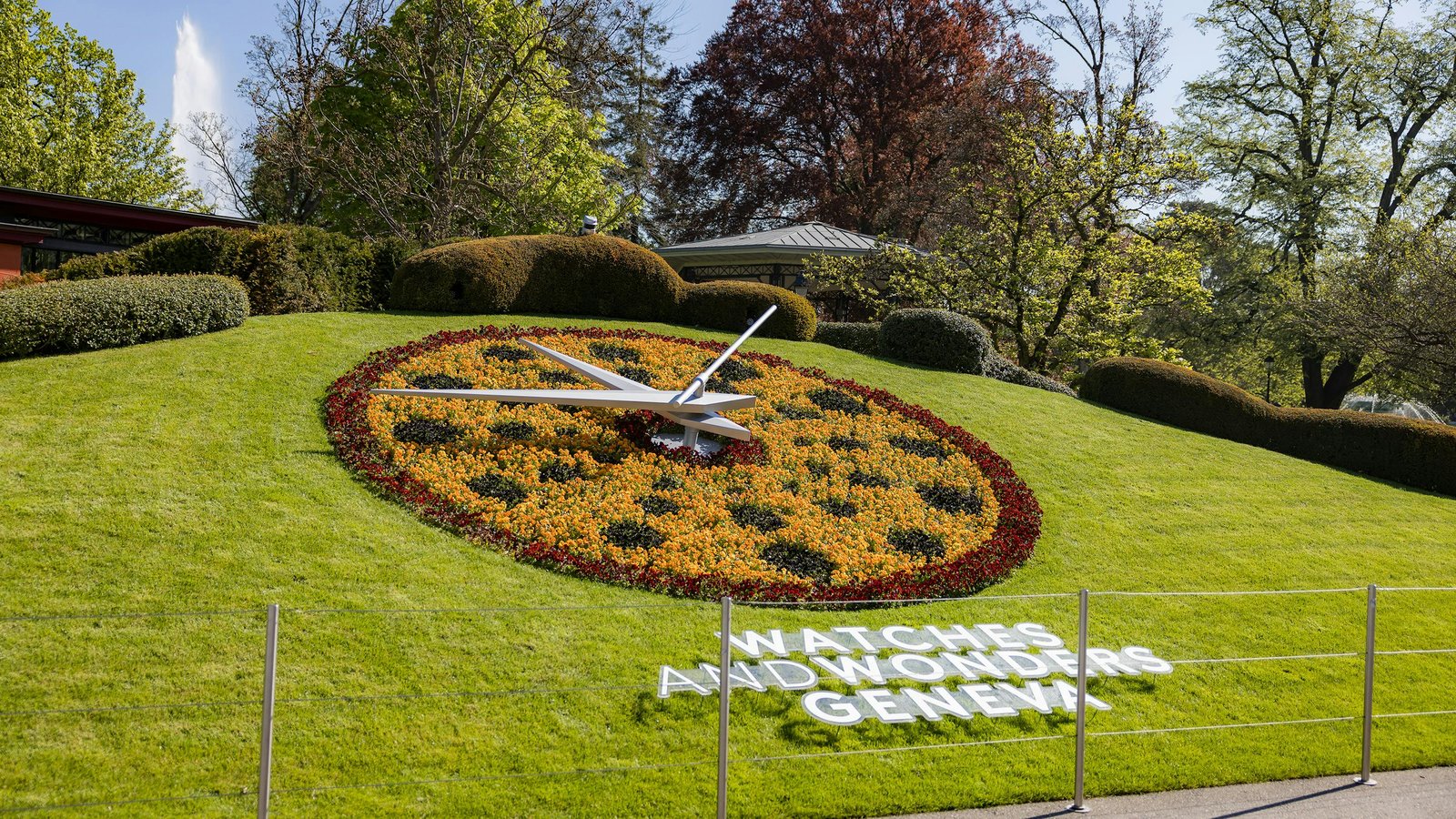
Watches and Wonders, the biggest event on the watch calendar, will run from April 5 to 11, 2027, at Palexpo in Geneva, with professional days from Monday and three public days over the weekend. In September the organisers confirmed it will have 75 exhibitors, including 13 that have never shown there before.
The newcomers are Akhor, Alain Silberstein, Berneron, Breva Genève, Fortis, Kerbedanz, Porsche Design, Singer Reimagined and Stollenwurm, joining Breitling, Damiani, Gallet and Universal Genève, whose arrival was announced in June. Berneron, led by the designer Sylvain Berneron, has made shaped watches so wanted that one Mirage, sold by the brand for about $62,000, recently resold for $521,400, a price he called unsustainable. Porsche Design has just opened its own manufacture in Grenchen. Stollenwurm is a young high-horology brand named after a creature from Alpine folklore.
The main hall will hold 32 houses, the Carré des Horlogers 27 brands, three times as many as a decade ago, and the Mezzanine 16. The halls get a new look inspired by the lakes and mountains around Geneva, and the In The City programme expands to all seven days. This year’s edition drew a record of nearly 60,000 visitors. A fair is really just a promise that everyone will be in the same place at the same time. This one keeps getting more people to make it.
GPHG 2026 finalists named
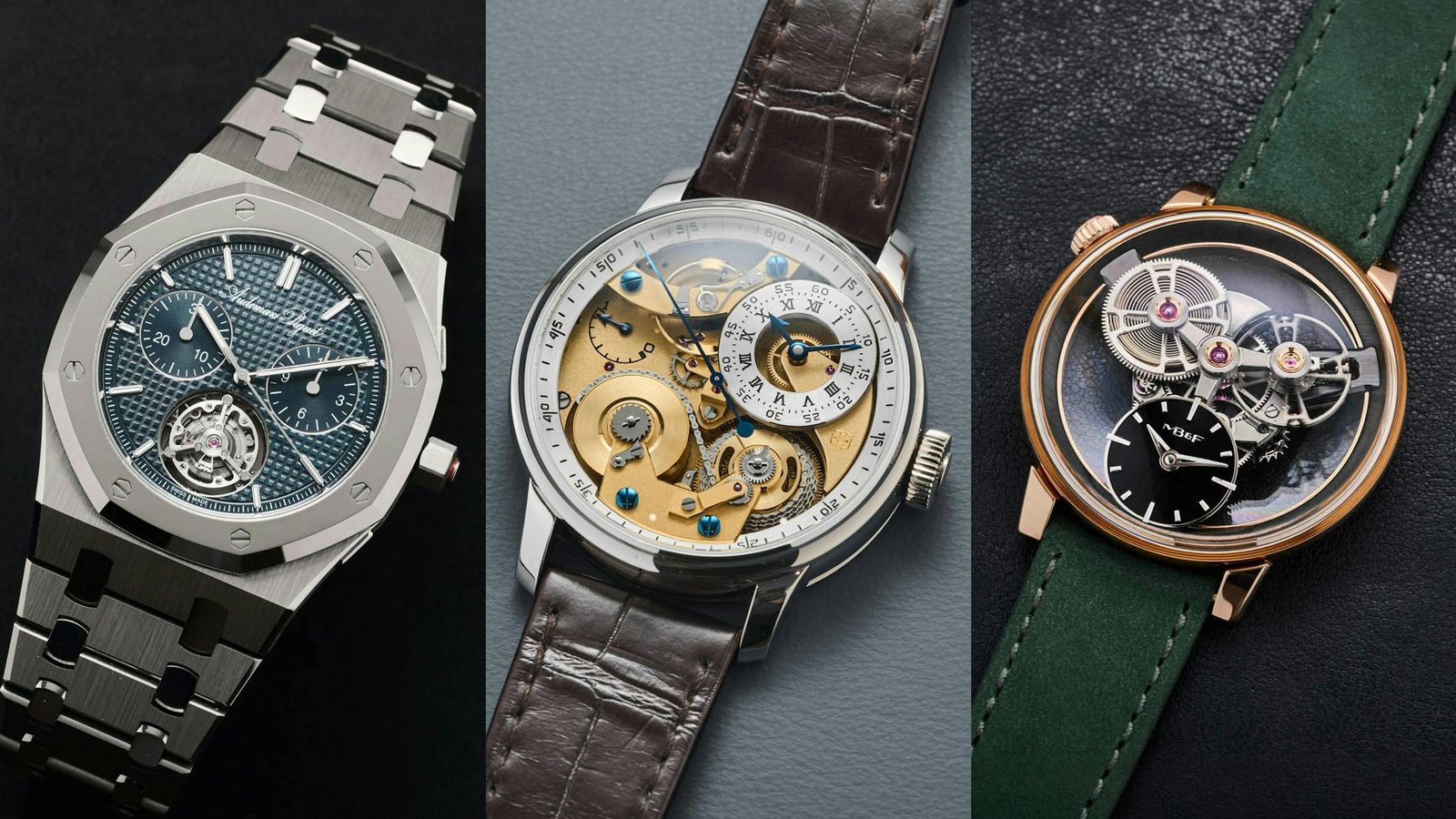
The Grand Prix d’Horlogerie de Genève is the closest thing watches have to the Oscars, and in September it named its finalists: six in each of 14 categories, 84 watches in all. Being a finalist can change the year for a small brand, and there are a couple of first-timers in the running. The prize was founded in 2001, and this is its 26th edition.
Some things are different this time. The jury is led by Wei Koh, taking over from Nicholas Foulkes, who retired after many years in the chair. Breguet won the top prize, the Aiguille d’Or, last year, so its chief executive Gregory Kissling sits on the jury and Breguet can’t compete. And the ceremony will be held in English for the first time, a nod to how global the audience has become.
The jury will handle the watches in Geneva and vote behind closed doors, and the winners will be announced on November 7 at the Bâtiment des Forces Motrices, the old riverside pumping station. Prizes don’t make a watch better. But they make people look, and for a small workshop, being looked at is everything.
Raffles & sign-ups
H. Moser & Cie. Streamliner Off-Grid
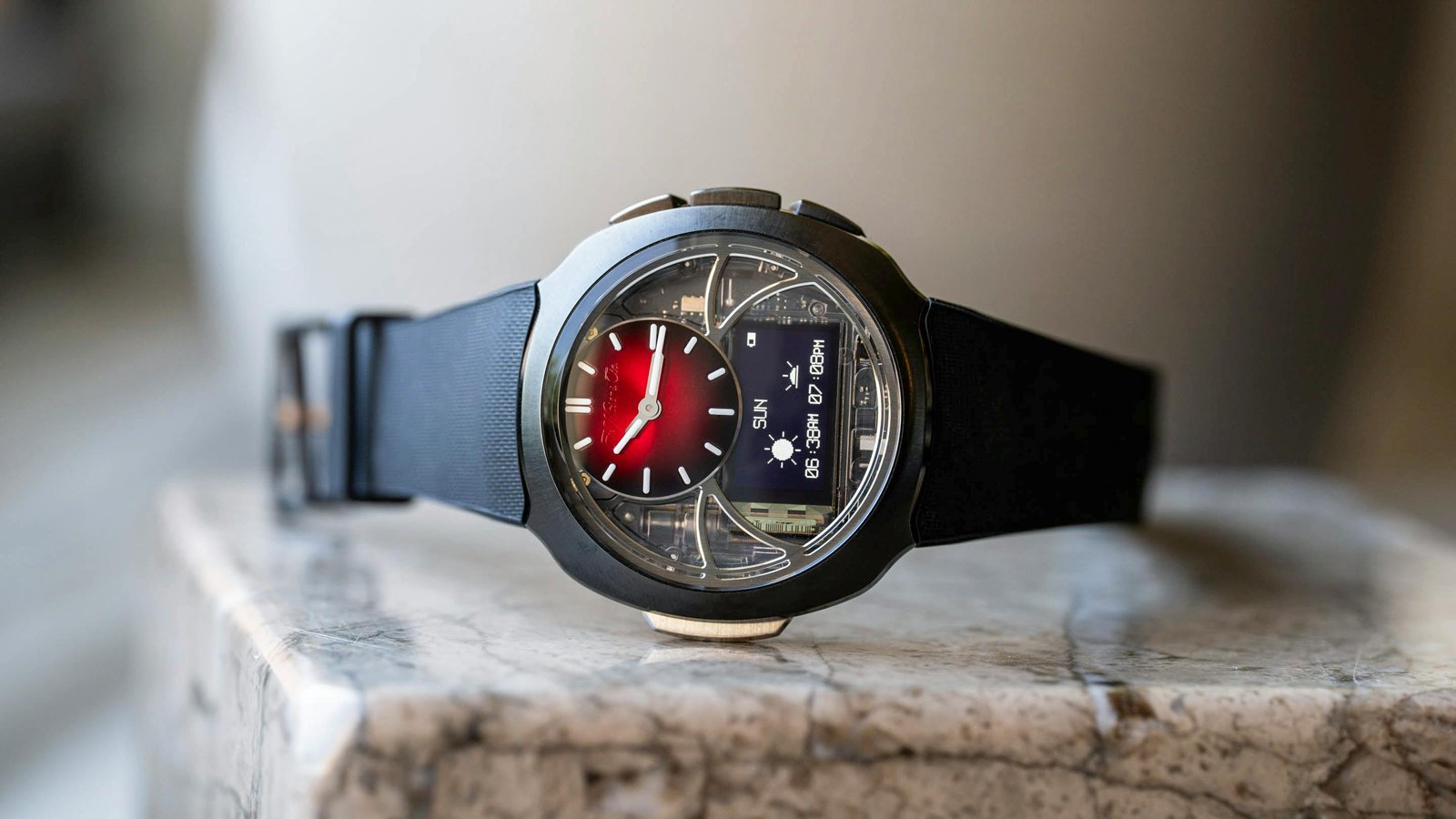
Moser has made a career out of mischief: a watch with a Swiss cheese case, a dial made of fake grass, a smartwatch-shaped mechanical piece. Its latest is a watch called Off-Grid that you have to charge, which is the kind of irony you’d pay for anyway.
Developed with Sequent, a Swiss maker of connected watches, the Streamliner Off-Grid puts a small black-and-white digital display at 6 o’clock building on an earlier connected Streamliner made for the Alpine Formula 1 mechanics, inside the familiar 42.6mm by 14.4mm steel cushion case, which wears smaller than it sounds because the strap attaches straight to the case. Three pushers on the right step through a GMT with country selector, a split-seconds chronograph, a perpetual calendar, a moonphase, sunrise and sunset times, a timer and a vibrating alarm. A pusher on the left switches on travel mode.
There’s a blue and a black, each limited to 1,000 pieces at $4,900, very low for Moser. Existing clients got first refusal until September 23, and the public ordering window ran from September 24 to October 5. It’s now closed, and Moser says it won’t be made again. Not every experiment needs to be serious to be worth trying. Sometimes you learn the most from the ones that made you smile.
Mergers & partnerships
Gallet returns under Breitling’s House of Brands
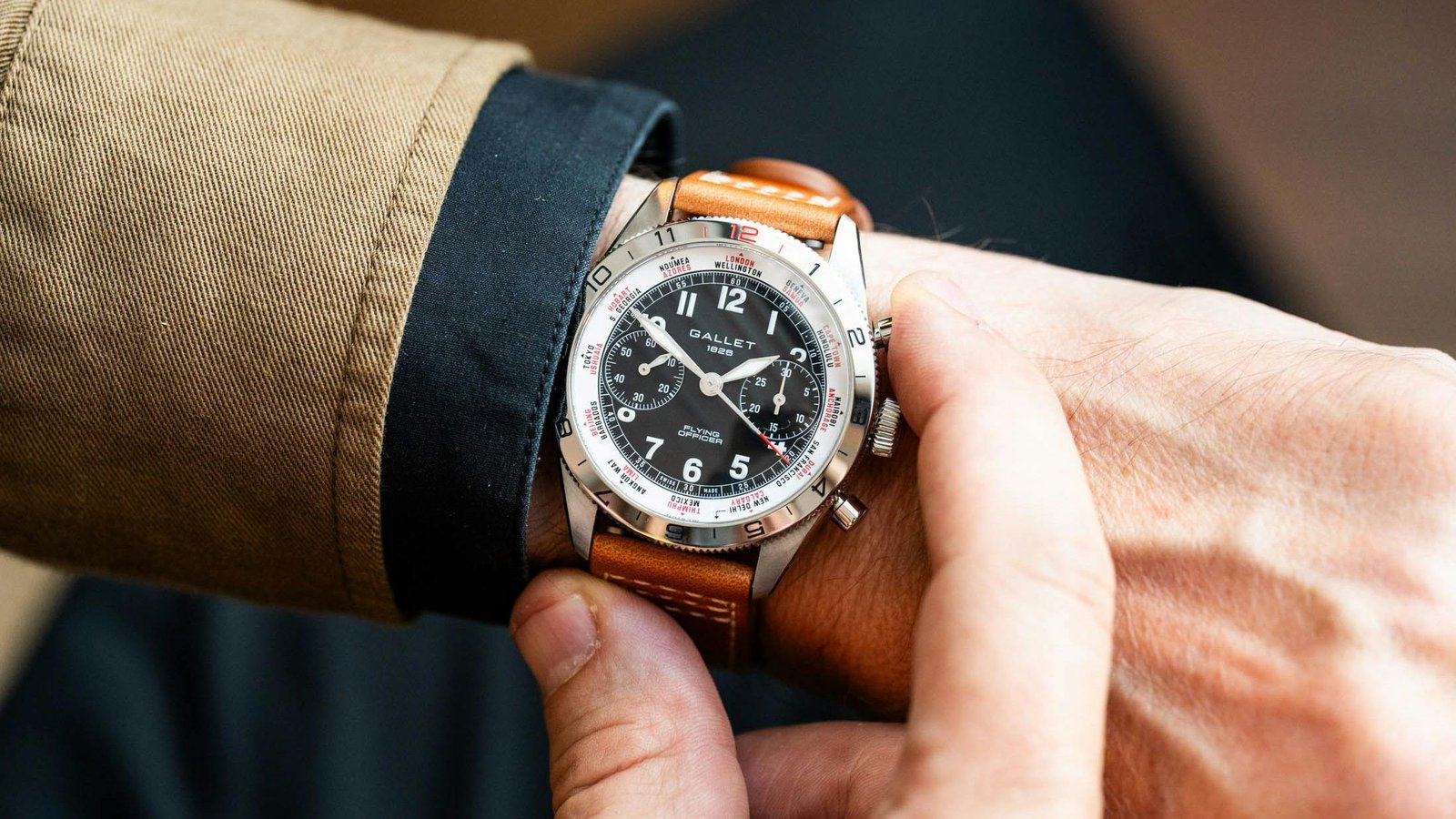
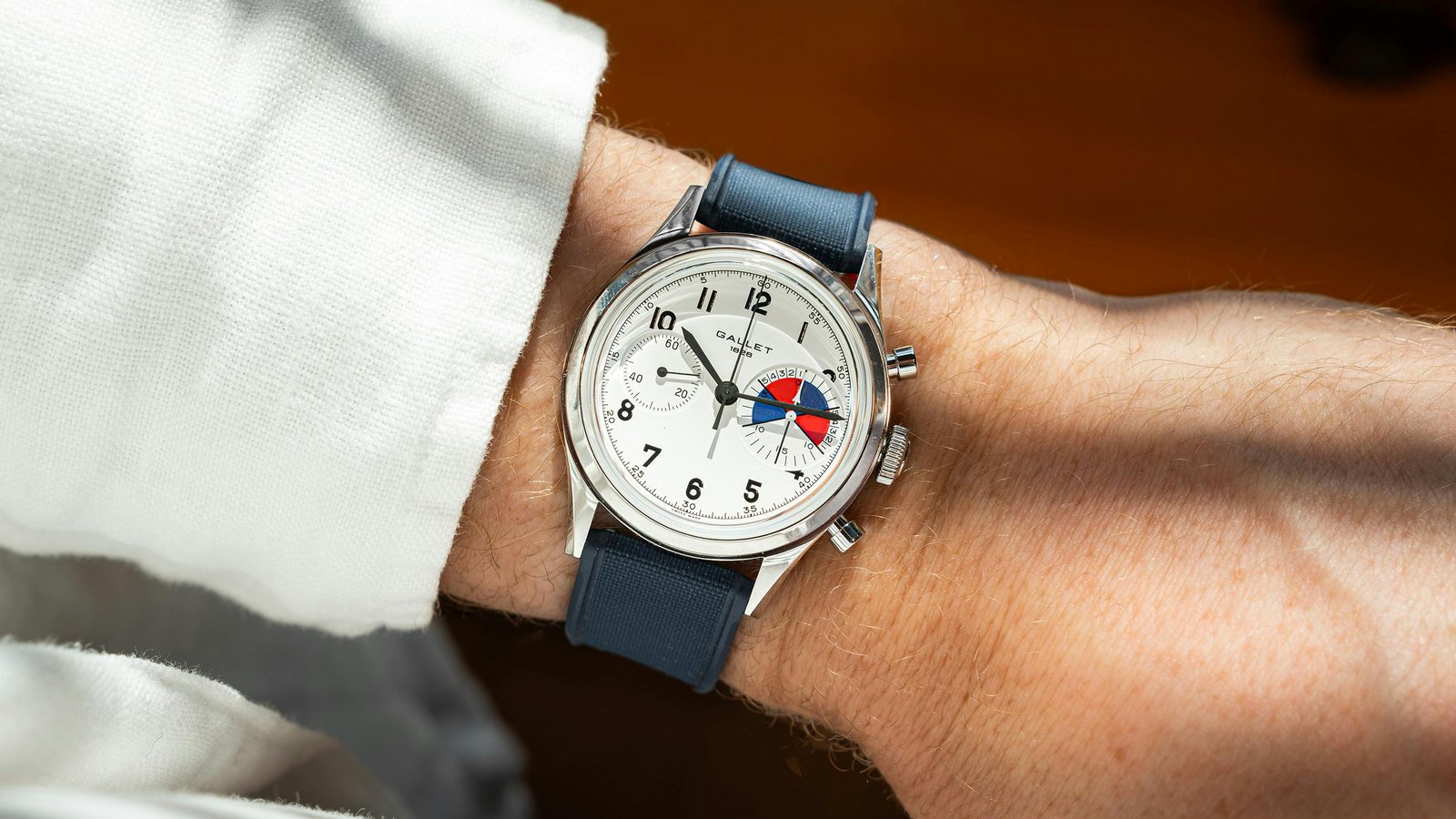
Gallet is one of the oldest names in Swiss watchmaking, known for the pilot and yachting chronographs it made for generations. It went quiet for years. Now it’s back as part of Breitling’s House of Brands, the entry point in a family that runs Gallet, then Breitling, then Universal Genève, with casebacks that say “Manufactured by Breitling” to make the point.
The interesting part is the price. Over the past decade the big Swiss brands have climbed upmarket, leaving the $2,000 to $5,000 space to small independent brands. Gallet walks straight back into it. The 40mm Flying Officer starts at $2,900 for the automatic and $4,400 for the chronograph. At the top sit the Classics: three 38mm reissues of the Multichron, including a Tribute to Yachting Big Eye with a red and white regatta timer, all in 38mm by 12.5mm steel cases rated to 100 metres, with Breitling’s hand-wound B09 chronograph calibre, 70 hours of reserve and a display back, at about $6,700. It will be sold in about half of Breitling’s roughly 300 boutiques.
Whether people want a new old name at that price is the big question, and the answer will matter beyond one brand. For years the Swiss walked away from the middle of the market. It’s good to see someone try to walk back in.
FHH teams up with the GIA
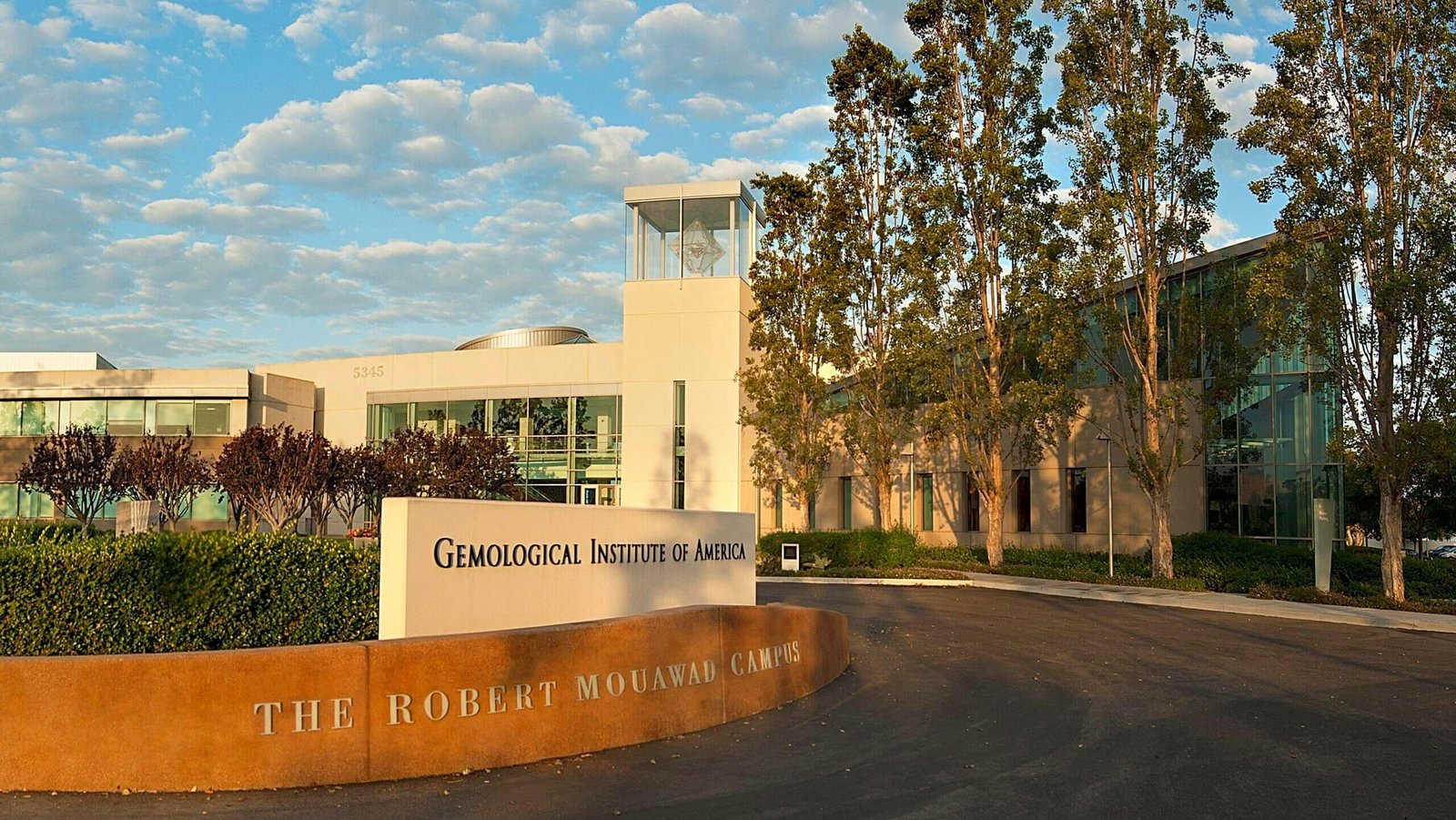
The Fondation Haute Horlogerie is the Swiss watch industry’s educational foundation, backed by about 40 watch companies and best known for training and certifying people who sell and explain fine watches. The GIA, the Gemological Institute of America, founded in 1931, is the world’s best-known authority on gems. It invented the Four Cs of diamond quality and has trained more than 200,000 professionals in jewellery and gems.
In September the two non-profits signed an academic collaboration. Through the FHH Academy, they’ll work on courses, instruction and certification, using the GIA’s campuses and online platform across the United States, Britain, Africa and Asia. For GIA students, that means a new body of watchmaking knowledge alongside gemmology. For the FHH, it means reaching far more people than it could alone. The GIA says its students have been asking to learn more craft, and more of it in person, which is exactly what watchmaking can offer. The first programmes are planned for early 2027.
It’s not the kind of news that makes anyone’s heart beat faster. But the industry spends a lot of energy on new watches and not enough on the people who’ll sell, explain and care for them. Teaching more people to understand what they’re looking at is never a bad investment.